Protorthodes alfkenii
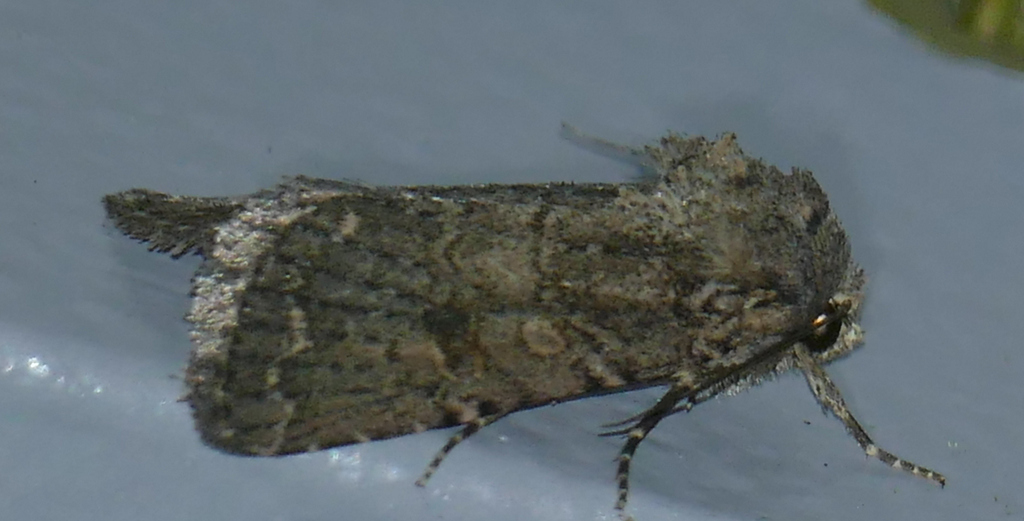
(c) Wendy McCrady, some rights reserved (CC BY) · licence
Family: Noctuidae · Class: Insecta · Order: Lepidoptera
Protorthodes alfkenii is a California animal in the Noctuidae family.
Protorthodes alfkenii is a moth species in the family Noctuidae, commonly known as owlet moths or cutworm moths. This species represents one of the lesser-documented members of the genus Protorthodes, which comprises small to medium-sized nocturnal moths distributed across western North America. The physical characteristics of P. alfkenii align with typical Protorthodes morphology. Adults exhibit the subdued coloration characteristic of many noctuid moths, with forewings displaying mottled patterns of brown and gray scales that provide effective camouflage against tree bark and other natural substrates. The hindwings are typically paler, ranging from whitish to light brown. Wing span measurements for this species have not been extensively documented in available literature, though related Protorthodes species typically range from 25 to 35 millimeters across the forewings. The distributional range of Protorthodes alfkenii appears to be restricted to specific regions of western North America, though comprehensive range mapping remains incomplete. Current records suggest the species occurs in portions of California, with potential extensions into adjacent states. The limited distributional data available indicates this may be a regionally endemic species with restricted geographic occurrence. Habitat preferences for P. alfkenii are not well-documented in current literature. Based on ecological patterns observed in related Protorthodes species, this moth likely inhabits areas with suitable host plants and appropriate microhabitat conditions for larval development. Many noctuid moths in this genus are associated with specific plant families and require particular environmental conditions for successful reproduction. The life cycle and behavioral ecology of Protorthodes alfkenii remain poorly studied. Like other noctuids, this species likely undergoes complete metamorphosis with distinct egg, larval, pupal, and adult stages. Adults are presumably nocturnal, as indicated by the family name, with flight activity occurring during evening and nighttime hours. Larval host plant relationships have not been definitively established for this species, though many Protorthodes larvae feed on various herbaceous plants and shrubs. Reproductive timing and seasonal activity patterns for P. alfkenii are not well-documented. Related species in the genus typically have specific flight periods that correspond to favorable environmental conditions and host plant phenology. Mating behaviors likely follow standard noctuid patterns, with males locating females through pheromone detection. The conservation status of Protorthodes alfkenii is not formally assessed by major conservation organizations. No federal or state listing status has been assigned to this species as of December 2025. The apparent rarity of records and limited distributional information suggest this moth may be naturally uncommon or potentially overlooked due to identification challenges and limited survey efforts targeting noctuid fauna. Without comprehensive population studies or formal status assessments, the conservation needs of this species remain uncertain. Further research is needed to establish basic ecological requirements, population trends, and potential conservation concerns for Protorthodes alfkenii.
Classification
Class: Insecta · Order: Lepidoptera · Family: Noctuidae
Frequently asked questions
How is Protorthodes alfkenii classified?
Protorthodes alfkenii belongs to class Insecta, order Lepidoptera, family Noctuidae.
What family does Protorthodes alfkenii belong to?
Protorthodes alfkenii is in the Noctuidae family.
What is Protorthodes alfkenii?
Protorthodes alfkenii is a moth species in the family Noctuidae, commonly known as owlet moths or cutworm moths.
Is Protorthodes alfkenii found in California?
Yes. Protorthodes alfkenii is recorded in California in The California Species Project's catalogue.
Related species
Other California species in the same genus, family, or bioregion.
Data from The California Species Project — 14,000+ California species with verified data from CNPS, CDFW, USFWS, and more.