Protorthodes rufula
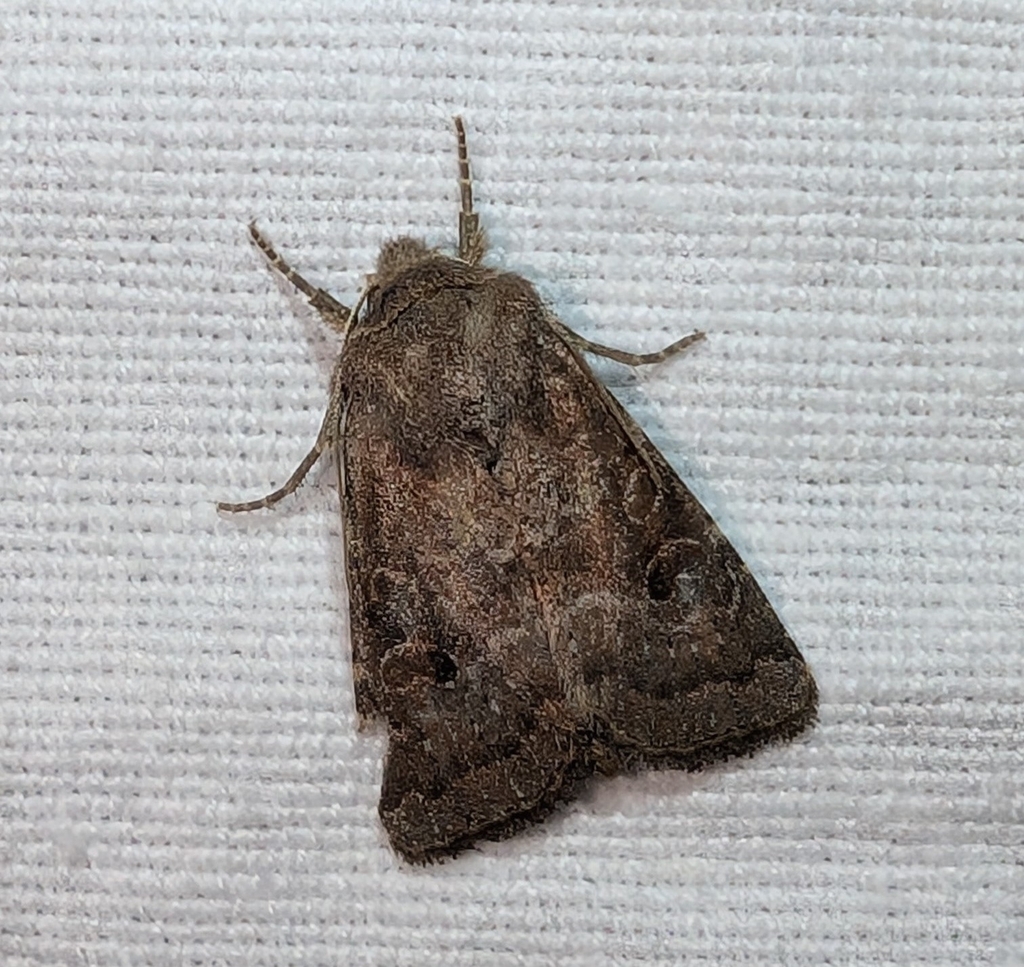
(c) Brodie Cass Talbott, some rights reserved (CC BY) · licence
Family: Noctuidae · Class: Insecta · Order: Lepidoptera
Protorthodes rufula is a California animal in the Noctuidae family.
Protorthodes rufula is a small moth in the family Noctuidae, commonly known as the rufous cutworm moth. Adults have a wingspan of approximately 25-30 mm (1.0-1.2 inches). The forewings display a mottled pattern of reddish-brown and gray scales, with the rufula species name referring to the reddish coloration. The hindwings are typically pale grayish-white with darker veining. Males can be distinguished from females by their more feathery antennae and slightly smaller size. This species occurs across much of North America, with documented populations from southern Canada to northern Mexico. In California, Protorthodes rufula has been recorded from various counties throughout the state, including both coastal and inland regions. The species appears to have a broad elevational range, occurring from near sea level to montane environments up to approximately 2,000 meters (6,600 feet). Protorthodes rufula inhabits diverse plant communities including grasslands, oak woodlands, chaparral, and disturbed areas such as agricultural margins and urban edges. Adults are attracted to artificial lights and are frequently collected at moth traps. The species shows adaptability to various vegetation types, reflecting the polyphagous nature of its larval stage. Adult moths are active during late spring through early fall, with peak flight periods typically occurring from May through August depending on elevation and local climate conditions. Females deposit eggs on or near host plants, and the larvae develop as cutworms, feeding on roots and lower stems of various herbaceous plants. The caterpillars are generalist feeders, consuming grasses, forbs, and low shrubs. Larvae construct shallow burrows in soil during daylight hours and emerge at night to feed. The species likely overwinters as pupae in the soil, with adults emerging the following spring. Development from egg to adult typically requires one year, though this may vary with temperature and growing season length. Like many noctuids, the larvae can occasionally reach pest status in agricultural settings when populations are high, though this species is generally not considered a significant economic pest. Protorthodes rufula does not appear on federal or state conservation lists and is presumed to have stable populations throughout its range. The species' broad host plant requirements and adaptability to disturbed habitats suggest resilience to moderate environmental changes. However, like many moths, populations may face pressure from habitat conversion, pesticide use, and light pollution, which can disrupt mating behaviors and navigation. Climate change may affect the timing of adult emergence and larval development, potentially creating mismatches with optimal host plant phenology. No specific conservation measures are currently in place for this species, and its conservation status appears secure based on its wide distribution and ecological adaptability.
Classification
Class: Insecta · Order: Lepidoptera · Family: Noctuidae
Frequently asked questions
How is Protorthodes rufula classified?
Protorthodes rufula belongs to class Insecta, order Lepidoptera, family Noctuidae.
What family does Protorthodes rufula belong to?
Protorthodes rufula is in the Noctuidae family.
What is Protorthodes rufula?
Protorthodes rufula is a small moth in the family Noctuidae, commonly known as the rufous cutworm moth.
Is Protorthodes rufula found in California?
Yes. Protorthodes rufula is recorded in California in The California Species Project's catalogue.
Related species
Other California species in the same genus, family, or bioregion.
Data from The California Species Project — 14,000+ California species with verified data from CNPS, CDFW, USFWS, and more.