Psamatodes abydata
Dot-lined Angle
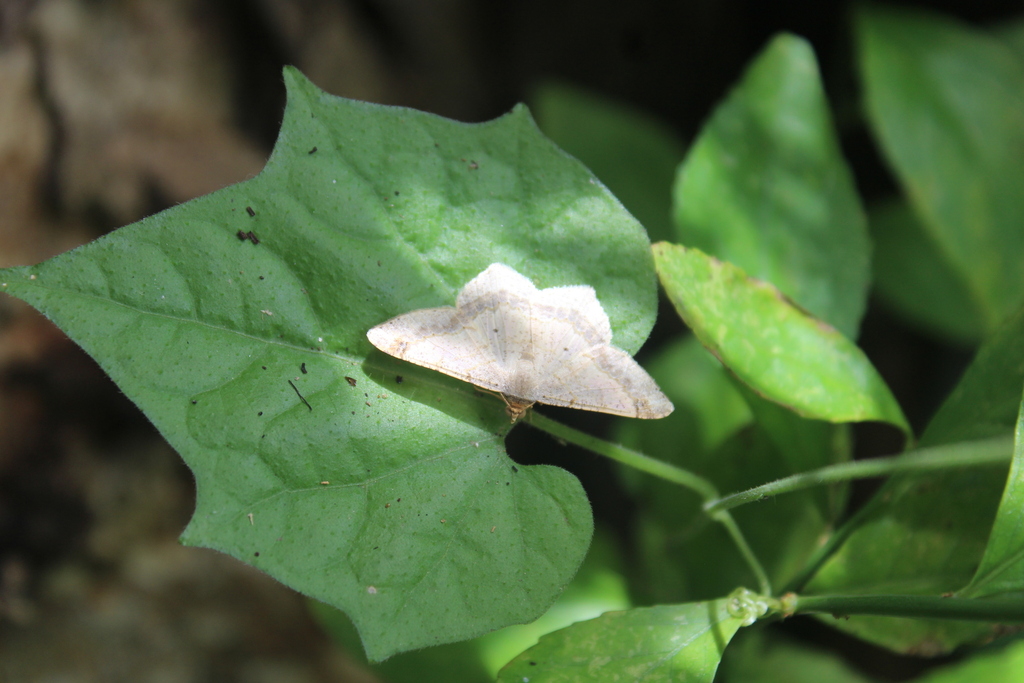
(c) Ricard Busquets Reverte, some rights reserved (CC BY) · licence
Family: Geometridae · Class: Insecta · Order: Lepidoptera
Psamatodes abydata (Dot-lined Angle) is a California animal in the Geometridae family.
The Dot-lined Angle is a geometrid moth in the subfamily Ennominae, tribe Macariini. This species exhibits the typical angular wing shape characteristic of geometrid moths, with forewings that display distinctive dot-like markings along the wing margins that give the species its common name. Adults have a moderate wingspan typical of mid-sized geometrids, with wings held horizontally when at rest in the characteristic geometrid posture. Psamatodes abydata has a broad distribution across the southern United States, ranging from Arizona eastward to Florida. The species regularly disperses northward from its core southern range, with documented occurrences extending to Colorado, Kentucky, and other northern states. This pattern of northward wandering suggests strong dispersal capabilities and tolerance for varied climatic conditions. Recent documentation includes records from New Mexico, where the species has been collected in Grant County at elevations around 5,200 feet in oak-juniper-walnut woodland habitats (2023 season summary). The species inhabits diverse woodland and forest ecosystems throughout its range. In the Southwest, it occurs in oak-juniper-walnut woodlands and oak-pinyon-juniper forests at moderate elevations. The species appears adaptable to various forest types across its broad geographic range, from southeastern pine forests to southwestern oak woodlands. Adults are attracted to ultraviolet lights, indicating nocturnal activity patterns typical of most geometrid moths. As with most geometrid moths, Dot-lined Angle larvae are likely caterpillars that feed on woody plants, though specific host plant relationships have not been well documented in the literature. The adults are active during warmer months, with collection records spanning from spring through fall depending on geographic location. In New Mexico, specimens have been documented from August through September, suggesting late summer flight periods in montane environments. The species' ability to wander far north of its typical range indicates strong flight capabilities and potentially multiple generations per year in southern portions of its range. Psamatodes abydata currently holds no federal or state conservation listing status. The species appears to maintain stable populations across its broad range, with regular documentation in lepidopteran surveys and citizen science projects. Its adaptability to diverse forest habitats and demonstrated dispersal capabilities suggest resilience to habitat fragmentation. However, like many forest-dependent moths, the species may face long-term challenges from habitat loss, forest management practices, and climate change effects on woodland ecosystems. The lack of detailed ecological studies limits assessment of population trends and specific conservation needs. Continued monitoring through moth surveys and citizen science initiatives provides valuable data on distribution patterns and seasonal activity for this widespread geometrid species.
Classification
Class: Insecta · Order: Lepidoptera · Family: Geometridae
Frequently asked questions
How is Psamatodes abydata classified?
Psamatodes abydata belongs to class Insecta, order Lepidoptera, family Geometridae.
What family does Psamatodes abydata belong to?
Psamatodes abydata is in the Geometridae family.
What is Psamatodes abydata?
The Dot-lined Angle is a geometrid moth in the subfamily Ennominae, tribe Macariini.
Is Psamatodes abydata found in California?
Yes. Psamatodes abydata is recorded in California in The California Species Project's catalogue.
Related species
Other California species in the same genus, family, or bioregion.
Data from The California Species Project — 14,000+ California species with verified data from CNPS, CDFW, USFWS, and more.