Pseudacris cadaverina
California Tree Frog
no rights reserved · CC0
Family: Hylidae · Class: Amphibia · Order: Anura
Pseudacris cadaverina (California Tree Frog) is a California animal in the Hylidae family.
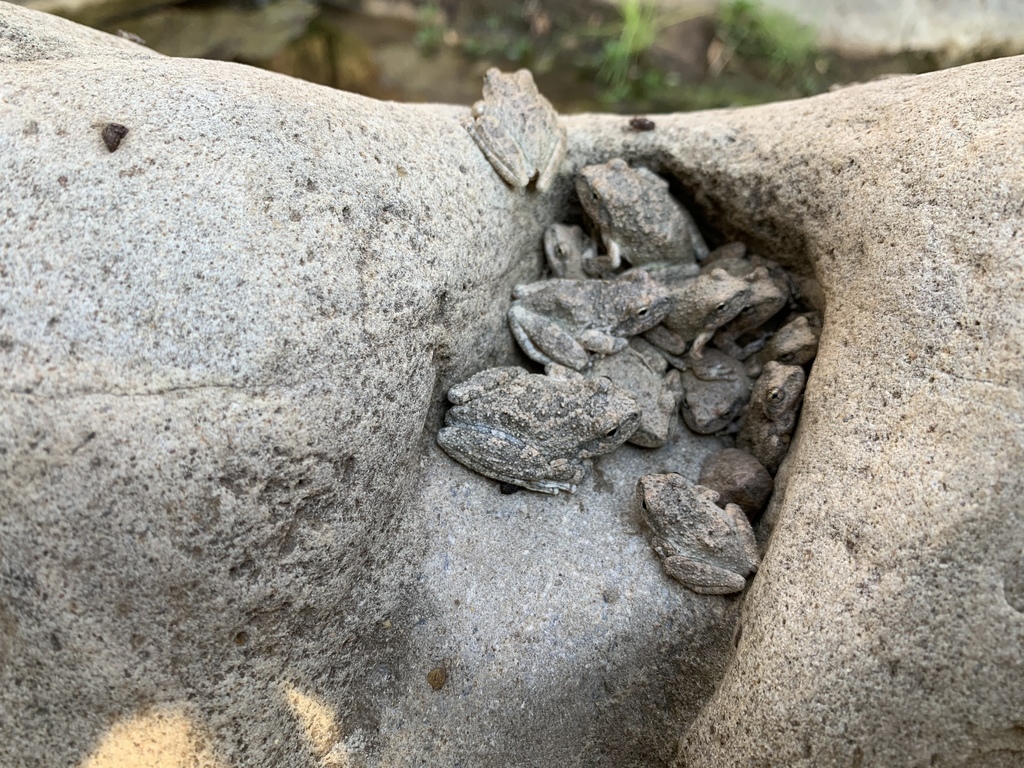
The California tree frog (Pseudacris cadaverina) is a small arboreal amphibian endemic to southern California and Baja California, Mexico. Adults measure 32 to 50 mm (1.3 to 2.0 inches) in snout-vent length, with females typically larger than males. The dorsal surface varies from gray to brown or green, often matching the color of surrounding granite or vegetation. A distinctive dark stripe extends from the nostril through the eye to the shoulder, bordered above by a light-colored line. The ventral surface is cream to white. Toe pads are well-developed and sticky, facilitating climbing on rocky surfaces and vegetation. The species occurs in mountainous regions of southern California, primarily in the Peninsular, Transverse, and southern Sierra Nevada ranges. The range extends from Riverside and San Bernardino counties south through San Diego County and into Baja California. Elevational distribution spans from near sea level to approximately 2,440 meters (8,000 feet), with populations documented in the Santa Ana, San Jacinto, Santa Rosa, Laguna, San Gabriel, and San Bernardino mountains. California tree frogs inhabit rocky streams, springs, and pools in chaparral, oak woodland, and pine-oak forest communities. The species shows strong association with granite boulder fields and rocky canyon bottoms where permanent or semi-permanent water sources exist. Adults are typically found on rocks, shrubs, or trees within 3 meters of water. Breeding sites include quiet pools in intermittent and permanent streams, often with sandy or rocky substrates and minimal flow. This species exhibits primarily nocturnal activity patterns, though individuals may be active during daylight hours in suitable microhabitats. Males establish territories near breeding sites and produce advertisement calls from January through August, with peak breeding activity from March through May. Females deposit 150 to 300 eggs in small clusters attached to vegetation or rocks in shallow water. Tadpoles develop over 2 to 4 months, depending on water temperature and availability. The diet consists primarily of small arthropods including flies, ants, beetles, and spiders, captured using a projectile tongue. The California tree frog currently lacks federal or state listing status, though populations face multiple threats across their range. Habitat degradation from urban development, water diversions, and recreational activities affects breeding sites and terrestrial habitats. Introduced predatory fish and American bullfrogs in some water bodies impact tadpole survival rates. Climate change poses additional risks through altered precipitation patterns and increased frequency of drought conditions. The fungal pathogen Batrachochytrium dendrobatidis has been detected in some populations, though infection rates and long-term impacts require further study. Water quality degradation from agricultural runoff and urban pollutants represents an ongoing concern for aquatic breeding habitats.
Classification
Class: Amphibia · Order: Anura · Family: Hylidae
Frequently asked questions
How is Pseudacris cadaverina classified?
Pseudacris cadaverina belongs to class Amphibia, order Anura, family Hylidae.
What family does Pseudacris cadaverina belong to?
Pseudacris cadaverina is in the Hylidae family.
What is Pseudacris cadaverina?
The California tree frog (Pseudacris cadaverina) is a small arboreal amphibian endemic to southern California and Baja California, Mexico.
Is Pseudacris cadaverina found in California?
Yes. Pseudacris cadaverina is recorded in California in The California Species Project's catalogue.
Related species
Other California species in the same genus, family, or bioregion.
Data from The California Species Project — 14,000+ California species with verified data from CNPS, CDFW, USFWS, and more.