Pseudacris regilla
Pacific Tree Frog
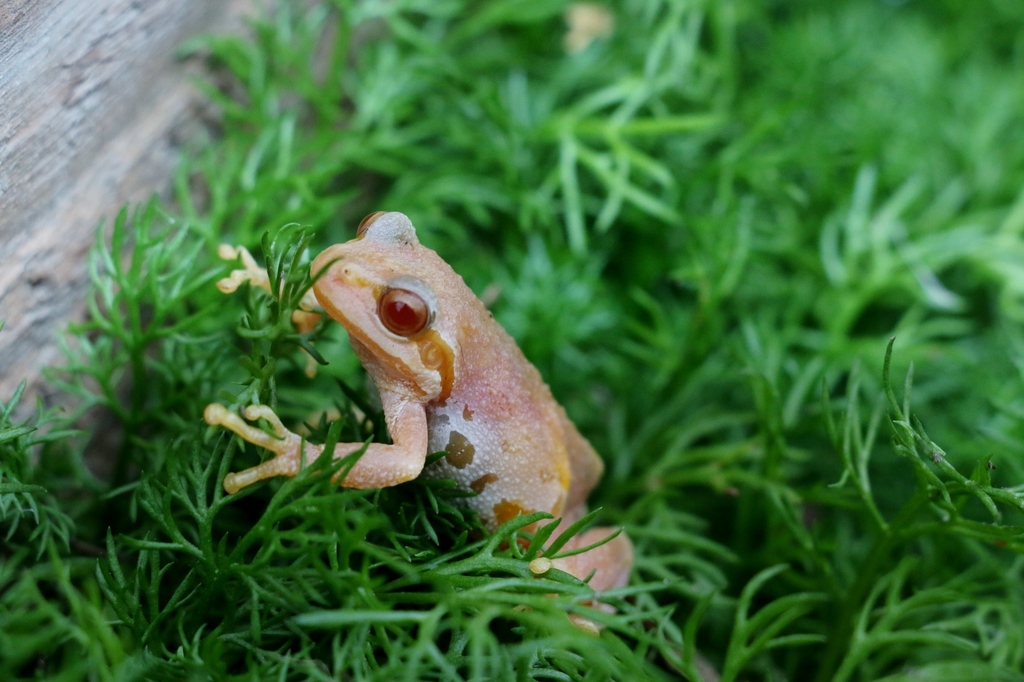
(c) brentnmoran, some rights reserved (CC BY-SA) · licence
Family: Hylidae · Class: Amphibia · Order: Anura
Pseudacris regilla (Pacific Tree Frog) is a California animal in the Hylidae family.
The Pacific tree frog (Pseudacris regilla), also known as the Pacific chorus frog, is a small amphibian native to western North America. Adults typically measure 19 to 51 mm (0.75 to 2.0 inches) in snout-vent length, with females generally larger than males. The species exhibits extensive color variation, ranging from bright green to brown, gray, or bronze, often matching their immediate surroundings. Most individuals display a distinctive dark stripe extending from the nostril through the eye to the shoulder, though this marking may be faint or absent in some populations. The ventral surface is typically cream-colored with yellow on the hind legs and groin area. Males develop a dark throat patch during breeding season and possess vocal sacs that expand when calling. Pacific tree frogs occur along the Pacific Coast from British Columbia to Baja California, extending inland through much of California, Oregon, Washington, Idaho, Nevada, and into western Montana. In California, the species is widely distributed from sea level to elevations exceeding 3,350 meters (11,000 feet) in the Sierra Nevada. They inhabit most counties throughout the state, with populations documented from coastal areas to alpine lakes and from urban environments to remote wilderness areas. This adaptable species occupies diverse habitats including riparian woodlands, chaparral, grasslands, agricultural areas, suburban gardens, and coniferous forests. Pacific tree frogs require access to standing or slow-moving water for reproduction, utilizing ponds, lakes, streams, marshes, stock tanks, and even temporary pools created by rainfall. Adults are semi-arboreal, using their adhesive toe pads to climb vegetation, rocks, and human structures. They seek shelter under logs, rocks, bark, and in vegetation during dry periods. Pacific tree frogs are primarily nocturnal and carnivorous, feeding on insects, spiders, and other small invertebrates. Their diet includes flies, beetles, moths, ants, and mosquitoes, which they capture using their sticky tongues. Breeding occurs from November through July, depending on elevation and local climate conditions. Males establish territories near water sources and produce the species' characteristic two-part call consisting of a "kreck-ek" sound. Females lay 400 to 750 eggs in spherical masses attached to submerged vegetation. Tadpoles metamorphose in 2 to 4 months, though development time varies with water temperature and food availability. The Pacific tree frog is not federally listed and maintains stable populations throughout most of its range. The species demonstrates considerable resilience to habitat modification and climate variation. However, local populations may face threats from habitat loss due to urban development, agricultural practices, and water diversions. Introduced predators such as bullfrogs and non-native fish species can impact breeding success in some locations. Climate change may affect breeding timing and tadpole development, particularly in mountain populations where snowpack and precipitation patterns are shifting. Despite these localized concerns, the species' broad habitat tolerance and large geographic range contribute to its overall population stability.
Classification
Class: Amphibia · Order: Anura · Family: Hylidae
Frequently asked questions
How is Pseudacris regilla classified?
Pseudacris regilla belongs to class Amphibia, order Anura, family Hylidae.
What family does Pseudacris regilla belong to?
Pseudacris regilla is in the Hylidae family.
What is Pseudacris regilla?
The Pacific tree frog (Pseudacris regilla), also known as the Pacific chorus frog, is a small amphibian native to western North America.
Is Pseudacris regilla found in California?
Yes. Pseudacris regilla is recorded in California in The California Species Project's catalogue.
Related species
Other California species in the same genus, family, or bioregion.
Data from The California Species Project — 14,000+ California species with verified data from CNPS, CDFW, USFWS, and more.