Pseudacris sierra
Sierran Treefrog
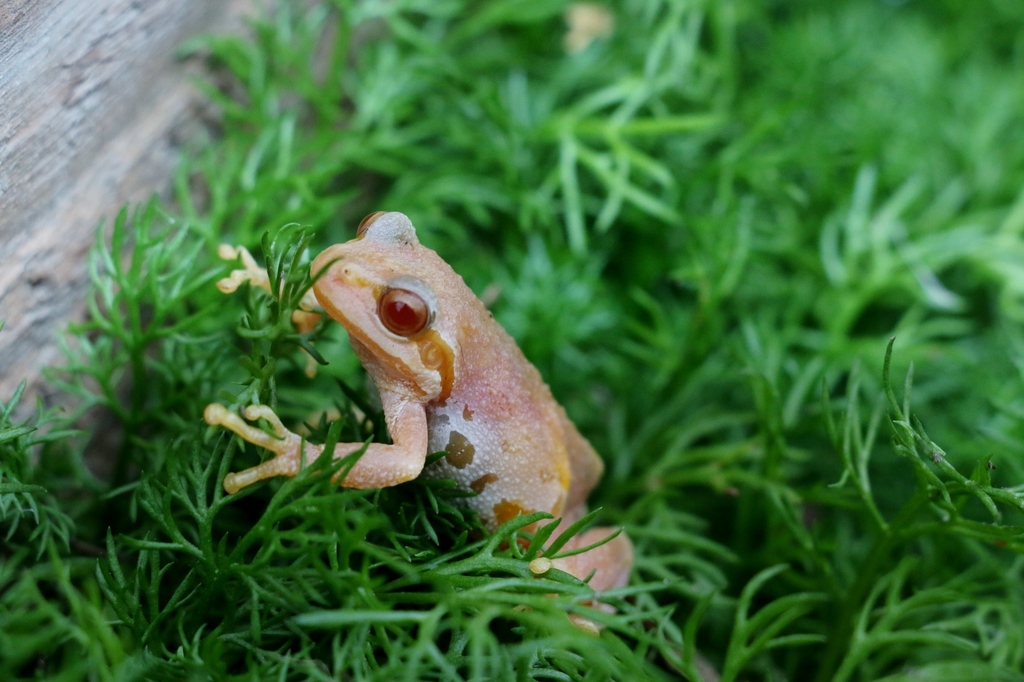
(c) brentnmoran, some rights reserved (CC BY-SA) · licence
Family: Hylidae · Class: Amphibia · Order: Anura
Pseudacris sierra (Sierran Treefrog) is a California animal in the Hylidae family.
The Sierran treefrog (Pseudacris sierra) is a small arboreal amphibian endemic to the Sierra Nevada mountain range of California and western Nevada. Adults measure 19 to 50 mm (0.75 to 2.0 inches) in snout-to-vent length, with females typically larger than males. The species exhibits variable coloration, ranging from bright green to brown, gray, or pink, with the ability to change color based on temperature, humidity, and background. A distinctive dark stripe extends from the nostril through the eye to the shoulder, often continuing as a broken line along the flank. The ventral surface is cream to white, and the toes possess well-developed adhesive pads that facilitate climbing on smooth surfaces including vegetation and rocks. The Sierran treefrog occurs throughout the Sierra Nevada from Shasta County south to Tulare County, at elevations ranging from approximately 150 meters (500 feet) in the foothills to 2,400 meters (7,900 feet) in subalpine zones. The species also extends into western Nevada along the eastern Sierra slope. According to recent taxonomic revisions by Recuero et al. (2006) and Barrow et al. (2014), populations previously considered Pacific treefrogs (Pseudacris regilla) were recognized as a distinct species based on genetic and morphological differences. NatureServe identifies this species as having a global conservation rank of G5 (secure) due to its wide distribution and stable populations. This species inhabits diverse habitats including riparian woodlands, oak savannas, chaparral, mixed conifer forests, and meadow edges. Breeding occurs in shallow, still or slow-moving water bodies such as ponds, pools in intermittent streams, cattle troughs, and flooded meadows. Adults require nearby vegetation for foraging and shelter, utilizing trees, shrubs, and herbaceous plants. The species demonstrates considerable habitat flexibility, adapting to elevations from hot, dry foothills to cool montane environments. Suitable breeding habitat must remain inundated for at least two months to allow complete tadpole development. Sierran treefrogs are primarily nocturnal, becoming active at dusk to forage for small arthropods including flies, mosquitoes, beetles, ants, and spiders. Males produce advertisement calls from vegetation near breeding sites, typically from February through July depending on elevation and snowmelt timing. The call consists of a series of short, harsh notes described as a kreck-ek sound that can be heard up to 100 meters away. Females deposit 400 to 750 eggs in small clusters of 10 to 70 eggs each, attached to vegetation or substrate in shallow water. Tadpoles develop over 45 to 100 days depending on water temperature, with metamorphosis occurring from May through September at higher elevations. The Sierran treefrog currently lacks federal or state conservation status designations and maintains stable populations throughout most of its range. The California Department of Fish and Wildlife does not list this species as a species of special concern. However, localized threats include habitat loss from urban development in foothill areas, water diversions affecting breeding habitat, and potential impacts from climate change altering precipitation patterns and snowpack duration. Introduced predators such as non-native fish, American bullfrogs, and crayfish may affect some populations, particularly in permanent water bodies. Chytrid fungus (Batrachochytrium dendrobatidis) has been detected in some Sierra Nevada amphibian populations, though impacts on this species appear minimal. The species benefits from its broad ecological tolerance and use of both natural and artificial water sources, contributing to its overall population stability across the Sierra Nevada ecosystem.
Classification
Class: Amphibia · Order: Anura · Family: Hylidae
Frequently asked questions
How is Pseudacris sierra classified?
Pseudacris sierra belongs to class Amphibia, order Anura, family Hylidae.
What family does Pseudacris sierra belong to?
Pseudacris sierra is in the Hylidae family.
What is Pseudacris sierra?
The Sierran treefrog (Pseudacris sierra) is a small arboreal amphibian endemic to the Sierra Nevada mountain range of California and western Nevada.
Is Pseudacris sierra found in California?
Yes. Pseudacris sierra is recorded in California in The California Species Project's catalogue.
Related species
Other California species in the same genus, family, or bioregion.
Data from The California Species Project — 14,000+ California species with verified data from CNPS, CDFW, USFWS, and more.