Pseudochelaria scabrella
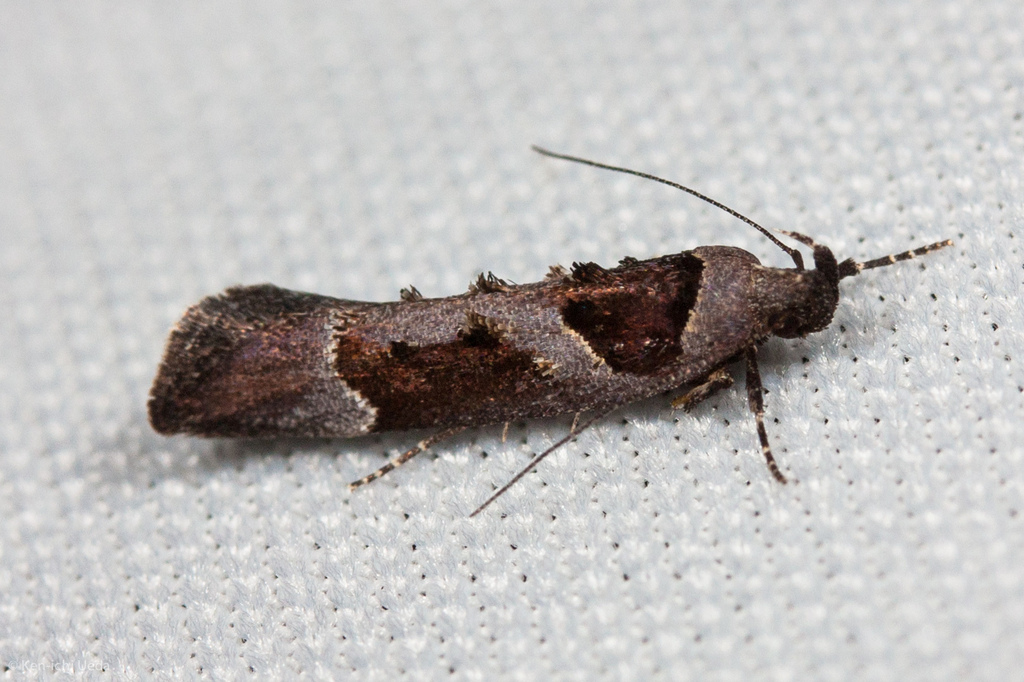
(c) Ken-ichi Ueda, some rights reserved (CC BY) · licence
Family: Gelechiidae · Class: Insecta · Order: Lepidoptera
Pseudochelaria scabrella is a California animal in the Gelechiidae family.
Pseudochelaria scabrella is a small moth in the family Gelechiidae, one of the largest families of microlepidoptera. Adult moths typically measure 8 to 12 millimeters (0.31 to 0.47 inches) in forewing length. The forewings are narrow and elongated, characteristic of gelechiid moths, with a mottled brown and gray coloration that provides effective camouflage against bark and dried plant material. The hindwings are pale gray to whitish with long, hair-like fringes extending beyond the wing margins. Males can be distinguished from females by their more feathery antennae and slightly smaller size. The distribution and range of Pseudochelaria scabrella remain poorly documented in the scientific literature. Like many microlepidoptera, this species likely has a limited geographic distribution, though specific locality records are scarce. The genus Pseudochelaria contains several described species, primarily from western North America, suggesting this species may occur in California or adjacent regions. Habitat requirements for Pseudochelaria scabrella are not well established in current literature. Most gelechiid moths are associated with specific host plants and occupy diverse habitats ranging from arid scrublands to montane forests. Many species in this family prefer areas with their larval host plants, which often include shrubs, herbaceous perennials, or trees. The specific elevation range and microhabitat preferences for this species require further field study and documentation. The life history and ecological behavior of Pseudochelaria scabrella follow the typical gelechiid pattern but lack detailed documentation. Adult moths are likely nocturnal, attracted to artificial lights during evening hours. Larvae probably feed as leaf miners, stem borers, or external feeders on specific host plants, though the larval food sources remain unknown. Most gelechiid species are univoltine, producing one generation per year, with adults emerging during specific seasonal windows that correspond to host plant phenology. Mating likely occurs through pheromone communication, with females releasing chemical attractants to draw males for reproduction. The conservation status of Pseudochelaria scabrella is currently unknown, as insufficient data exists to assess population trends or threats. Many microlepidoptera face conservation challenges due to habitat loss, climate change, and the inherent difficulty in detecting and monitoring small moth populations. The species is not listed under federal or state endangered species legislation, though this may reflect a lack of comprehensive surveys rather than population stability. Without basic ecological data, including host plant relationships and distribution patterns, conservation needs cannot be adequately assessed. Further taxonomic and ecological research is needed to determine the species' conservation requirements and develop appropriate management strategies if threats are identified.
Classification
Class: Insecta · Order: Lepidoptera · Family: Gelechiidae
Frequently asked questions
How is Pseudochelaria scabrella classified?
Pseudochelaria scabrella belongs to class Insecta, order Lepidoptera, family Gelechiidae.
What family does Pseudochelaria scabrella belong to?
Pseudochelaria scabrella is in the Gelechiidae family.
What is Pseudochelaria scabrella?
Pseudochelaria scabrella is a small moth in the family Gelechiidae, one of the largest families of microlepidoptera.
Is Pseudochelaria scabrella found in California?
Yes. Pseudochelaria scabrella is recorded in California in The California Species Project's catalogue.
Related species
Other California species in the same genus, family, or bioregion.
Data from The California Species Project — 14,000+ California species with verified data from CNPS, CDFW, USFWS, and more.