Pseudochorthippus curtipennis
Marsh meadow grasshopper
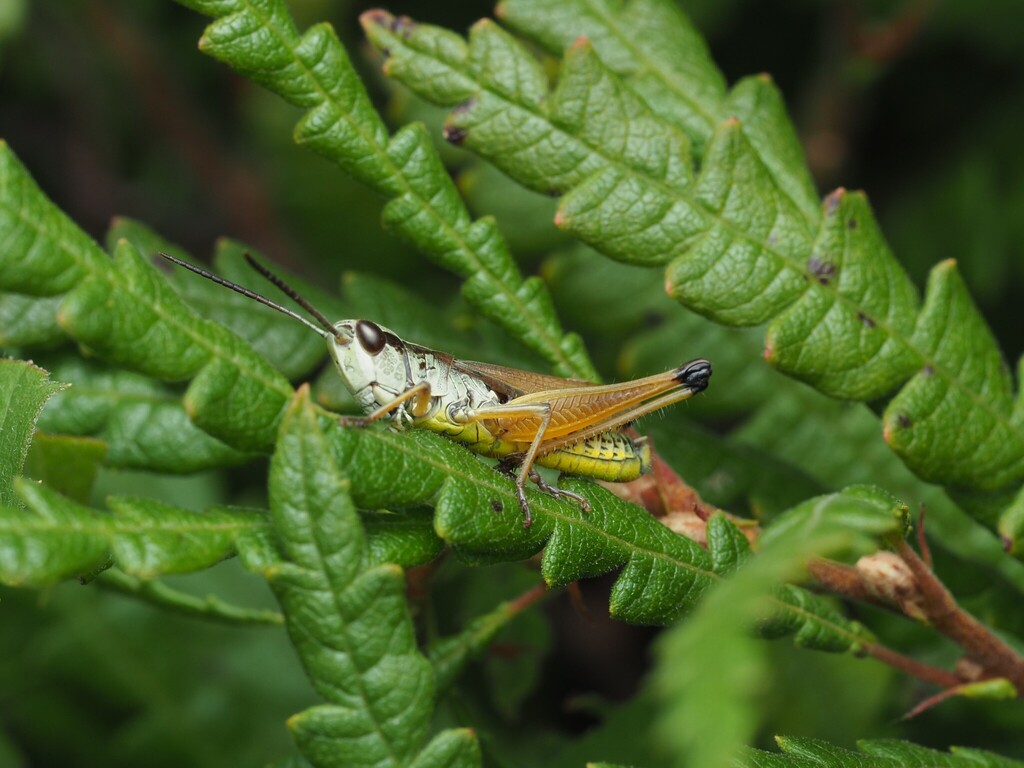
no rights reserved · CC0
Family: Acrididae · Class: Insecta · Order: Orthoptera
Pseudochorthippus curtipennis (Marsh meadow grasshopper) is a California animal in the Acrididae family.
The marsh meadow grasshopper (Pseudochorthippus curtipennis) is a small slant-faced grasshopper in the family Acrididae. Males measure 12-20 mm in length, while females are notably larger at 20-35 mm (BugGuide). This species is also known by the common names meadow grasshopper and short-winged brown grasshopper. As a member of the subfamily Gomphocerinae, it possesses the characteristic slanted face that distinguishes this group from other grasshoppers. The marsh meadow grasshopper has a broad distribution across North America (iNaturalist). The species exhibits subspecies variation, with at least two recognized forms: P. c. curtipennis and P. c. californicus, indicating geographic differentiation across its range. In California, this grasshopper occurs in suitable wetland habitats throughout the state, though specific county-level distribution data requires further documentation. True to its common name, this species is closely associated with marsh and wet meadow habitats. It inhabits freshwater wetlands including wet meadows, shallow emergent marshes, and areas where water levels fluctuate seasonally or annually. These wetland environments typically have salinity levels below 0.5 parts per thousand and may experience periodic drying in semi-arid regions. The vegetation in these habitats is often dynamic, shifting with changing water levels and seasonal patterns. Substrates range from mineral soils to organic soils, providing the diverse microhabitats that support grasshopper populations. As with most grasshoppers in the family Acrididae, the marsh meadow grasshopper is primarily herbivorous, feeding on grasses and other vegetation characteristic of wetland environments. The species exhibits typical grasshopper development with incomplete metamorphosis, progressing through egg, nymph, and adult stages. Adults are most commonly observed during the warmer months when they are active and reproductive. The pronounced sexual dimorphism in size, with females being significantly larger than males, is typical of many grasshopper species and relates to reproductive biology, as larger females can produce more eggs. The marsh meadow grasshopper appears to have stable populations across much of its range, with no current federal or state conservation listings. However, like many wetland-dependent species, it may face pressure from habitat loss and degradation as marshes and wet meadows are converted to other uses or altered by water management practices. Climate change may also affect the hydrological patterns that maintain suitable habitat conditions. The species' association with dynamic wetland environments that naturally experience fluctuating water levels may provide some resilience to environmental changes, though long-term monitoring would be valuable to assess population trends. The taxonomic history of this species includes previous classification under the genus Chorthippus, reflecting ongoing refinements in grasshopper systematics. Current molecular and morphological studies continue to clarify relationships within the slant-faced grasshopper group, contributing to our understanding of North American Orthoptera diversity.
Classification
Class: Insecta · Order: Orthoptera · Family: Acrididae
Frequently asked questions
How is Pseudochorthippus curtipennis classified?
Pseudochorthippus curtipennis belongs to class Insecta, order Orthoptera, family Acrididae.
What family does Pseudochorthippus curtipennis belong to?
Pseudochorthippus curtipennis is in the Acrididae family.
What is Pseudochorthippus curtipennis?
The marsh meadow grasshopper (Pseudochorthippus curtipennis) is a small slant-faced grasshopper in the family Acrididae.
Is Pseudochorthippus curtipennis found in California?
Yes. Pseudochorthippus curtipennis is recorded in California in The California Species Project's catalogue.
Related species
Other California species in the same genus, family, or bioregion.
Data from The California Species Project — 14,000+ California species with verified data from CNPS, CDFW, USFWS, and more.