Pseudocopaeodes eunus eunus
Alkali Skipper
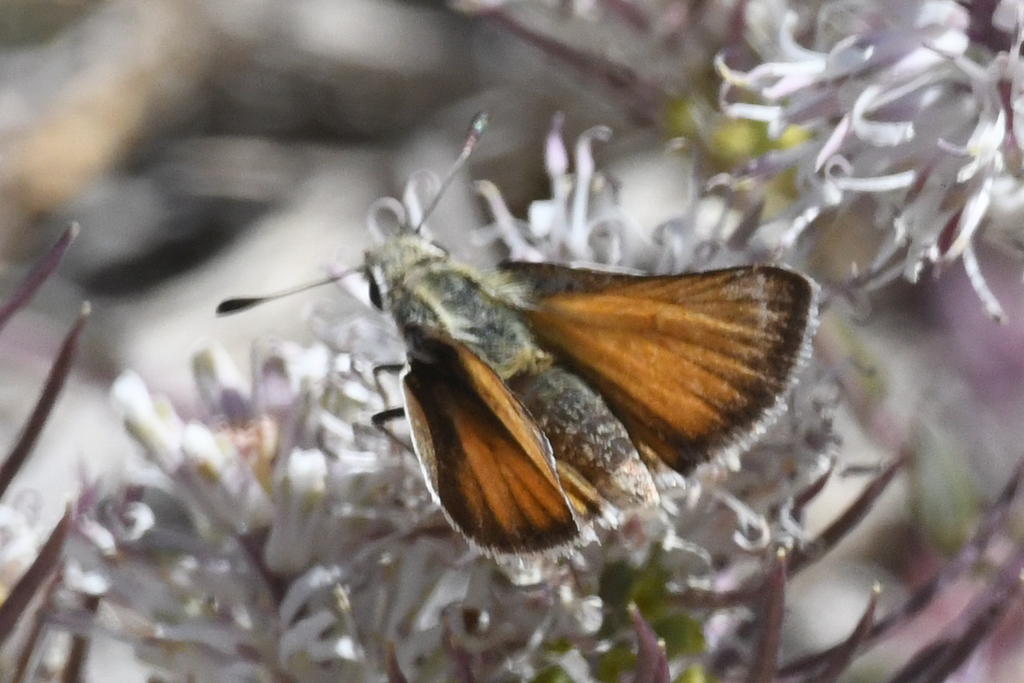
(c) Trevor Van Loon, some rights reserved (CC BY) · licence
Family: Hesperiidae · Class: Insecta · Order: Lepidoptera
Conservation status: G3T2 S2
Pseudocopaeodes eunus eunus (Alkali Skipper) is a California animal in the Hesperiidae family.
The Alkali Skipper (Pseudocopaeodes eunus eunus) is a small butterfly subspecies within the grass skipper family Hesperiidae. Adults have a wingspan of approximately 22 to 28 mm (0.87 to 1.1 inches), with males typically smaller than females. The dorsal wing surfaces are predominantly orange-brown to tawny, with dark brown borders and scattered dark spots. Males possess a distinctive dark stigma or scent patch on the forewings. The ventral wing surfaces are paler, displaying cream to light yellow coloration with small white spots arranged in irregular patterns. The antennae are short with orange clubs tipped in black. This subspecies is endemic to California, where it occurs in highly fragmented populations within the Central Valley and adjacent foothills. Historical records document populations from Kern, Tulare, Fresno, Merced, San Joaquin, Stanislaus, and Contra Costa counties. Current populations are restricted to isolated patches of suitable habitat, primarily in the southern San Joaquin Valley and scattered locations in the Sacramento Valley. The species has experienced significant range contraction due to habitat conversion and degradation. Alkali Skipper inhabits alkaline and saline wetland margins, including alkali meadows, salt grass flats, and edges of seasonal pools. The species requires areas with elevated soil salinity levels that support specialized plant communities. Typical habitat occurs at elevations below 300 meters (984 feet) in valley floor locations. Adults are closely associated with stands of their host plant, saltgrass (Distichlis spicata), which grows in dense patches on alkaline soils with seasonal moisture patterns. Adults are active from late April through September, with peak flight periods occurring from May to July. The species exhibits multiple broods per year in favorable conditions. Males engage in territorial behavior, perching on low vegetation near host plants and pursuing passing insects. Females deposit eggs singly on or near saltgrass blades. Larvae feed exclusively on saltgrass, creating silk shelters within the grass clumps. The species overwinters as larvae in the grass tussocks. Adults nectar on various flowers including alkali goldenbush (Isocoma acradenia), alkali heath (Frankenia salina), and introduced species like alfalfa. The Alkali Skipper receives no federal listing protection but maintains a Global/State conservation rank of G3T2 S2, indicating the subspecies is vulnerable to extirpation. The restricted distribution and specialized habitat requirements make this subspecies particularly susceptible to environmental changes. Primary threats include agricultural conversion of alkaline wetlands, urban development, water diversions that alter soil moisture regimes, and invasive plant species that displace native vegetation. Remaining habitat fragments are often small and isolated, limiting population viability. Conservation efforts focus on protecting existing alkaline wetland remnants and managing water levels to maintain appropriate salinity conditions for saltgrass communities.
Classification
Class: Insecta · Order: Lepidoptera · Family: Hesperiidae
Conservation status
G3T2 S2
Frequently asked questions
How is Pseudocopaeodes eunus eunus classified?
Pseudocopaeodes eunus eunus belongs to class Insecta, order Lepidoptera, family Hesperiidae.
What family does Pseudocopaeodes eunus eunus belong to?
Pseudocopaeodes eunus eunus is in the Hesperiidae family.
Is Pseudocopaeodes eunus eunus protected or of conservation concern?
Pseudocopaeodes eunus eunus carries the following status: G3T2 S2.
What is Pseudocopaeodes eunus eunus?
The Alkali Skipper (Pseudocopaeodes eunus eunus) is a small butterfly subspecies within the grass skipper family Hesperiidae.
Is Pseudocopaeodes eunus eunus found in California?
Yes. Pseudocopaeodes eunus eunus is recorded in California in The California Species Project's catalogue.
Related species
Other California species in the same genus, family, or bioregion.
Data from The California Species Project — 14,000+ California species with verified data from CNPS, CDFW, USFWS, and more.