Pseudocopaeodes eunus obscurus
Carson wandering skipper
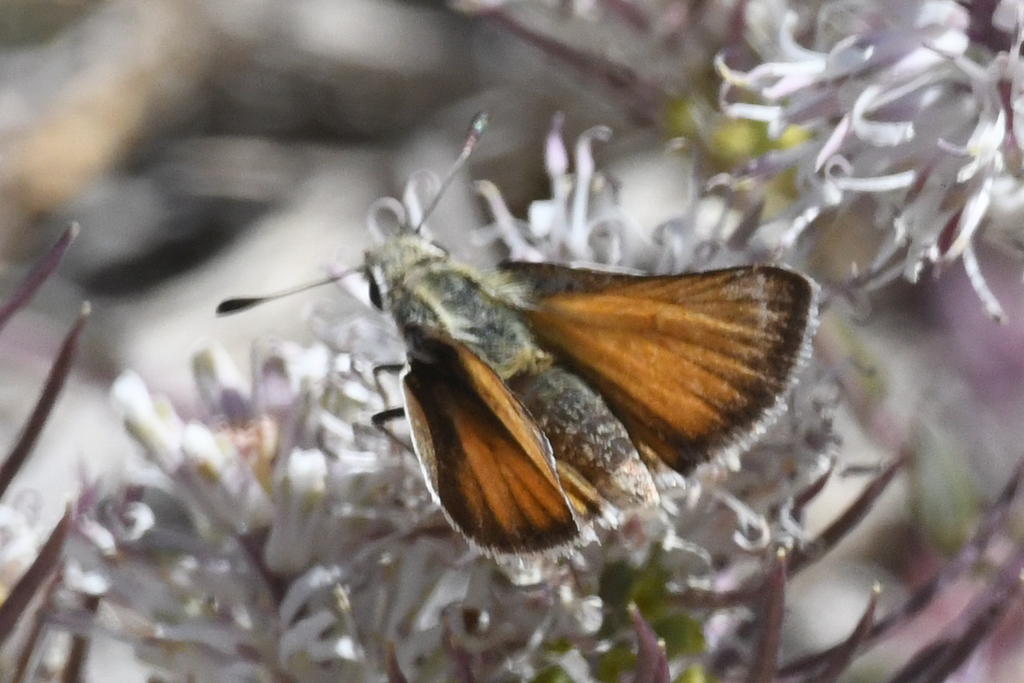
(c) Trevor Van Loon, some rights reserved (CC BY) · licence
Family: Hesperiidae · Class: Insecta · Order: Lepidoptera
Conservation status: Endangered · G3T1 S2
Pseudocopaeodes eunus obscurus (Carson wandering skipper) is a California animal in the Hesperiidae family.
The Carson wandering skipper is a small butterfly subspecies with a wingspan of approximately 20 to 25 mm (0.8 to 1.0 inches). Males display orange-brown forewings with dark borders and a distinctive dark stigma, while females are typically darker with more subdued coloration. The hindwings of both sexes are pale orange to tan with lighter veining. The subspecies can be distinguished from the nominate subspecies Pseudocopaeodes eunus eunus by its generally darker coloration and smaller size, adaptations to its specialized alkaline habitat. The Carson wandering skipper is currently known from only two populations: one in Washoe County, Nevada, and one in Lassen County, California. This extremely limited distribution represents a significant range restriction from historical records. The subspecies was first described in 1998 by Austin and J. Emmel, highlighting its recent taxonomic recognition. The California population occurs in the northeastern portion of the state, while the Nevada population is located in the western part of that state. This subspecies inhabits specialized grassland habitats characterized by alkaline substrates. These unique alkaline meadow systems support distinct plant communities adapted to high soil pH and salt concentrations. The Carson wandering skipper requires specific microhabitat conditions including native grass communities and adequate soil moisture levels. These alkaline grasslands typically occur at elevations between 1,200 and 1,500 meters (4,000 to 5,000 feet) in intermountain basin settings. The Carson wandering skipper exhibits typical hesperiid behavior, with adults active during warm, sunny periods from late spring through early fall. Males establish territories and engage in perching behavior to locate females for mating. The species likely has multiple generations per year in suitable conditions. Larvae feed on native grasses adapted to alkaline conditions, though specific host plant relationships require further documentation. Adults nectar on various wildflowers present in their alkaline meadow habitat. The U.S. Fish and Wildlife Service listed the Carson wandering skipper as endangered under the Endangered Species Act on August 31, 2002 (67 FR 55978). The subspecies faces multiple conservation challenges including livestock grazing that can alter habitat structure and plant community composition. Off-road vehicle activity poses direct threats through habitat disturbance and soil compaction. Encroaching development and gas and geothermal development projects threaten remaining habitat areas. Changes in the water table, whether from drought conditions or human water diversions, can alter the delicate hydrological balance required for alkaline meadow ecosystems. Pesticide drift from agricultural operations may impact both adult butterflies and their larval host plants. Non-native plant invasion represents an additional threat by altering plant community structure and potentially displacing native host plants. The species' extremely small population size and limited distribution make it particularly vulnerable to stochastic events and genetic bottlenecks. Conservation efforts focus on habitat protection, threat mitigation, and population monitoring to prevent extinction of this rare subspecies.
Classification
Class: Insecta · Order: Lepidoptera · Family: Hesperiidae
Conservation status
Endangered · G3T1 S2
Frequently asked questions
How is Pseudocopaeodes eunus obscurus classified?
Pseudocopaeodes eunus obscurus belongs to class Insecta, order Lepidoptera, family Hesperiidae.
What family does Pseudocopaeodes eunus obscurus belong to?
Pseudocopaeodes eunus obscurus is in the Hesperiidae family.
Is Pseudocopaeodes eunus obscurus protected or of conservation concern?
Pseudocopaeodes eunus obscurus carries the following status: Endangered · G3T1 S2.
What is Pseudocopaeodes eunus obscurus?
The Carson wandering skipper is a small butterfly subspecies with a wingspan of approximately 20 to 25 mm (0.8 to 1.0 inches).
Is Pseudocopaeodes eunus obscurus found in California?
Yes. Pseudocopaeodes eunus obscurus is recorded in California in The California Species Project's catalogue.
Related species
Other California species in the same genus, family, or bioregion.
Data from The California Species Project — 14,000+ California species with verified data from CNPS, CDFW, USFWS, and more.