Pseudohemihyalea edwardsii
Edwards' Glassy-wing Moth
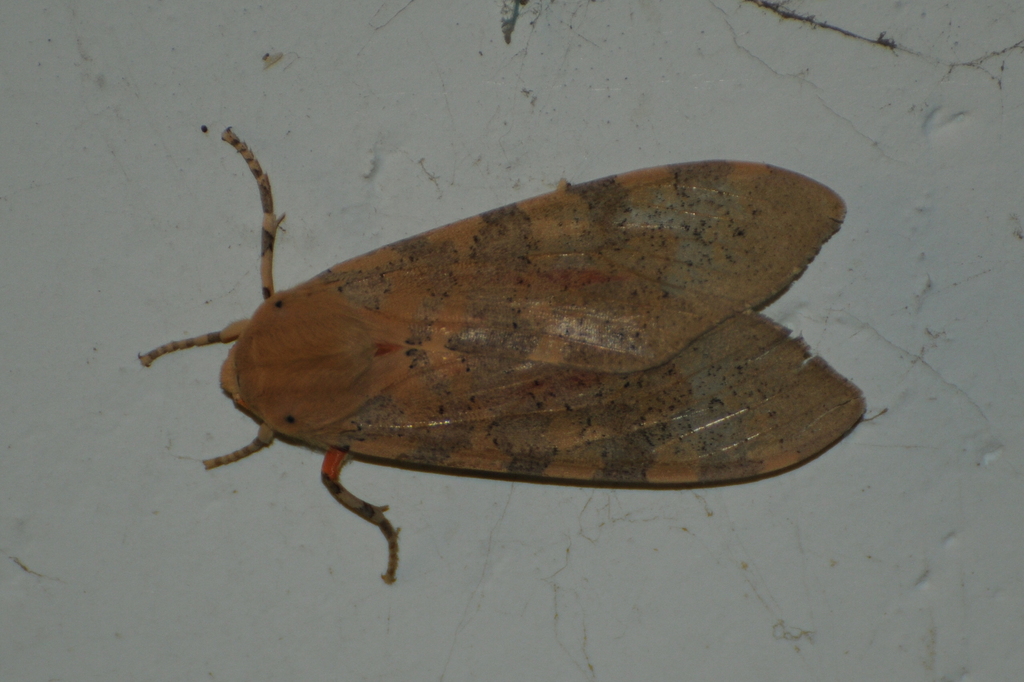
(c) Hawk T., some rights reserved (CC BY) · licence
Family: Erebidae · Class: Insecta · Order: Lepidoptera
Pseudohemihyalea edwardsii (Edwards' Glassy-wing Moth) is a California animal in the Erebidae family.
Edwards' Glassy-wing Moth is a medium-sized moth in the family Erebidae, subfamily Arctiinae. Adults display the characteristic wing transparency that gives the species its common name, with forewings showing translucent or glassy patches. The moth exhibits the typical arctiid body structure with a robust thorax and relatively broad wings. Sexual dimorphism is present, though specific morphological differences between males and females have not been extensively documented in the literature. The species ranges from western Oregon south through California, extending eastward into Arizona and southwestern New Mexico. This distribution pattern places Edwards' Glassy-wing Moth within the southwestern United States, primarily in regions characterized by Mediterranean and semi-arid climates. The moth appears to be absent from the Pacific Northwest's wetter coastal regions and the eastern United States. Within California, the species likely occurs in multiple counties, though specific distributional records require additional documentation. Edwards' Glassy-wing Moth inhabits areas that support its larval development requirements, typically associated with regions containing appropriate host plants. The species appears to favor lower to middle elevation habitats, consistent with its southwestern distribution pattern. Specific elevation ranges and microhabitat preferences have not been thoroughly documented, representing a significant gap in current ecological knowledge of this species. Life history information for Pseudohemihyalea edwardsii remains limited in the scientific literature. Like other arctiid moths, larvae likely feed on herbaceous plants, though specific host plant associations have not been definitively established. Adult flight periods, mating behaviors, and larval development timing require further study. The species presumably overwinters in the larval or pupal stage, following typical patterns observed in related southwestern arctiids. Adults are likely attracted to artificial lights at night, as documented for most nocturnal moth species. Edwards' Glassy-wing Moth does not currently hold federal or state conservation status in California or other states within its range. The species appears on Species of Greatest Conservation Need lists for Arkansas and New Mexico, indicating some regional conservation concern (BugGuide). However, these listings may reflect data deficiency rather than confirmed population decline. The moth's conservation status remains poorly understood due to limited population monitoring and ecological research. Primary potential threats likely include habitat modification and urbanization within its southwestern range, though specific threat assessments have not been conducted. Climate change may pose additional challenges, particularly given the species' apparent restriction to specific climatic zones in the southwestern United States. Scientific documentation for Edwards' Glassy-wing Moth remains limited despite its inclusion in regional species inventories. Additional research is needed to establish host plant relationships, population trends, and specific habitat requirements. Field studies documenting flight periods, larval ecology, and distribution patterns would significantly enhance understanding of this southwestern species.
Classification
Class: Insecta · Order: Lepidoptera · Family: Erebidae
Frequently asked questions
How is Pseudohemihyalea edwardsii classified?
Pseudohemihyalea edwardsii belongs to class Insecta, order Lepidoptera, family Erebidae.
What family does Pseudohemihyalea edwardsii belong to?
Pseudohemihyalea edwardsii is in the Erebidae family.
What is Pseudohemihyalea edwardsii?
Edwards' Glassy-wing Moth is a medium-sized moth in the family Erebidae, subfamily Arctiinae.
Is Pseudohemihyalea edwardsii found in California?
Yes. Pseudohemihyalea edwardsii is recorded in California in The California Species Project's catalogue.
Related species
Other California species in the same genus, family, or bioregion.
Data from The California Species Project — 14,000+ California species with verified data from CNPS, CDFW, USFWS, and more.