Pseudomyrmex apache
Apache Twig Ant
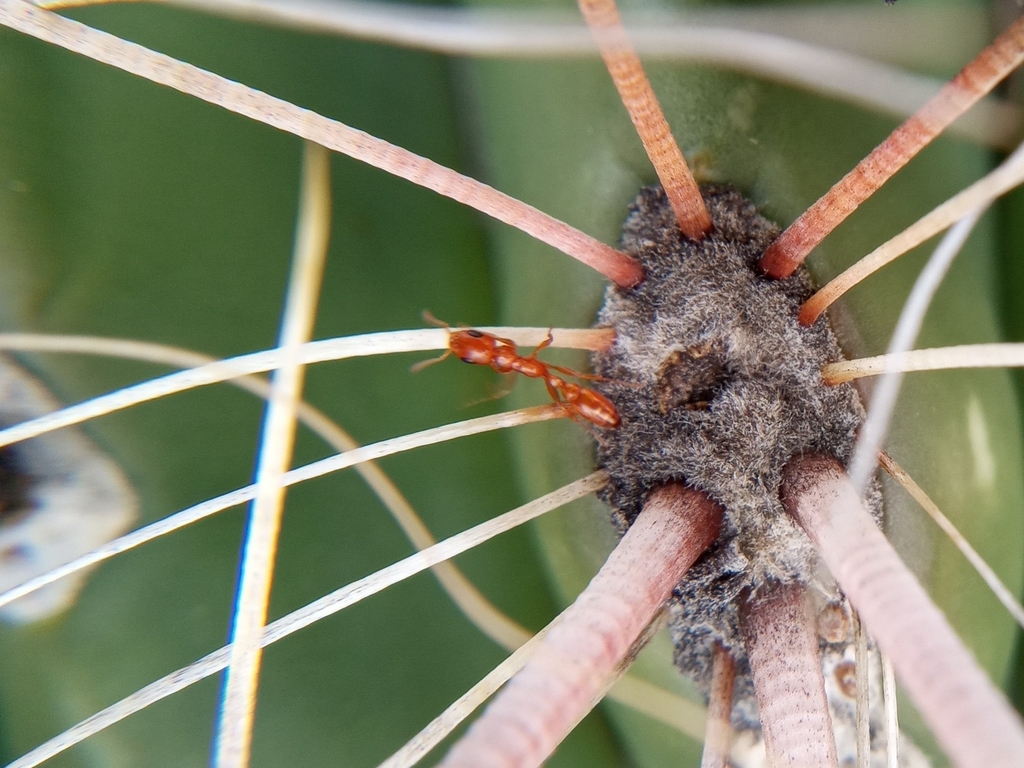
(c) Jake Nitta, some rights reserved (CC BY) · licence
Family: Formicidae · Class: Insecta · Order: Hymenoptera
Pseudomyrmex apache (Apache Twig Ant) is a California animal in the Formicidae family.
The Apache twig ant (Pseudomyrmex apache) is a medium-sized ant species measuring approximately 5 mm in length. Workers and females display the characteristic elongated body form typical of the subfamily Pseudomyrmecinae, with a slender build adapted for life in narrow spaces within plant stems and twigs. The species exhibits the reddish-brown to dark brown coloration common among southwestern twig ants, with relatively large eyes and long antennae that aid in navigation through confined spaces. Pseudomyrmex apache occurs primarily in the southwestern United States, with documented populations in Arizona and New Mexico. Specimens have been collected from multiple locations in Arizona, including Agua Fria National Monument in Yavapai County and Madera Canyon in southern Arizona (BugGuide 2019-2020). The species' range extends into New Mexico, where it was historically documented during early myrmecological surveys of the Trans-Pecos region (Wheeler 1905). Current California records for this species are not well documented in available literature. This species inhabits riparian zones and desert areas at moderate elevations, typically around 1,000 meters. Collections from Agua Fria National Monument were made in riparian habitat at 1,004 meters elevation (BugGuide 2019-2020). The ant appears to favor areas with suitable woody plant material for nesting, consistent with the ecology of other Pseudomyrmex species that utilize hollow plant stems and dead wood for colony establishment. The species has been documented in both desert scrub and riparian woodland environments. Like other members of the genus Pseudomyrmex, P. apache likely nests in hollow twigs, dead wood, and plant stems. The elongated body form is an adaptation for navigating the narrow galleries these ants excavate or occupy within woody plant material. Workers are presumed to be omnivorous, foraging for small arthropods, nectar, and plant exudates. Colony structure and reproductive biology follow typical patterns for the genus, with queens establishing new colonies in suitable hollow plant material. Seasonal activity patterns appear to peak during warmer months, with collections documented from May through September. Pseudomyrmex apache does not currently hold federal or state conservation status. The species appears to have a relatively restricted range within the southwestern United States, but population trends and conservation needs have not been formally assessed. Limited recent collection records may reflect either natural rarity or insufficient survey effort rather than population decline. The species' dependence on riparian and desert woodland habitats suggests potential vulnerability to habitat modification, particularly in riparian areas subject to water management and development pressures. Climate change impacts on southwestern ecosystems may also affect suitable habitat availability for this and other desert-adapted ant species. Scientific documentation for this species remains limited compared to more widespread ant species. Additional research on population distribution, habitat requirements, and ecological relationships would enhance understanding of this southwestern endemic.
Classification
Class: Insecta · Order: Hymenoptera · Family: Formicidae
Frequently asked questions
How is Pseudomyrmex apache classified?
Pseudomyrmex apache belongs to class Insecta, order Hymenoptera, family Formicidae.
What family does Pseudomyrmex apache belong to?
Pseudomyrmex apache is in the Formicidae family.
What is Pseudomyrmex apache?
The Apache twig ant (Pseudomyrmex apache) is a medium-sized ant species measuring approximately 5 mm in length.
Is Pseudomyrmex apache found in California?
Yes. Pseudomyrmex apache is recorded in California in The California Species Project's catalogue.
Related species
Other California species in the same genus, family, or bioregion.
Data from The California Species Project — 14,000+ California species with verified data from CNPS, CDFW, USFWS, and more.