Pseudorthodes puerilis
The Puerilis Moth
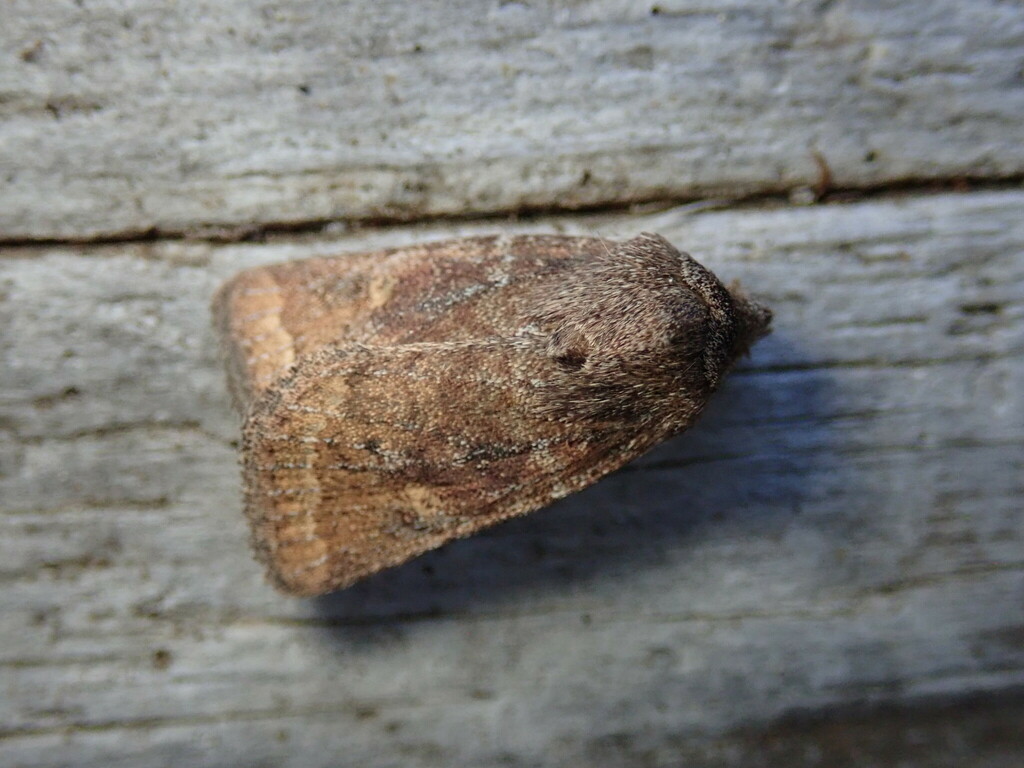
(c) Cricket Raspet, some rights reserved (CC BY) · licence
Family: Noctuidae · Class: Insecta · Order: Lepidoptera
Pseudorthodes puerilis (The Puerilis Moth) is a California animal in the Noctuidae family.
The Puerilis Moth (Pseudorthodes puerilis) is a small noctuid moth in the family Noctuidae, subfamily Noctuinae, tribe Eriopygini. Adults display a wingspan of 24.0 to 27.0 mm based on documented specimens from California (BugGuide). The forewings are typically brownish with distinctive double transverse lines and a pale reniform spot. The subterminal line appears pale and relatively straight, distinguishing this species from the closely related Pseudorthodes irrorata, which exhibits bolder transverse lines and an irregular subterminal line. No orbicular or claviform spots are visible on the forewings. Pseudorthodes puerilis ranges from British Columbia south to approximately Los Angeles, California (BugGuide). Within California, documented occurrences include San Benito County, where multiple specimens have been collected near Aromas. The species appears to have a primarily coastal distribution pattern, though the full extent of its California range requires further documentation. The species inhabits coastal environments, particularly live oak and chaparral habitats (BugGuide). Documented collection sites in San Benito County feature live oak-chaparral vegetation associations, suggesting this moth may be associated with oak woodland ecosystems. The specific microhabitat requirements and elevational preferences of this species have not been well documented in the scientific literature. Adults are nocturnal and attracted to black light and mercury vapor traps, indicating typical noctuid behavior patterns. In California, flight period extends from March through October, with documented collection dates including June and August specimens from San Benito County (BugGuide). Northern populations begin their flight season later than southern California populations. Larval host plants, feeding behavior, and reproductive ecology remain undocumented in available scientific literature. The species has been confirmed through DNA barcoding analysis using the Barcode of Life Database (BOLD), providing molecular verification of taxonomic identification. Pseudorthodes puerilis lacks formal conservation status at federal or state levels. The species does not appear on U.S. Fish and Wildlife Service threatened or endangered species lists, California Department of Fish and Wildlife special concern lists, or international conservation assessments as of December 2025. Population trends and conservation threats have not been systematically assessed. The limited number of documented occurrences may reflect either genuine rarity or insufficient survey effort for this nocturnal species. Habitat loss in coastal California oak woodlands and chaparral ecosystems could potentially affect this species, though specific threats have not been identified or studied. Scientific documentation for this species remains limited despite its presence in taxonomic databases and photographic records. Additional research is needed to determine host plant relationships, larval ecology, population status, and habitat requirements. The species' apparent association with oak-chaparral habitats suggests potential vulnerability to ongoing habitat conversion in coastal California, though formal threat assessment has not been conducted.
Classification
Class: Insecta · Order: Lepidoptera · Family: Noctuidae
Frequently asked questions
How is Pseudorthodes puerilis classified?
Pseudorthodes puerilis belongs to class Insecta, order Lepidoptera, family Noctuidae.
What family does Pseudorthodes puerilis belong to?
Pseudorthodes puerilis is in the Noctuidae family.
What is Pseudorthodes puerilis?
The Puerilis Moth (Pseudorthodes puerilis) is a small noctuid moth in the family Noctuidae, subfamily Noctuinae, tribe Eriopygini.
Is Pseudorthodes puerilis found in California?
Yes. Pseudorthodes puerilis is recorded in California in The California Species Project's catalogue.
Related species
Other California species in the same genus, family, or bioregion.
Data from The California Species Project — 14,000+ California species with verified data from CNPS, CDFW, USFWS, and more.