Pseudosciaphila duplex
Poplar Leafroller Moth
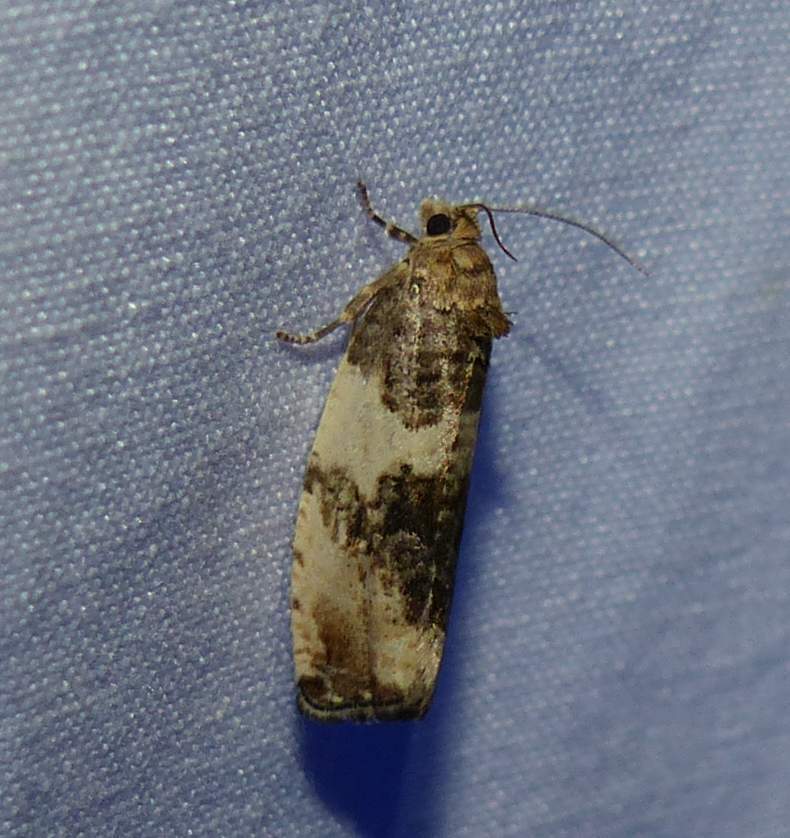
(c) christine123, some rights reserved (CC BY) · licence
Family: Tortricidae · Class: Insecta · Order: Lepidoptera
Pseudosciaphila duplex (Poplar Leafroller Moth) is a California animal in the Tortricidae family.
The Poplar Leafroller Moth (Pseudosciaphila duplex) is a small tortricid moth with forewings measuring approximately 15-17 mm in wingspan. The forewings display considerable variation in coloration, ranging from light brown to mostly dark brown forms. Key identifying features include white markings at the costa, short black marks along the distal half of the costa, and a small black patch at the apex. The hindwings are consistently dark gray with pale fringe across all color forms (BugGuide). This species occurs across northern United States and southern Canada, with a range extending from Quebec and New England west to northern California and British Columbia (BugGuide). The type locality is Loveland, Colorado. In California, the species represents the western extent of its continental distribution. Records document occurrences in Montana, with specimens collected at East Helena in Lewis and Clark County during summer months (Lepidopterists' Society 2013). Additional records exist from Alberta, Canada, extending the known northern range (Pohl 2005). Pseudosciaphila duplex inhabits areas where its primary host plants occur, particularly in riparian zones and mixed deciduous forests. The species is associated with quaking aspen (Populus tremuloides) dominated habitats, though it occasionally utilizes other deciduous trees. Adults have been documented at ultraviolet lights during summer collection periods, indicating nocturnal activity patterns typical of tortricid moths. Larvae are leafrollers that feed primarily on quaking aspen (Populus tremuloides), with occasional records from birch, plum, or willow species (BugGuide). The caterpillars construct shelters by folding or rolling leaves of the host plant, creating silk-tied shelters characteristic of the tortricid family. Adult flight periods occur during summer months, with records from June through August. Montana specimens were collected in July and August, suggesting peak adult activity during mid-summer (Lepidopterists' Society 2013). The species exhibits typical tortricid life cycle patterns with larvae overwintering and adults emerging the following summer. Currently, Pseudosciaphila duplex has no federal or state conservation listing status. The species appears to maintain stable populations across its range, with regular documentation from various locations including recent records from multiple western states. Its association with quaking aspen, a widespread and generally stable tree species across western North America, likely contributes to its continued persistence. However, localized habitat modifications affecting riparian corridors and aspen stands could potentially impact regional populations. The species' broad geographic distribution from coast to coast suggests resilience to environmental variations, though specific population trends have not been systematically studied. Climate change impacts on aspen distribution patterns may influence future habitat availability for this specialized leafroller species.
Classification
Class: Insecta · Order: Lepidoptera · Family: Tortricidae
Frequently asked questions
How is Pseudosciaphila duplex classified?
Pseudosciaphila duplex belongs to class Insecta, order Lepidoptera, family Tortricidae.
What family does Pseudosciaphila duplex belong to?
Pseudosciaphila duplex is in the Tortricidae family.
What is Pseudosciaphila duplex?
The Poplar Leafroller Moth (Pseudosciaphila duplex) is a small tortricid moth with forewings measuring approximately 15-17 mm in wingspan.
Is Pseudosciaphila duplex found in California?
Yes. Pseudosciaphila duplex is recorded in California in The California Species Project's catalogue.
Related species
Other California species in the same genus, family, or bioregion.
Data from The California Species Project — 14,000+ California species with verified data from CNPS, CDFW, USFWS, and more.