Pseudosermyle straminea
Gray Walkingstick
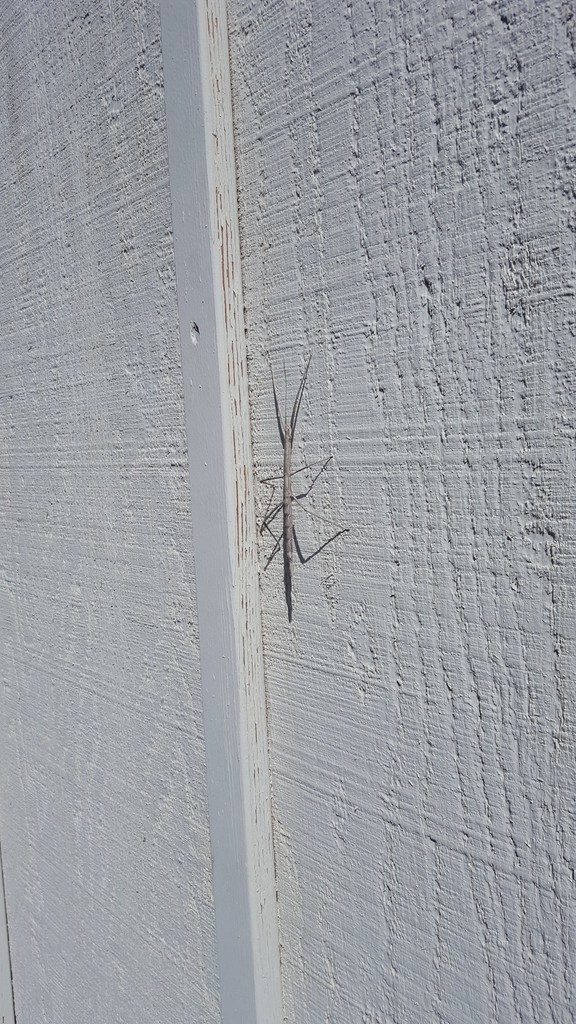
(c) Diego Tamayo, some rights reserved (CC BY) · licence
Family: Diapheromeridae · Class: Insecta · Order: Phasmida
Pseudosermyle straminea (Gray Walkingstick) is a California animal in the Diapheromeridae family.
The Gray Walkingstick (Pseudosermyle straminea) is an elongated, wingless insect belonging to the order Phasmida. This species exhibits typical walkingstick morphology with an extremely slender, stick-like body that provides effective camouflage among woody vegetation. Sexual dimorphism is present, with females typically larger than males. The body coloration is predominantly gray to brown, helping the insect blend with bark and dried vegetation. Antennae are approximately two-thirds the length of the body, and the species lacks wings entirely, distinguishing it from many other phasmid species. Pseudosermyle straminea occurs in western North America, with documented presence in California. The genus Pseudosermyle includes seven species according to USFWS taxonomic records, indicating this is part of a relatively small but specialized group within the family Diapheromeridae. Specific county-level distribution data within California requires further documentation, as current range information remains limited in scientific literature. This species inhabits areas with woody vegetation, consistent with the ecological preferences of most walkingstick species. Like other members of the order Phasmida, Gray Walkingsticks are typically found on trees and shrubs where their cryptic appearance provides protection from predators. They prefer habitats with deciduous or mixed vegetation that supports their herbivorous lifestyle. Specific elevation ranges and microhabitat preferences for P. straminea have not been well documented in available scientific literature. Gray Walkingsticks are herbivorous, feeding on the foliage of various woody plants. Their feeding behavior is typically nocturnal, with individuals remaining motionless during daylight hours to avoid detection. Reproduction follows the typical phasmid pattern, with females depositing eggs that overwinter before hatching. Development proceeds through multiple nymphal stages, with young resembling miniature adults. The species likely exhibits parthenogenesis, a common reproductive strategy among walkingsticks that allows females to reproduce without mating. The conservation status of Pseudosermyle straminea has not been formally evaluated by federal or state agencies. The species lacks federal listing under the Endangered Species Act and is not currently tracked by the California Department of Fish and Wildlife as a species of special concern. Population trends and specific threats remain undocumented, reflecting the general lack of comprehensive surveys for most walkingstick species. As with many invertebrates, habitat loss through development and forest management practices could potentially impact local populations, but quantitative assessment of these threats has not been conducted. Detailed ecological studies of this species are lacking. The above information synthesizes available taxonomic data from USFWS records and general phasmid biology. Scientific documentation regarding specific host plants, reproductive timing, population dynamics, and detailed habitat requirements remains limited. Additional field research and taxonomic work are needed to better understand the ecology and conservation needs of P. straminea and related species within the genus Pseudosermyle.
Classification
Class: Insecta · Order: Phasmida · Family: Diapheromeridae
Frequently asked questions
How is Pseudosermyle straminea classified?
Pseudosermyle straminea belongs to class Insecta, order Phasmida, family Diapheromeridae.
What family does Pseudosermyle straminea belong to?
Pseudosermyle straminea is in the Diapheromeridae family.
What is Pseudosermyle straminea?
The Gray Walkingstick (Pseudosermyle straminea) is an elongated, wingless insect belonging to the order Phasmida.
Is Pseudosermyle straminea found in California?
Yes. Pseudosermyle straminea is recorded in California in The California Species Project's catalogue.
More California species
This species has no close relatives in our California data — here are other species to explore.
Data from The California Species Project — 14,000+ California species with verified data from CNPS, CDFW, USFWS, and more.