Pseudosuccinea columella
Mimic Lymnaea
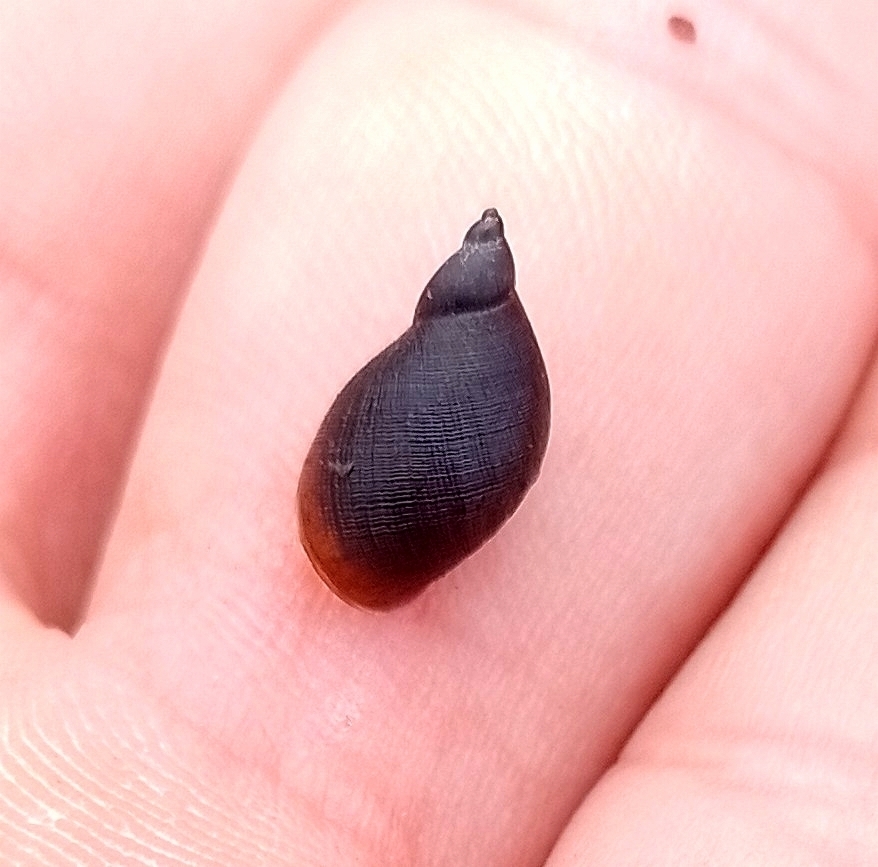
(c) Tomás Carranza Perales, some rights reserved (CC BY) · licence
Family: Lymnaeidae · Class: Gastropoda · Order: -
Pseudosuccinea columella (Mimic Lymnaea) is a California animal in the Lymnaeidae family.
Pseudosuccinea columella, commonly known as the mimic lymnaea or American ribbed fluke snail, is a small freshwater gastropod mollusk belonging to the family Lymnaeidae. This air-breathing aquatic snail typically measures 8-12 mm in shell height, with a characteristic elongated, spiral shell that displays prominent ribbed sculpturing. The shell is typically light brown to yellowish-brown in coloration with a translucent appearance when fresh. Native to eastern North America, including regions of the United States and Canada, P. columella has expanded its range significantly through both natural dispersal and human-mediated introduction (USGS NAS Database). The species is now established in California, with documented populations in Los Angeles County as of 2018. Additional populations have been recorded in Florida and Hawaii, indicating the species' broad invasive potential across diverse geographic regions. Mimic lymnaea inhabits a variety of freshwater environments, including ponds, lakes, slow-moving streams, marshes, and artificial water bodies such as irrigation canals and constructed wetlands. The species demonstrates considerable tolerance for varying water quality conditions and can persist in both permanent and temporary aquatic habitats. It is commonly found among aquatic vegetation and on soft substrates where it feeds and reproduces. This species is a generalist herbivore, primarily grazing on algae, detritus, and decaying plant matter. P. columella is hermaphroditic, possessing both male and female reproductive organs, though cross-fertilization typically occurs between individuals. Reproduction involves the deposition of gelatinous egg masses containing multiple embryos on submerged surfaces including vegetation, rocks, and artificial substrates. The species can complete multiple generations per year under favorable conditions, contributing to its rapid population establishment in new habitats. From a conservation and management perspective, P. columella is not listed under federal or state endangered species acts, as it is considered a non-native invasive species in California. The species has gained attention primarily due to its role as an intermediate host for parasitic flatworms, including Fasciola hepatica and F. gigantica, which cause fascioliasis in livestock and occasionally humans (Cambridge Journal of Helminthology). This parasitological significance has made P. columella a species of veterinary and public health concern in regions where it has become established. The invasive nature of P. columella in California and other non-native regions raises ecological concerns regarding potential impacts on native freshwater gastropod communities. However, specific ecological impacts and population control measures have not been extensively documented. The species' broad environmental tolerance and reproductive capacity suggest it will likely continue expanding its range in suitable aquatic habitats throughout California. Monitoring efforts focus primarily on locations where the species may facilitate parasite transmission rather than on conservation of the species itself.
Classification
Class: Gastropoda · Order: - · Family: Lymnaeidae
Frequently asked questions
How is Pseudosuccinea columella classified?
Pseudosuccinea columella belongs to class Gastropoda, order -, family Lymnaeidae.
What family does Pseudosuccinea columella belong to?
Pseudosuccinea columella is in the Lymnaeidae family.
What is Pseudosuccinea columella?
Pseudosuccinea columella, commonly known as the mimic lymnaea or American ribbed fluke snail, is a small freshwater gastropod mollusk belonging to the family Lymnaeidae.
Is Pseudosuccinea columella found in California?
Yes. Pseudosuccinea columella is recorded in California in The California Species Project's catalogue.
Related species
Other California species in the same genus, family, or bioregion.
Data from The California Species Project — 14,000+ California species with verified data from CNPS, CDFW, USFWS, and more.