Pseudothyatira cymatophoroides
Tufted Thyatirid
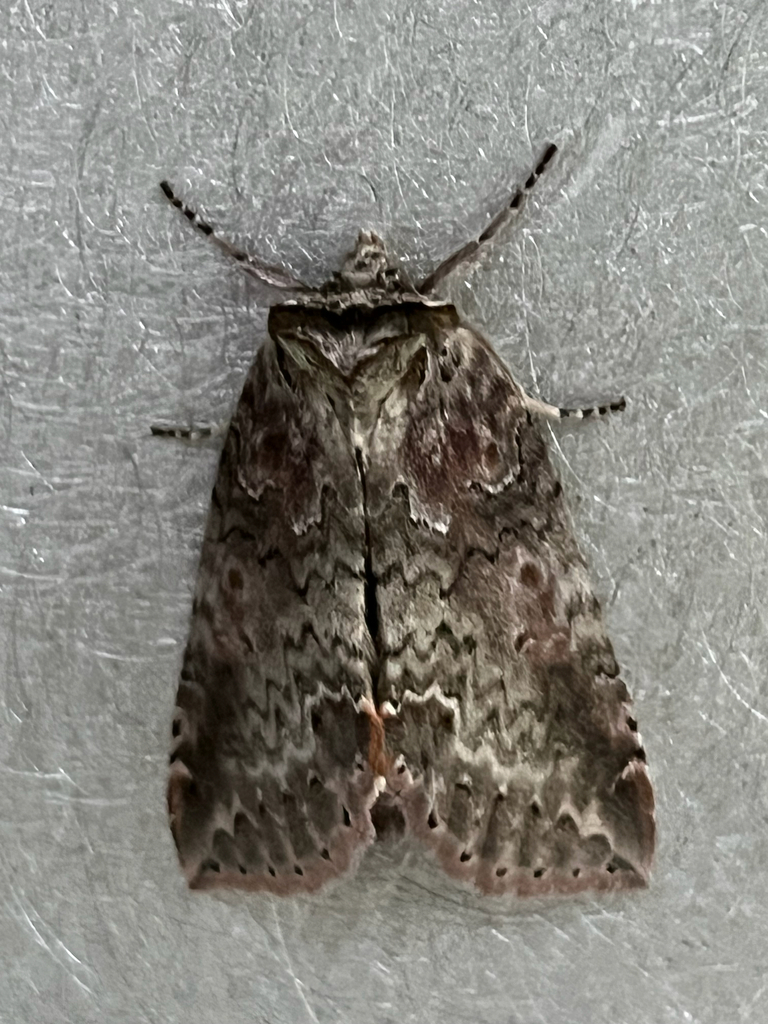
no rights reserved · CC0
Family: Drepanidae · Class: Insecta · Order: Lepidoptera
Pseudothyatira cymatophoroides (Tufted Thyatirid) is a California animal in the Drepanidae family.
The Tufted Thyatirid (Pseudothyatira cymatophoroides) is a moth species in the family Drepanidae, characterized by distinctive wing patterns and specialized host plant associations. Adults typically measure 35-45 mm in wingspan, with forewings displaying a complex pattern of gray and brown coloration marked by subtle wavy lines and crescentic markings. The hindwings are generally paler than the forewings, with less distinct patterning. The species name 'cymatophoroides' refers to its resemblance to members of the genus Cymatophora, reflecting the wavy or undulating patterns across the wing surfaces. Pseudothyatira cymatophoroides occurs in western North America, with documented populations in California, Oregon, and Washington. Within California, the species has been recorded primarily in the northern counties, including areas of the Coast Range and Sierra Nevada foothills. The distribution appears to be closely tied to the presence of suitable host plants and appropriate forest habitat conditions. The species inhabits mixed coniferous and deciduous forests, particularly in areas where alder species are present. Typical habitat includes riparian zones, forest edges, and areas of secondary growth where host plants are abundant. Elevational range extends from near sea level to approximately 1,500 meters, though most records come from lower to middle elevations where deciduous trees are well-established. Larvae of P. cymatophoroides feed primarily on alder species (Alnus spp.), with particular association with red alder (Alnus rubra) and white alder (Alnus rhombifolia). The caterpillars are leaf feeders, consuming foliage during their development through multiple instars. Adults are nocturnal and are attracted to artificial lights, with flight periods typically occurring from late spring through early fall, depending on local climate conditions and elevation. The species likely produces one or two generations per year in California, though specific phenological data for the state's populations require further documentation. Currently, Pseudothyatira cymatophoroides lacks federal or state conservation status designations in California. The species appears to be relatively uncommon but not immediately threatened, with populations dependent on maintaining healthy riparian and forest ecosystems that support alder host plants. Primary conservation concerns include habitat modification, particularly the removal of native alder stands for development or altered land use practices. Forest management activities that preserve diverse age classes of deciduous trees, especially in riparian corridors, benefit this species. Climate change may affect future distribution patterns, particularly if it alters the range or health of alder host plants. Additional surveys and monitoring would help clarify population status and distribution patterns within California, as lepidopteran species often remain undersampled despite their ecological importance as pollinators and indicators of ecosystem health.
Classification
Class: Insecta · Order: Lepidoptera · Family: Drepanidae
Frequently asked questions
How is Pseudothyatira cymatophoroides classified?
Pseudothyatira cymatophoroides belongs to class Insecta, order Lepidoptera, family Drepanidae.
What family does Pseudothyatira cymatophoroides belong to?
Pseudothyatira cymatophoroides is in the Drepanidae family.
What is Pseudothyatira cymatophoroides?
The Tufted Thyatirid (Pseudothyatira cymatophoroides) is a moth species in the family Drepanidae, characterized by distinctive wing patterns and specialized host plant associations.
Is Pseudothyatira cymatophoroides found in California?
Yes. Pseudothyatira cymatophoroides is recorded in California in The California Species Project's catalogue.
Related species
Other California species in the same genus, family, or bioregion.
Data from The California Species Project — 14,000+ California species with verified data from CNPS, CDFW, USFWS, and more.