Psychomastax deserticola
Desert Monkey Grasshopper
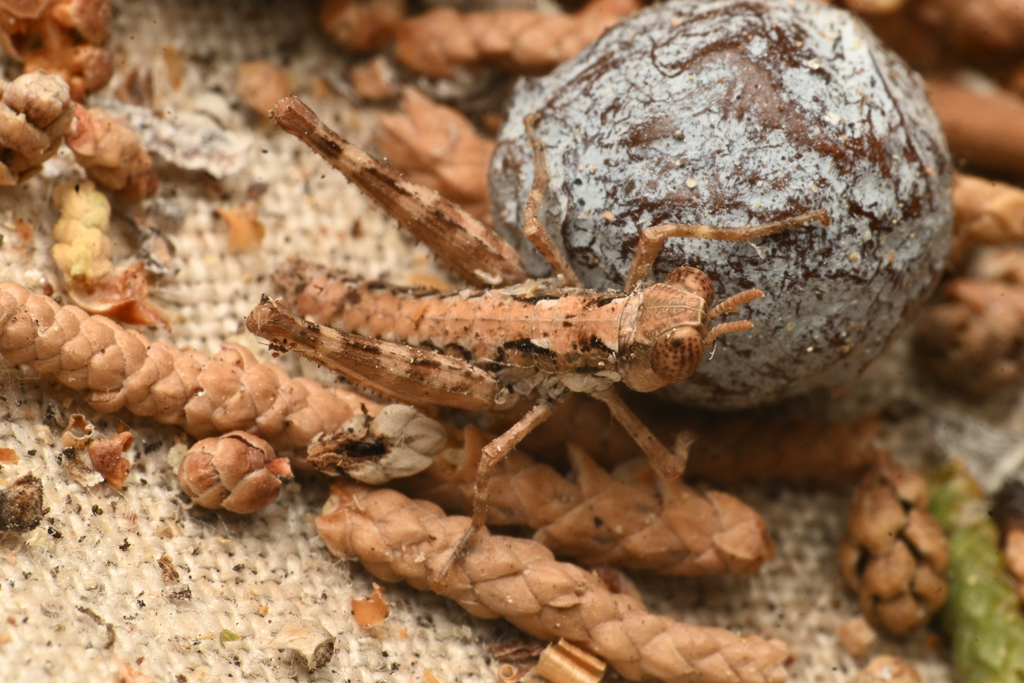
(c) Trevor Van Loon, some rights reserved (CC BY) · licence
Family: Eumastacidae · Class: Insecta · Order: Orthoptera
Conservation status: G2G3 S1
Psychomastax deserticola (Desert Monkey Grasshopper) is a California animal in the Eumastacidae family.
The Desert Monkey Grasshopper is a member of the family Eumastacidae, one of the smaller grasshopper families in North America. According to the Xerces Society, monkey grasshoppers are represented by fewer than twenty species across all three families in the United States, making this group relatively uncommon compared to other orthopteran families. Physical characteristics specific to this species have not been well documented in the available literature. Psychomastax deserticola occurs in southern California, with confirmed presence in seven counties according to the U.S. Fish and Wildlife Service: Imperial, Los Angeles, Orange, Riverside, San Bernardino, San Diego, and Ventura counties. This distribution pattern suggests the species inhabits multiple desert and semi-arid regions across the southern portion of the state. The species' range appears to encompass both coastal and inland desert areas, from the Sonoran Desert regions of Imperial and Riverside counties to the more coastal areas of Los Angeles, Orange, and Ventura counties. Habitat requirements for the Desert Monkey Grasshopper have not been thoroughly documented in available scientific literature. Given its common name and distribution pattern, the species likely inhabits desert and semi-arid environments typical of southern California. These areas are characterized by hot, dry summers and mild winters, with vegetation communities including creosote bush scrub, desert chaparral, and coastal sage scrub. Elevation ranges and specific microhabitat preferences remain poorly documented. Behavioral and ecological information for this species is limited in current literature. As a member of the Eumastacidae family, the Desert Monkey Grasshopper likely shares general characteristics with other monkey grasshoppers, though specific details about diet, reproduction, and seasonal activity patterns have not been well studied. The Xerces Society notes that grasshoppers are integral parts of grassland and rangeland ecosystems, serving important ecological roles as both herbivores and prey species for various predators. The Desert Monkey Grasshopper carries a Global Rank of G2G3, indicating the species is imperiled to vulnerable globally, and a State Rank of S1 in California, designating it as critically imperiled within the state. This conservation status suggests very small population sizes and restricted distribution. The species currently has no federal listing status under the Endangered Species Act, though its presence in multiple California counties has been documented by the U.S. Fish and Wildlife Service as of December 2025. Primary threats to the species likely include habitat loss and fragmentation due to urban development, agricultural conversion, and climate change impacts on desert ecosystems, though specific threat assessments have not been published. The limited scientific documentation available for this species highlights the need for additional research to better understand its biology, ecology, and conservation requirements.
Classification
Class: Insecta · Order: Orthoptera · Family: Eumastacidae
Conservation status
G2G3 S1
Frequently asked questions
How is Psychomastax deserticola classified?
Psychomastax deserticola belongs to class Insecta, order Orthoptera, family Eumastacidae.
What family does Psychomastax deserticola belong to?
Psychomastax deserticola is in the Eumastacidae family.
Is Psychomastax deserticola protected or of conservation concern?
Psychomastax deserticola carries the following status: G2G3 S1.
What is Psychomastax deserticola?
The Desert Monkey Grasshopper is a member of the family Eumastacidae, one of the smaller grasshopper families in North America.
Is Psychomastax deserticola found in California?
Yes. Psychomastax deserticola is recorded in California in The California Species Project's catalogue.
Related species
Other California species in the same genus, family, or bioregion.
Data from The California Species Project — 14,000+ California species with verified data from CNPS, CDFW, USFWS, and more.