Psylla alni
Alder Sucker
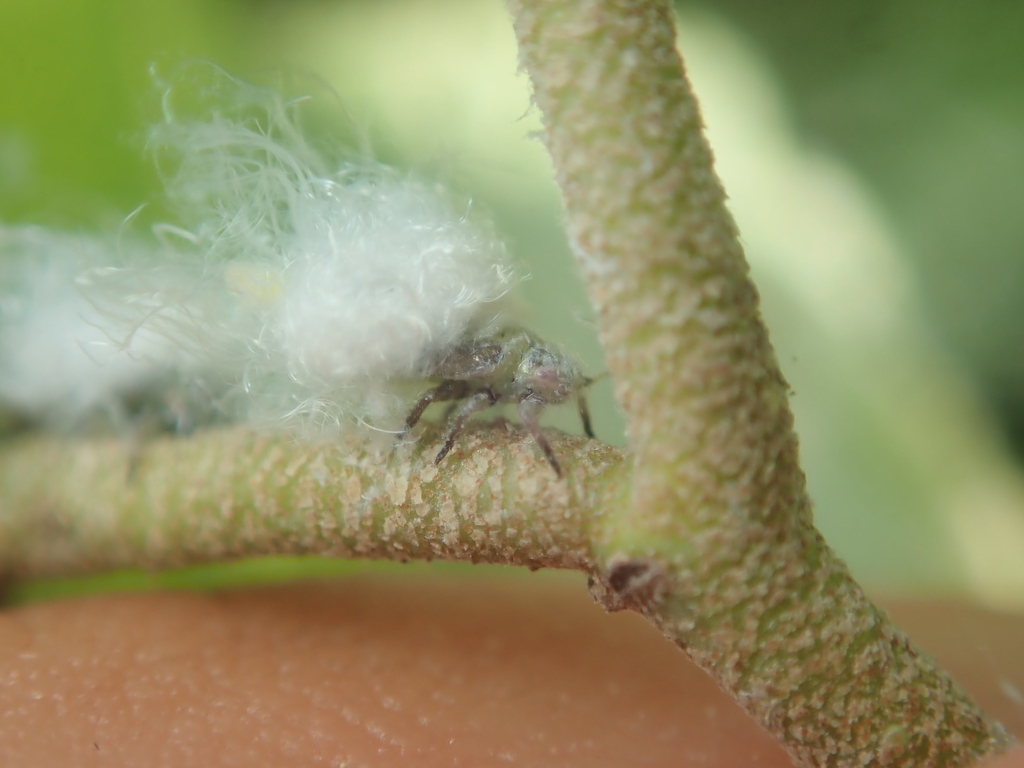
(c) Dr. Guido Bohne, some rights reserved (CC BY-SA) · licence
Family: Psyllidae · Class: Insecta · Order: Hemiptera
Psylla alni (Alder Sucker) is a California animal in the Psyllidae family.
Psylla alni, commonly known as the alder sucker, is a small hemipteran insect in the family Psyllidae. Adult alder suckers measure approximately 2-3 mm in length and display the characteristic psyllid body form with a robust thorax, prominent head, and clear wings held tent-like over the body when at rest. The wings are typically transparent to slightly yellowish with distinct venation patterns. Adults possess strong jumping hind legs, allowing them to leap considerable distances when disturbed, a behavior that gives psyllids their common name of "jumping plant lice." The alder sucker occurs throughout much of North America where suitable host plants are present. In California, this species is found primarily in the northern regions and mountainous areas where alder trees grow naturally. The distribution extends from coastal areas to montane environments, following the range of its host plants. Populations are documented in riparian corridors, canyon bottoms, and moist slopes where alder species thrive. This psyllid species demonstrates a strict association with alder trees (Alnus species), particularly red alder (Alnus rubra), white alder (Alnus rhombifolia), and mountain alder (Alnus incana). Adults and nymphs feed exclusively on alder foliage by piercing plant tissues with their needle-like stylets and extracting phloem sap. The species inhabits riparian forests, streamside woodlands, and mixed coniferous forests where alder occurs as an understory or canopy component. Elevation ranges typically span from sea level to approximately 2,500 meters, corresponding to the altitudinal limits of host alder species. Alder suckers exhibit a typical psyllid life cycle with multiple generations per year in favorable climates. Females deposit eggs on young alder shoots and leaf surfaces during spring and summer months. The eggs are small, oval, and initially pale yellow, darkening before hatching. Nymphs pass through five instars, secreting waxy white filaments that provide protection from predators and environmental stress. Development from egg to adult requires approximately 4-6 weeks under optimal conditions. Adults are most active during warm daylight hours, when they engage in feeding, mating, and dispersal behaviors. The species produces characteristic honeydew as a byproduct of phloem feeding, which can accumulate on leaf surfaces and support secondary mold growth. Heavy infestations may cause leaf yellowing, premature leaf drop, and reduced tree vigor, though alder suckers rarely cause significant damage to healthy, established trees. Natural enemies include predatory insects, spiders, and various parasitoid wasps that help regulate population levels. Currently, Psylla alni lacks formal conservation status designations and is not considered threatened or endangered. The species' distribution and abundance appear stable, closely tracking the health and extent of alder forest ecosystems. Climate change and alterations to riparian habitats represent potential long-term concerns, as these factors may affect both the insect and its host plants. Maintenance of healthy riparian corridors and native alder populations supports continued stable populations of this specialized herbivore.
Classification
Class: Insecta · Order: Hemiptera · Family: Psyllidae
Frequently asked questions
How is Psylla alni classified?
Psylla alni belongs to class Insecta, order Hemiptera, family Psyllidae.
What family does Psylla alni belong to?
Psylla alni is in the Psyllidae family.
What is Psylla alni?
Psylla alni, commonly known as the alder sucker, is a small hemipteran insect in the family Psyllidae.
Is Psylla alni found in California?
Yes. Psylla alni is recorded in California in The California Species Project's catalogue.
More California species
This species has no close relatives in our California data — here are other species to explore.
Data from The California Species Project — 14,000+ California species with verified data from CNPS, CDFW, USFWS, and more.