Psyllobora vigintimaculata
Twenty-spotted Lady Beetle
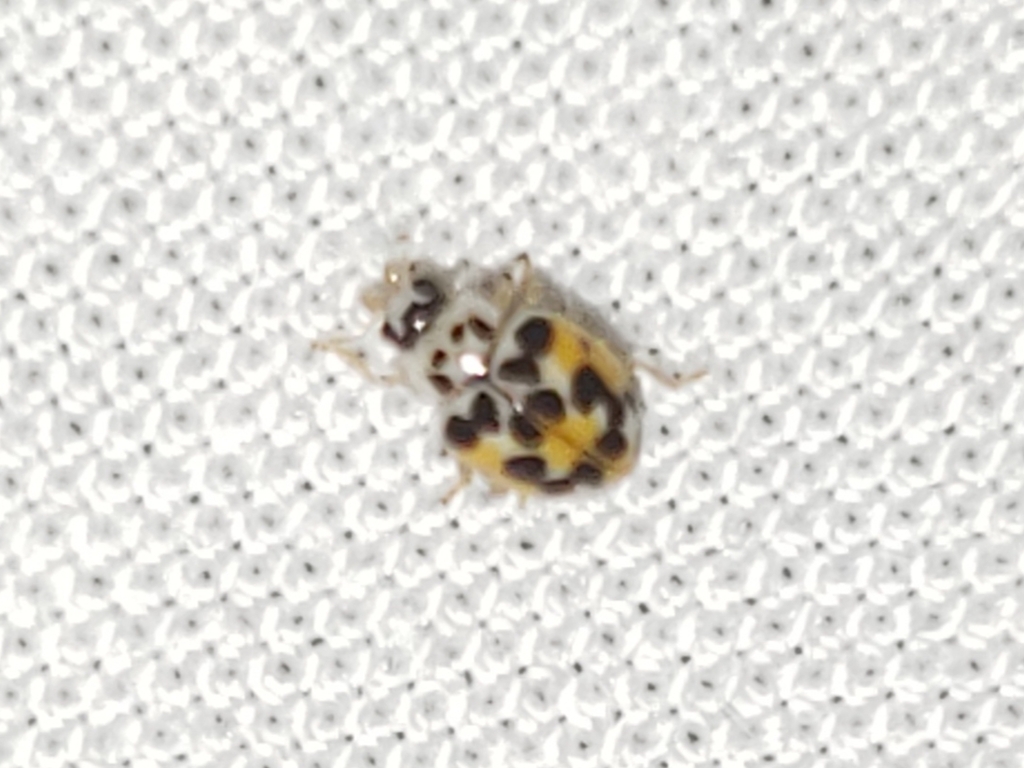
(c) aispinsects, some rights reserved (CC BY) · licence
Family: Coccinellidae · Class: Insecta · Order: Coleoptera
Psyllobora vigintimaculata (Twenty-spotted Lady Beetle) is a California animal in the Coccinellidae family.
The Twenty-spotted Lady Beetle is a small fungus-eating coccinellid measuring 1.75 to 3.0 mm in length (BugGuide 2025). This diminutive beetle displays a distinctive pattern of approximately 20 dark spots on light-colored elytra, though spot counts may vary slightly among individuals. The pronotum features four distinct spots, a key identifying characteristic that distinguishes it from other Psyllobora species (Gordon 1985). The body is oval-shaped and convex, typical of lady beetles, with a pale yellow to cream-colored background and dark spotting. Psyllobora vigintimaculata occurs across much of North America, with documented populations from southern Canada through the United States. The species is found coast to coast, with records from California in the west to the Atlantic states in the east. In New York, the species is designated as a Species of Greatest Conservation Need, indicating some level of conservation concern in that state (BugGuide 2025). The Twenty-spotted Lady Beetle inhabits diverse environments where fungal food sources are available. Unlike most coccinellids that are predatory, members of the genus Psyllobora are specialized mycophagous beetles, feeding primarily on fungal material including powdery mildews and other fungal growth on plant surfaces. This dietary specialization influences their habitat selection, as they are typically found in areas with abundant fungal growth such as forest edges, gardens, and areas with high humidity that promote fungal development. As fungus-eating specialists, these beetles play a unique ecological role among coccinellids. Adults and larvae consume various fungi, particularly powdery mildews that commonly affect plants. Their feeding behavior can provide some biological control of plant fungal diseases, though they are not considered major biocontrol agents. Reproductive biology follows typical coccinellid patterns, with females laying eggs near fungal food sources. Development proceeds through typical holometabolous stages including egg, larval instars, pupal, and adult phases. Adults are active during warmer months and may overwinter in protected locations such as leaf litter or bark crevices, similar to other lady beetle species that cluster in native bunch grasses and under tree bark during winter (Xerces Society 2018). The conservation status of Psyllobora vigintimaculata varies regionally. While not federally listed, the species appears on New York's Species of Greatest Conservation Need list, suggesting population concerns in parts of its range (BugGuide 2025). Factors affecting fungus-eating lady beetles may include habitat modification that reduces fungal diversity, pesticide applications that eliminate both target organisms and beneficial fungi, and climate changes that alter fungal community composition. The species' dependence on specific fungal food sources makes it potentially vulnerable to environmental changes that affect fungal communities. Limited scientific documentation exists regarding specific population trends, ecological requirements, and conservation needs for this species, highlighting the need for additional research on this specialized group of coccinellids.
Classification
Class: Insecta · Order: Coleoptera · Family: Coccinellidae
Frequently asked questions
How is Psyllobora vigintimaculata classified?
Psyllobora vigintimaculata belongs to class Insecta, order Coleoptera, family Coccinellidae.
What family does Psyllobora vigintimaculata belong to?
Psyllobora vigintimaculata is in the Coccinellidae family.
What is Psyllobora vigintimaculata?
The Twenty-spotted Lady Beetle is a small fungus-eating coccinellid measuring 1.75 to 3.0 mm in length (BugGuide 2025).
Is Psyllobora vigintimaculata found in California?
Yes. Psyllobora vigintimaculata is recorded in California in The California Species Project's catalogue.
Related species
Other California species in the same genus, family, or bioregion.
Data from The California Species Project — 14,000+ California species with verified data from CNPS, CDFW, USFWS, and more.