Pterodroma sandwichensis
Hawaiian Petrel
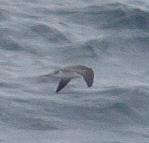
(c) Adam J. Searcy, some rights reserved (CC BY) · licence
Family: Procellariidae · Class: Aves · Order: Procellariiformes
Pterodroma sandwichensis (Hawaiian Petrel) is a California animal in the Procellariidae family.
The Hawaiian Petrel (Pterodroma sandwichensis), also known as the Dark-rumped Petrel, is a medium-sized seabird endemic to the Hawaiian Islands. Adults measure approximately 16 inches (40.6 cm) in length with a wingspan of three feet (91.4 cm). The species displays distinctive plumage with a dark gray head, wings, and tail contrasting sharply with a white forehead and belly. This coloration pattern is characteristic of the gadfly petrel group and aids in field identification. Historically, Hawaiian Petrels nested throughout the main Hawaiian Islands, but their range has contracted significantly due to habitat loss and introduced predators. Today, the species maintains breeding colonies primarily on the islands of Maui, Hawaii (Big Island), Kauai, Molokai, and Lanai. Most of the known active nest sites are located in and around Haleakalā National Park on Maui Island (Birds of the World). The species was previously considered conspecific with the Galápagos Petrel but is now recognized as a distinct species based on genetic and morphological evidence (USFWS Seabird Conservation Plan). Hawaiian Petrels nest in high-elevation areas, typically above 2,000 feet, in native forest habitats and alpine shrublands. Nesting sites are usually located in burrows excavated in volcanic soil or under rock overhangs and tree roots. The species shows strong site fidelity, with individuals often returning to the same general nesting areas year after year. Breeding habitat requires protection from introduced predators and minimal human disturbance. The species exhibits highly pelagic behavior outside the breeding season. Away from breeding grounds, Hawaiian Petrels occur primarily in equatorial waters of the eastern tropical Pacific (Birds of the World). During the breeding season, which typically spans from March through October, adults produce a distinctive call described as "oo ah oo" (USFWS Species Profile). Hawaiian Petrels are nocturnal at breeding colonies, arriving after dark to avoid predation and reduce heat stress. The species feeds primarily on squid and fish captured through surface seizing and shallow diving in marine waters. The Hawaiian Petrel has experienced extensive long-term population decline due to habitat destruction and introduced predators (NatureServe Explorer). Primary threats include predation by feral cats, dogs, and rodents, habitat degradation from ungulates, and collision with artificial lighting. The species faces additional challenges from climate change, which may affect ocean productivity and nesting habitat at high elevations. Breeding success is primarily dependent on site management and predator protection at local scales, and maintaining safe movement corridors between nesting areas and the ocean (NatureServe Explorer). Conservation efforts focus on predator control, habitat restoration, and reducing light pollution near breeding colonies. The small breeding range and continued threats make this species particularly vulnerable to extinction without sustained conservation intervention.
Classification
Class: Aves · Order: Procellariiformes · Family: Procellariidae
Frequently asked questions
How is Pterodroma sandwichensis classified?
Pterodroma sandwichensis belongs to class Aves, order Procellariiformes, family Procellariidae.
What family does Pterodroma sandwichensis belong to?
Pterodroma sandwichensis is in the Procellariidae family.
What is Pterodroma sandwichensis?
The Hawaiian Petrel (Pterodroma sandwichensis), also known as the Dark-rumped Petrel, is a medium-sized seabird endemic to the Hawaiian Islands.
Is Pterodroma sandwichensis found in California?
Yes. Pterodroma sandwichensis is recorded in California in The California Species Project's catalogue.
Related species
Other California species in the same genus, family, or bioregion.
Data from The California Species Project — 14,000+ California species with verified data from CNPS, CDFW, USFWS, and more.