Pterodroma ultima
Murphy's Petrel
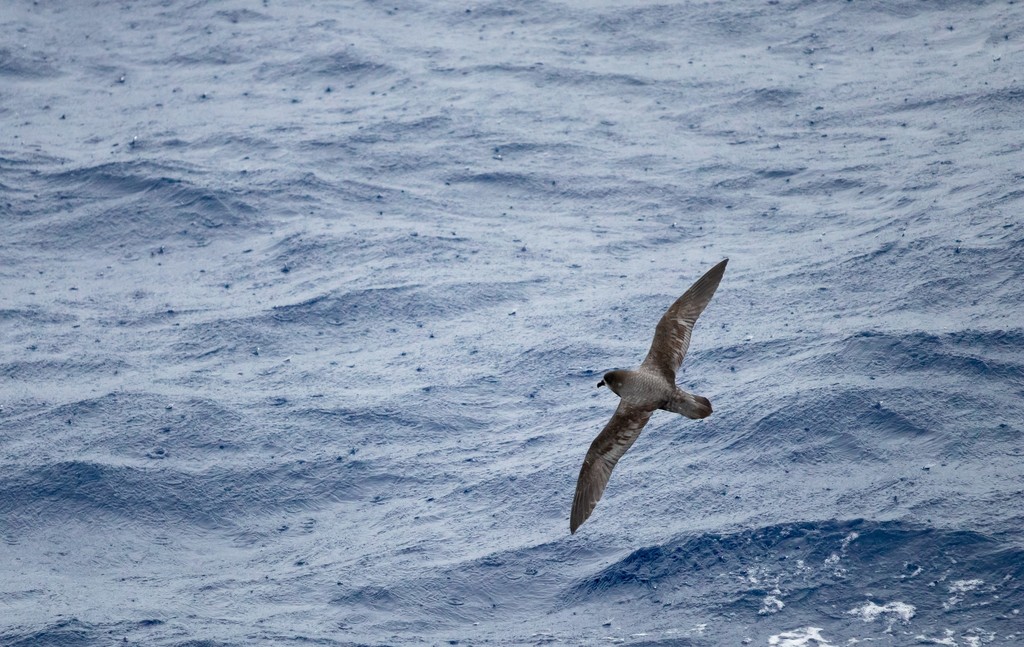
(c) Kane Fleury, some rights reserved (CC BY) · licence
Family: Procellariidae · Class: Aves · Order: Procellariiformes
Pterodroma ultima (Murphy's Petrel) is a California animal in the Procellariidae family.
Murphy's Petrel is a medium-sized seabird in the family Procellariidae, characterized by its distinctive dark plumage and pelagic lifestyle. Adults measure approximately 40 centimeters (16 inches) in length with a wingspan of 97 centimeters (38 inches). The species displays uniformly dark brownish-gray plumage across the upperparts and wings, with slightly paler underparts. The bill is black and hooked, typical of petrels, measuring about 3 centimeters in length. In flight, Murphy's Petrel shows a characteristic white flash at the base of the primaries on the underwing, which distinguishes it from similar dark petrels. Murphy's Petrel has a highly restricted breeding range, nesting only on remote islands in the South Pacific, including the Pitcairn Islands, Henderson Island, and Oeno Island. Outside the breeding season, the species ranges widely across the Pacific Ocean, with individuals documented in waters off the western coasts of North and South America. In California waters, Murphy's Petrel occurs as a rare visitor, primarily during spring and summer months when individuals may be observed far offshore during pelagic birding trips. This species inhabits open ocean environments, spending most of its life cycle in pelagic waters far from land. Murphy's Petrel forages in areas where cold and warm water masses meet, often associated with upwelling zones that concentrate prey species. During the breeding season, the species nests on rocky islands with suitable crevices and burrows for nesting sites. Nesting areas are typically located on clifftops and steep slopes with sparse vegetation. Murphy's Petrel feeds primarily on squid, small fish, and crustaceans, which it captures by surface seizing and shallow diving. The species is largely nocturnal in its feeding behavior, taking advantage of the vertical migration of deep-sea organisms that rise to surface waters at night. Breeding occurs from November to May, with pairs typically laying a single white egg in rock crevices or shallow burrows. The incubation period lasts approximately 50 days, with both parents sharing duties. Chicks fledge after about 100 days in the nest. Murphy's Petrel is not federally listed under the Endangered Species Act, though its restricted breeding range makes it vulnerable to localized threats. The global population is estimated at fewer than 10,000 breeding pairs, with the majority nesting on Henderson Island. Primary conservation concerns include habitat degradation on breeding islands, potential impacts from climate change on ocean productivity, and threats from introduced predators on nesting islands. The species' reliance on remote oceanic islands for breeding makes monitoring and conservation efforts challenging. Plastic pollution in marine environments poses an additional threat, as petrels may ingest debris or feed contaminated prey to their chicks.
Classification
Class: Aves · Order: Procellariiformes · Family: Procellariidae
Frequently asked questions
How is Pterodroma ultima classified?
Pterodroma ultima belongs to class Aves, order Procellariiformes, family Procellariidae.
What family does Pterodroma ultima belong to?
Pterodroma ultima is in the Procellariidae family.
What is Pterodroma ultima?
Murphy's Petrel is a medium-sized seabird in the family Procellariidae, characterized by its distinctive dark plumage and pelagic lifestyle.
Is Pterodroma ultima found in California?
Yes. Pterodroma ultima is recorded in California in The California Species Project's catalogue.
Related species
Other California species in the same genus, family, or bioregion.
Data from The California Species Project — 14,000+ California species with verified data from CNPS, CDFW, USFWS, and more.