Pterostichus lama
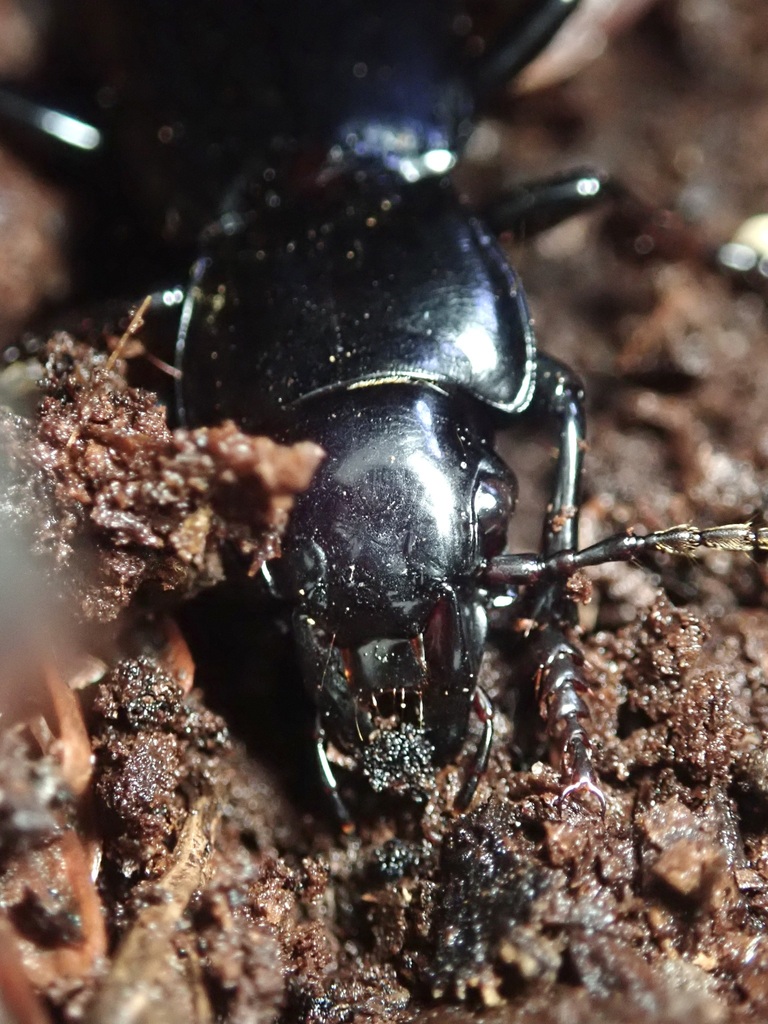
(c) Cricket Raspet, some rights reserved (CC BY) · licence
Family: Carabidae · Class: Insecta · Order: Coleoptera
Pterostichus lama is a California animal in the Carabidae family.
Pterostichus lama is a ground beetle species belonging to the family Carabidae, subfamily Harpalinae, tribe Pterostichini. This species is classified within the subgenus Hypherpes of the genus Pterostichus. Like other members of the Pterostichus genus, P. lama is characterized by the typical carabid body form with an elongated, somewhat flattened appearance, prominent mandibles, and well-developed legs adapted for cursorial locomotion. Ground beetles in this genus typically range from 8 to 20 millimeters in length, though specific morphometric data for P. lama has not been documented in the available literature. The geographic distribution of Pterostichus lama appears to be restricted to California, though detailed range information remains poorly documented. The species is recognized by the U.S. Fish and Wildlife Service taxonomic database, indicating its occurrence within areas of federal concern or interest. However, specific county-level distribution data, historical range information, and population localities have not been comprehensively surveyed or published in the accessible scientific literature. Habitat requirements for P. lama have not been specifically characterized in published studies. Ground beetles in the genus Pterostichus typically inhabit diverse terrestrial environments including forest floors, riparian zones, grasslands, and scrubland areas. Many species in this genus are associated with moist microhabitats under logs, stones, leaf litter, or within soil crevices. They often require areas with adequate ground cover and organic matter that support their prey base of smaller arthropods and decomposing organic material. Like other Pterostichus species, P. lama is presumably a nocturnal predator that emerges at night to hunt small invertebrates including springtails, fly larvae, aphids, and other soft-bodied arthropods. Ground beetles in this genus are generally considered beneficial species due to their role in controlling agricultural and garden pests. Reproduction likely follows the typical carabid pattern of ground-dwelling larvae that pupate in soil chambers, though specific breeding biology, seasonal activity patterns, and life cycle duration for P. lama remain undocumented. The conservation status of Pterostichus lama has not been formally assessed by state or federal agencies. The species lacks federal or state listing status as of December 2025, and no specific population studies or threat assessments have been conducted. The absence of detailed ecological and distributional data represents a significant knowledge gap that limits effective conservation planning. Like many specialized invertebrates, ground beetles may be vulnerable to habitat loss, agricultural intensification, and urban development, though specific threats to P. lama cannot be identified without further research. Scientific documentation for this species remains extremely limited. The information presented here is based on taxonomic databases and general knowledge of Pterostichus ecology. Detailed field studies are needed to document this species' distribution, habitat requirements, and conservation needs. We welcome contributions of verified scientific data, photographs, or field observations to enhance this species account.
Classification
Class: Insecta · Order: Coleoptera · Family: Carabidae
Frequently asked questions
How is Pterostichus lama classified?
Pterostichus lama belongs to class Insecta, order Coleoptera, family Carabidae.
What family does Pterostichus lama belong to?
Pterostichus lama is in the Carabidae family.
What is Pterostichus lama?
Pterostichus lama is a ground beetle species belonging to the family Carabidae, subfamily Harpalinae, tribe Pterostichini.
Is Pterostichus lama found in California?
Yes. Pterostichus lama is recorded in California in The California Species Project's catalogue.
Related species
Other California species in the same genus, family, or bioregion.
Data from The California Species Project — 14,000+ California species with verified data from CNPS, CDFW, USFWS, and more.