Puffinus auricularis
Townsend's Shearwater
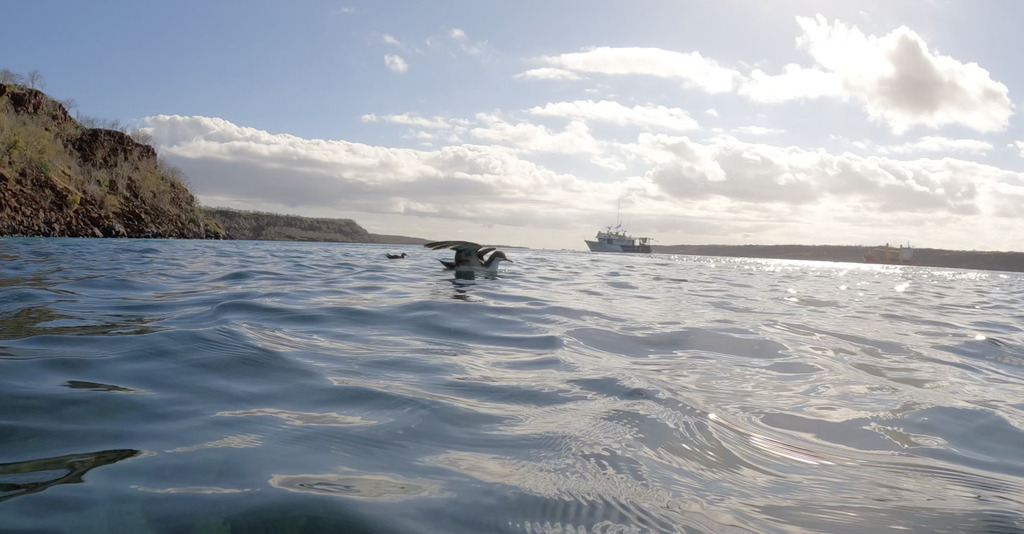
no rights reserved · CC0
Family: Procellariidae · Class: Aves · Order: Procellariiformes
Puffinus auricularis (Townsend's Shearwater) is a California animal in the Procellariidae family.
Townsend's Shearwater is a medium-sized seabird endemic to the Revillagigedo Islands off the Pacific coast of Mexico, with occasional sightings in California waters. Adults measure approximately 33 to 38 cm (13 to 15 inches) in length with a wingspan of 76 to 89 cm (30 to 35 inches). The species exhibits distinctive black and white plumage, with dark blackish-brown upperparts contrasting sharply with white underparts. The underwing coverts are white with dark trailing edges, and the bird displays a characteristic white rump patch visible in flight. The bill is black and relatively slender, typical of shearwaters, while the legs and feet are pinkish. Historically, Townsend's Shearwater bred exclusively on San Benedicto, Socorro, and Clarión islands in the Revillagigedo archipelago, located approximately 400 kilometers southwest of Baja California. The species was extirpated from San Benedicto Island following volcanic activity in 1952. Currently, breeding populations persist only on Socorro and Clarión islands. During non-breeding periods, the species disperses into offshore waters of the eastern Pacific, with vagrant individuals occasionally recorded along the California coast, particularly in waters off central and southern California. Breeding habitat consists of rocky cliff faces and volcanic slopes where birds nest in crevices, under boulders, or in burrows excavated in volcanic soil. Nesting sites are typically located at elevations ranging from sea level to approximately 500 meters. During the marine phase of their life cycle, Townsend's Shearwaters inhabit pelagic waters over the continental shelf and slope, generally remaining within 200 kilometers of their breeding islands. The species exhibits typical shearwater feeding behavior, employing surface-seizing and shallow diving techniques to capture small fish, squid, and crustaceans. Breeding occurs during the austral winter months, with egg-laying typically beginning in February. Females lay a single white egg in underground burrows or rock crevices. The incubation period lasts approximately 51 days, with both parents sharing duties. Chicks fledge after 75 to 80 days and become independent immediately upon leaving the nest. Townsend's Shearwater faces significant conservation challenges due to its extremely restricted breeding range and small population size. The International Union for Conservation of Nature classifies the species as Critically Endangered, with recent population estimates suggesting fewer than 5,000 breeding pairs remain across both breeding islands. Primary threats include habitat degradation from introduced mammals, particularly sheep and cats on Socorro Island, which destroy nesting sites and prey on adults and chicks. Climate change poses additional risks through altered ocean productivity and increased storm intensity. El Niño events can significantly impact food availability, leading to breeding failures and population declines. Light pollution from human settlements disrupts nocturnal flight patterns of fledglings, often causing fatal groundings. Conservation efforts focus on invasive species control and habitat protection within the Revillagigedo Biosphere Reserve, established by Mexico in 1994.
Classification
Class: Aves · Order: Procellariiformes · Family: Procellariidae
Frequently asked questions
How is Puffinus auricularis classified?
Puffinus auricularis belongs to class Aves, order Procellariiformes, family Procellariidae.
What family does Puffinus auricularis belong to?
Puffinus auricularis is in the Procellariidae family.
What is Puffinus auricularis?
Townsend's Shearwater is a medium-sized seabird endemic to the Revillagigedo Islands off the Pacific coast of Mexico, with occasional sightings in California waters.
Is Puffinus auricularis found in California?
Yes. Puffinus auricularis is recorded in California in The California Species Project's catalogue.
Related species
Other California species in the same genus, family, or bioregion.
Data from The California Species Project — 14,000+ California species with verified data from CNPS, CDFW, USFWS, and more.