Puffinus gravis
Greater Shearwater
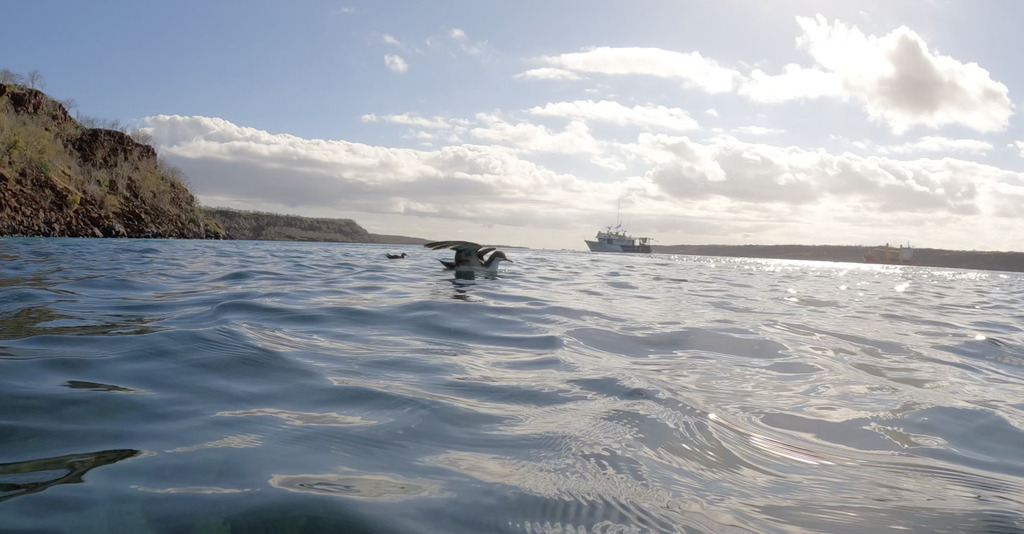
no rights reserved · CC0
Family: Procellariidae · Class: Aves · Order: Procellariiformes
Puffinus gravis (Greater Shearwater) is a California animal in the Procellariidae family.
The Greater Shearwater is a large seabird measuring 43 to 51 cm (17 to 20 inches) in length with a wingspan of 105 to 122 cm (41 to 48 inches). Adults weigh between 715 to 950 grams (1.6 to 2.1 pounds). The species displays distinct plumage with a dark brown cap extending below the eye, contrasting sharply with white cheeks and throat. The upperparts are dark grayish-brown, while the underparts are predominantly white with a distinctive dark belly patch. The bill is long, slender, and dark with tubular nostrils characteristic of the Procellariidae family. In flight, the species shows a white rump patch and white underwing coverts with dark trailing edges. Greater Shearwaters breed exclusively on Tristan da Cunha and Gough Island in the South Atlantic Ocean. During the non-breeding season, they undertake extensive trans-equatorial migrations, traveling north to feeding areas in the North Atlantic. In California waters, Greater Shearwaters occur as uncommon to rare visitors, primarily from August through November. They are most frequently observed in offshore waters beyond the continental shelf, typically more than 30 kilometers (19 miles) from shore. Sightings along the California coast are irregular and depend on oceanic conditions and food availability. The species inhabits pelagic marine environments, favoring areas with high productivity and abundant prey. During the breeding season on sub-Antarctic islands, they nest in burrows excavated in peat soil on grassy slopes and clifftops. In California waters, they occur in the open ocean over deep waters, often associated with upwelling areas and continental shelf edges where prey concentrations are highest. They may occasionally venture closer to shore during periods of unusual oceanographic conditions or when following fishing vessels. Greater Shearwaters are opportunistic feeders, diving from the surface to capture prey underwater. Their diet consists primarily of small schooling fish including sardines, anchovies, and juvenile mackerel, supplemented by squid and marine crustaceans. They employ surface-seizing, shallow diving, and pursuit diving techniques to depths of up to 5 meters (16 feet). The species exhibits dynamic soaring flight patterns, utilizing wind currents to cover vast distances with minimal energy expenditure. Breeding occurs from September to April on their sub-Antarctic nesting islands, with females laying a single white egg in underground burrows. The Greater Shearwater is not listed under the U.S. Endangered Species Act and holds no special conservation status in California. The global population is estimated at approximately 5 million individuals, with the species classified as Near Threatened by the International Union for Conservation of Nature due to ongoing population declines. Primary threats include fisheries interactions, particularly longline fishing mortality, plastic pollution, and climate change effects on prey availability. On breeding islands, introduced mammals pose significant threats to nesting success. In California waters, the species may be vulnerable to oil spills, marine debris ingestion, and changes in prey distribution associated with ocean warming.
Classification
Class: Aves · Order: Procellariiformes · Family: Procellariidae
Frequently asked questions
How is Puffinus gravis classified?
Puffinus gravis belongs to class Aves, order Procellariiformes, family Procellariidae.
What family does Puffinus gravis belong to?
Puffinus gravis is in the Procellariidae family.
What is Puffinus gravis?
The Greater Shearwater is a large seabird measuring 43 to 51 cm (17 to 20 inches) in length with a wingspan of 105 to 122 cm (41 to 48 inches).
Is Puffinus gravis found in California?
Yes. Puffinus gravis is recorded in California in The California Species Project's catalogue.
Related species
Other California species in the same genus, family, or bioregion.
Data from The California Species Project — 14,000+ California species with verified data from CNPS, CDFW, USFWS, and more.