Puffinus puffinus
Manx Shearwater
no rights reserved · CC0
Family: Procellariidae · Class: Aves · Order: Procellariiformes
Puffinus puffinus (Manx Shearwater) is a California animal in the Procellariidae family.
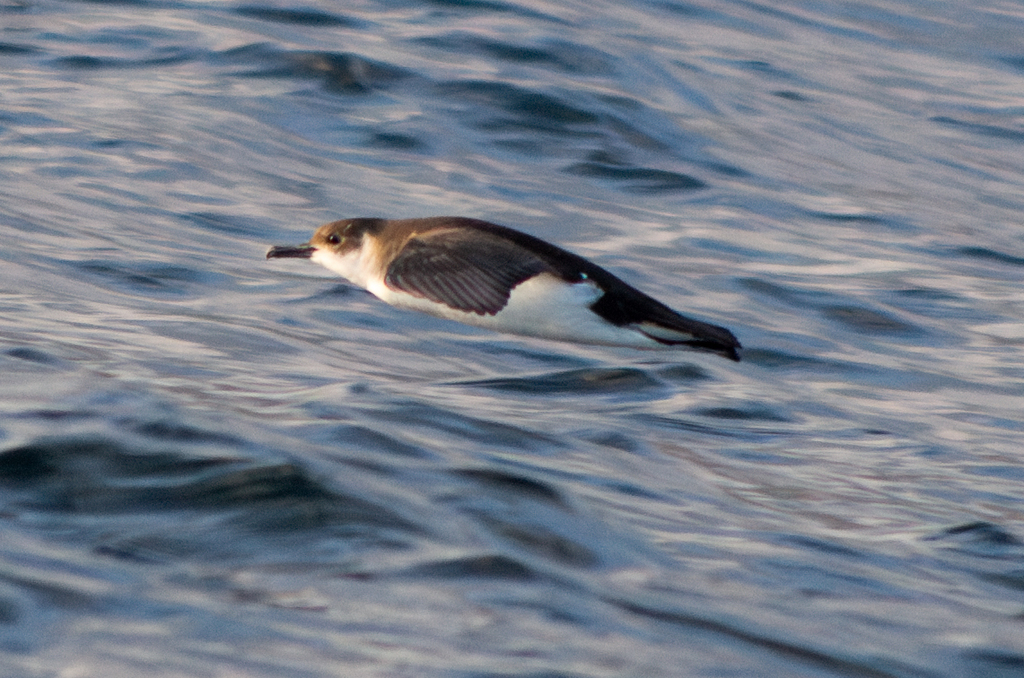
The Manx Shearwater is a medium-sized seabird with a distinctive black-and-white plumage pattern. Adults measure 30 to 38 cm (12 to 15 inches) in length with a wingspan of 76 to 89 cm (30 to 35 inches), weighing 350 to 575 grams. The species displays a sharp contrast between its dark brownish-black upperparts and bright white underparts. The bill is long, slender, and dark with tubular nostrils characteristic of the petrel family. In flight, the wings appear narrow and pointed, with dark trailing edges visible on the underwing. The Manx Shearwater has a widespread distribution across the North Atlantic, with breeding colonies primarily located on islands off the coasts of Britain, Ireland, and France. In North America, the species breeds on islands along the Atlantic coast from Newfoundland to North Carolina. California records represent vagrant individuals, typically observed during fall migration periods along the coast. Most California sightings occur from September through November, with occasional records extending into winter months. The species is most frequently reported from offshore waters and coastal headlands from Monterey County northward. At sea, Manx Shearwaters inhabit pelagic waters over the continental shelf and slope, typically foraging in areas with upwelling or convergence zones that concentrate prey. During the breeding season, they nest in burrows excavated in soil on grassy clifftops and offshore islands. Burrows extend 60 to 200 cm into the ground, ending in a nesting chamber lined with vegetation. The species shows strong site fidelity, returning to the same burrow systems year after year. Manx Shearwaters are highly pelagic outside the breeding season, spending most of their time on the ocean surface or in flight. They feed primarily on small schooling fish, including sardines, anchovies, and herring, which they capture by surface seizing and shallow plunge diving. The species also consumes squid and marine crustaceans. Breeding occurs from April through September, with pairs laying a single white egg in late May or June. Both parents incubate the egg for approximately 51 days and feed the chick for 60 to 75 days until fledging. Adults are nocturnal at breeding colonies, arriving after dark to avoid predation by gulls and skuas. The Manx Shearwater is not federally listed in the United States and is considered globally secure with stable populations. The IUCN Red List classifies the species as Least Concern. However, breeding colonies face localized threats from introduced mammals, particularly rats and cats on island nesting sites. Climate change may affect prey distribution and availability, potentially impacting foraging success. In California, the species remains a rare but regular vagrant, with observations increasing during years of warmer ocean conditions associated with El Niño events.
Classification
Class: Aves · Order: Procellariiformes · Family: Procellariidae
Frequently asked questions
How is Puffinus puffinus classified?
Puffinus puffinus belongs to class Aves, order Procellariiformes, family Procellariidae.
What family does Puffinus puffinus belong to?
Puffinus puffinus is in the Procellariidae family.
What is Puffinus puffinus?
The Manx Shearwater is a medium-sized seabird with a distinctive black-and-white plumage pattern.
Is Puffinus puffinus found in California?
Yes. Puffinus puffinus is recorded in California in The California Species Project's catalogue.
Related species
Other California species in the same genus, family, or bioregion.
Data from The California Species Project — 14,000+ California species with verified data from CNPS, CDFW, USFWS, and more.