Pugettia producta
Northern Kelp Crab
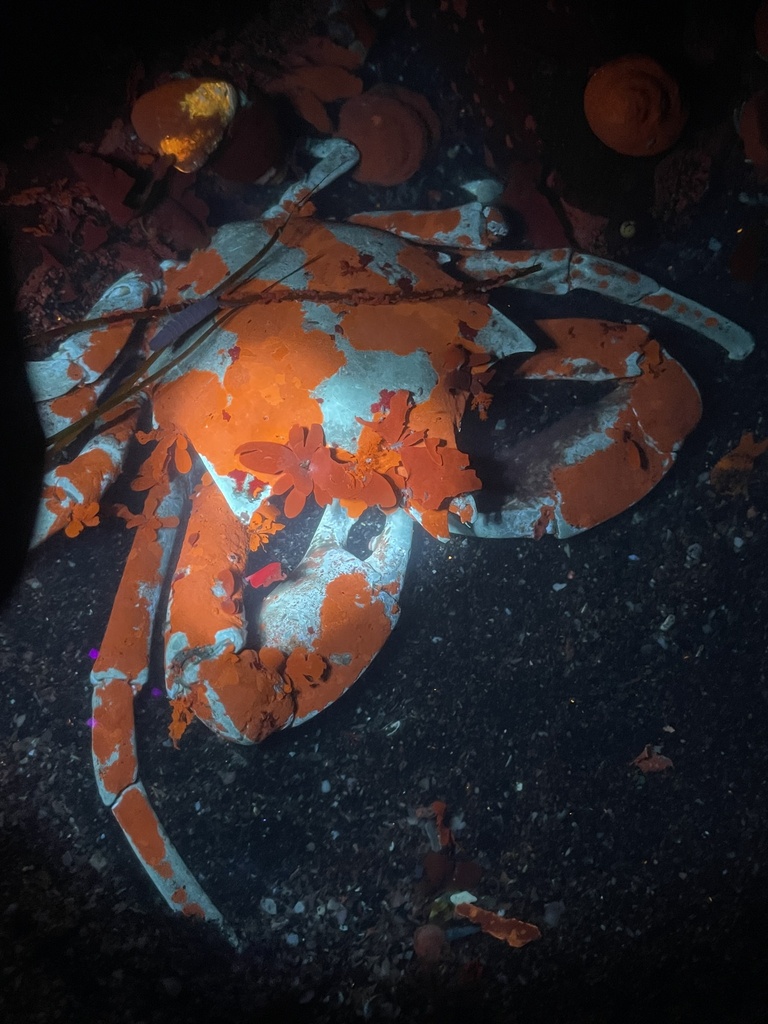
(c) Cricket Raspet, some rights reserved (CC BY) · licence
Family: Epialtidae · Class: Malacostraca · Order: Decapoda
Pugettia producta (Northern Kelp Crab) is a California animal in the Epialtidae family.
The northern kelp crab is a medium-sized marine crab with a carapace that typically measures 20 to 45 millimeters (0.8 to 1.8 inches) in width. The carapace is shield-shaped and moderately convex, with a granular surface texture. Coloration ranges from reddish-brown to olive-green, often matching the kelp on which they live. The rostrum is bifid (two-pointed) and projects forward between the eyes. The legs are relatively long and slender, adapted for climbing through kelp fronds, with the walking legs bearing sharp, curved claws that aid in gripping algal surfaces. Pugettia producta ranges along the Pacific coast from Alaska to Baja California, Mexico. In California, the species occurs from the Oregon border south to Point Conception, with populations documented in rocky intertidal and subtidal zones throughout this range. The species is commonly found in kelp forests along the California coast, including areas within marine protected areas such as Bodega Head State Marine Reserve and Saunders Reef State Marine Conservation Area. Northern kelp crabs inhabit rocky intertidal and shallow subtidal environments, primarily associated with kelp forests and algal beds. They occur from the low intertidal zone to depths of approximately 73 meters (240 feet), though they are most abundant in shallow waters where kelp is present. The species shows a strong preference for areas with giant kelp (Macrocystis pyrifera) and bull kelp (Nereocystis luetkeana), using these large brown algae for both shelter and food. They can also be found among other macroalgae including rockweed and sea lettuce. The northern kelp crab exhibits primarily herbivorous feeding behavior, consuming various species of marine algae. Their diet consists mainly of kelp and other brown algae, though they may also consume small invertebrates opportunistically. The species displays cryptic behavior, often remaining motionless among kelp fronds where their coloration provides effective camouflage. Reproduction occurs during spring and summer months, with females carrying eggs beneath their abdomen until hatching. The larvae undergo several planktonic stages before settling and metamorphosing into juvenile crabs. Currently, Pugettia producta does not hold any federal or state conservation listing status. The species appears to maintain stable populations throughout its range and benefits from the protection of kelp forest ecosystems within California's network of marine protected areas. However, kelp forest habitats face ongoing threats from climate change, including marine heat waves and ocean acidification, which can affect both kelp abundance and the invertebrate communities they support. Sea otter predation represents a natural threat, as these marine mammals consume various crab species including Pugettia species as documented in recovery planning documents (USFWS 2012). The species' close association with kelp ecosystems makes it potentially vulnerable to large-scale kelp forest declines, though its wide distribution and adaptability to various algal habitats provide some resilience against localized habitat changes.
Classification
Class: Malacostraca · Order: Decapoda · Family: Epialtidae
Frequently asked questions
How is Pugettia producta classified?
Pugettia producta belongs to class Malacostraca, order Decapoda, family Epialtidae.
What family does Pugettia producta belong to?
Pugettia producta is in the Epialtidae family.
What is Pugettia producta?
The northern kelp crab is a medium-sized marine crab with a carapace that typically measures 20 to 45 millimeters (0.8 to 1.8 inches) in width.
Is Pugettia producta found in California?
Yes. Pugettia producta is recorded in California in The California Species Project's catalogue.
More California species
This species has no close relatives in our California data — here are other species to explore.
Data from The California Species Project — 14,000+ California species with verified data from CNPS, CDFW, USFWS, and more.