Puma concolor browni
Yuma Mountain Lion
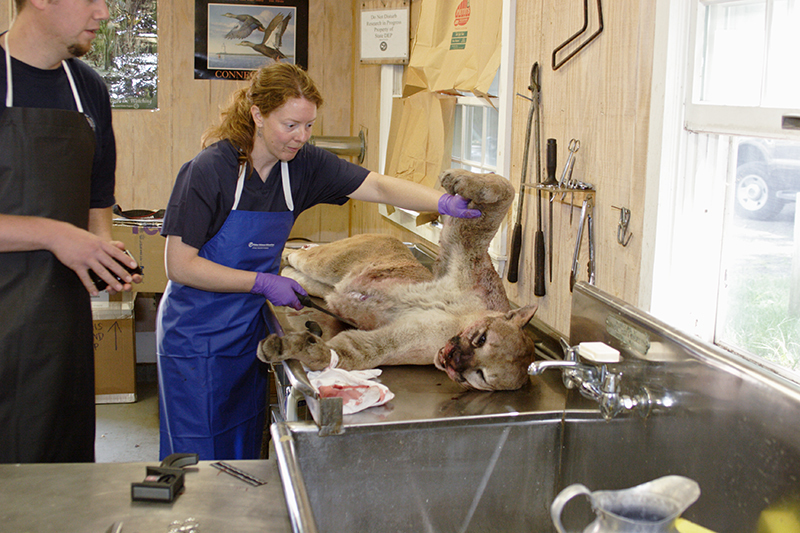
(c) Bobby McCabe, some rights reserved (CC BY) · licence
Family: Felidae · Class: Mammalia · Order: Carnivora
Conservation status: G5T1T2Q S1
Puma concolor browni (Yuma Mountain Lion) is a California animal in the Felidae family.
The Yuma Mountain Lion (Puma concolor browni) is a subspecies of cougar distinguished by its large size and tawny coloration. Adults typically measure 2.4 to 2.7 meters (8 to 9 feet) in total length, including a tail of 60 to 90 centimeters (24 to 36 inches), and weigh 34 to 48 kilograms (75 to 105 pounds) for females and 53 to 72 kilograms (115 to 160 pounds) for males. The coat is generally tawny to grayish-brown above with lighter underparts, and the species lacks the spots present in juveniles of other Puma concolor subspecies. Historically, P. c. browni ranged throughout the southwestern United States, including southeastern California, Arizona, New Mexico, and northern Mexico. The current range has been severely reduced, with the subspecies now restricted to isolated populations in remote mountainous areas of the southwestern United States. In California, any remaining populations would be limited to the southeastern desert mountain ranges, though recent confirmed occurrences are extremely rare. The Yuma Mountain Lion inhabits rugged desert mountain terrain, including rocky canyons, cliff areas, and associated woodland and chaparral communities. The subspecies typically occurs at elevations ranging from 300 to 2,400 meters (1,000 to 8,000 feet), favoring areas with adequate water sources, prey availability, and escape terrain. Preferred habitat includes pinyon-juniper woodlands, oak woodlands, and riparian corridors within otherwise arid landscapes. As an apex predator, P. c. browni primarily hunts deer species, including mule deer and white-tailed deer, but also takes smaller mammals such as rabbits, rodents, and occasionally javelinas. Hunting typically occurs during dawn and dusk hours, with individuals covering territories of 50 to 370 square kilometers (20 to 140 square miles) depending on prey density and habitat quality. Females give birth to 1 to 6 kittens after a gestation period of approximately 90 days, with young remaining with the mother for 15 to 26 months. Sexual maturity is reached at 2 to 3 years of age. The conservation status of P. c. browni is extremely precarious, with NatureServe ranking it as G5T1T2Q S1, indicating a critically imperiled subspecies at high risk of extinction. Primary threats include habitat fragmentation, human encroachment, vehicle strikes, and prey depletion due to overhunting and habitat loss. Historical persecution through bounty programs and predator control significantly reduced populations throughout the 20th century. Current populations are believed to number fewer than 50 individuals across the entire range, making genetic isolation and inbreeding additional conservation concerns. Unlike other Puma concolor subspecies, P. c. browni lacks federal protection under the Endangered Species Act, though it may receive some protection under state wildlife regulations. The subspecies' survival depends on maintaining connectivity between remaining habitat patches and reducing human-wildlife conflicts in border regions.
Classification
Class: Mammalia · Order: Carnivora · Family: Felidae
Conservation status
G5T1T2Q S1
Frequently asked questions
How is Puma concolor browni classified?
Puma concolor browni belongs to class Mammalia, order Carnivora, family Felidae.
What family does Puma concolor browni belong to?
Puma concolor browni is in the Felidae family.
Is Puma concolor browni protected or of conservation concern?
Puma concolor browni carries the following status: G5T1T2Q S1.
What is Puma concolor browni?
The Yuma Mountain Lion (Puma concolor browni) is a subspecies of cougar distinguished by its large size and tawny coloration.
Is Puma concolor browni found in California?
Yes. Puma concolor browni is recorded in California in The California Species Project's catalogue.
Related species
Other California species in the same genus, family, or bioregion.
Data from The California Species Project — 14,000+ California species with verified data from CNPS, CDFW, USFWS, and more.