Pusa hispida
Ringed Seal
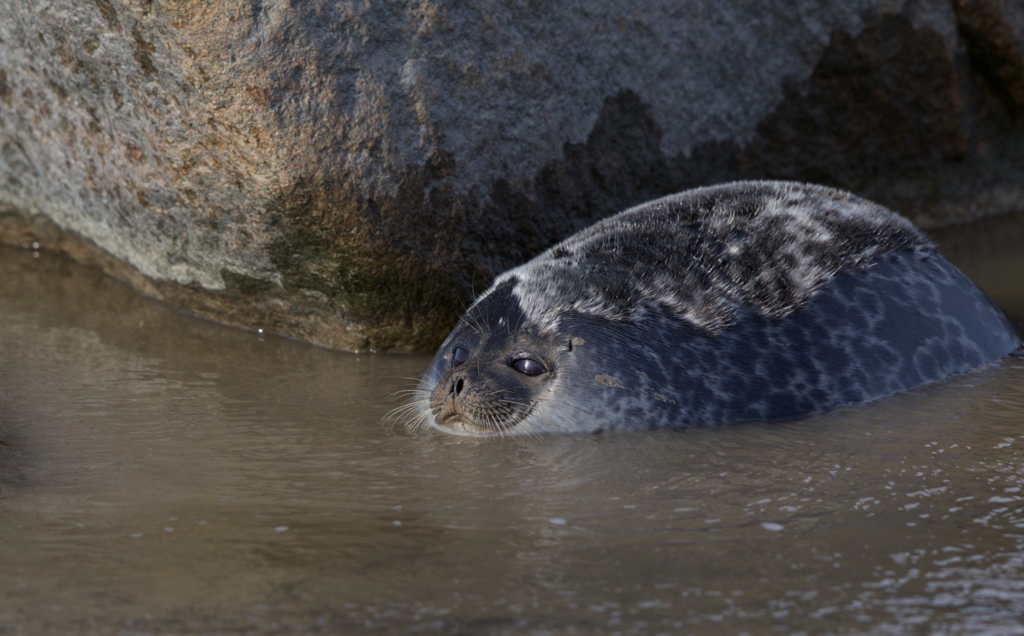
(c) Nodnarb Nedloh, some rights reserved (CC BY-SA) · licence
Family: Phocidae · Class: Mammalia · Order: Carnivora
Pusa hispida (Ringed Seal) is a California animal in the Phocidae family.
The ringed seal is the smallest and most abundant pinniped in the Arctic, measuring 100 to 150 centimeters (39 to 59 inches) in length and weighing 32 to 70 kilograms (70 to 154 pounds). Adults display distinctive dark spots surrounded by light-colored rings on their dorsal surface, giving the species its common name. The dorsal coloration ranges from dark gray to brownish-black, while the ventral surface is lighter gray to cream-colored. Pups are born with white lanugo fur that molts to the adult pelage pattern within several weeks. Ringed seals have a circumpolar distribution in Arctic and subarctic waters. The species occurs in the Beaufort, Chukchi, and Bering seas off Alaska's coast. In California waters, ringed seals are extremely rare vagrants, with only occasional sightings documented along the northern coast. These represent individuals that have traveled far south of their normal range, likely following cold water currents or during periods of unusual oceanographic conditions. The species inhabits ice-covered marine waters, showing strong dependence on sea ice for breeding, molting, and resting. Ringed seals require stable landfast ice or heavy pack ice to construct breathing holes and pupping lairs. They are capable of maintaining breathing holes in ice up to 2 meters (6.5 feet) thick using their strong fore-flipper claws. During ice-free periods, they utilize terrestrial haul-out sites on rocky shores and beaches. Ringed seals are solitary animals that maintain individual breathing holes throughout the ice-covered season. They are accomplished divers, reaching depths of 45 meters (148 feet) routinely and maximum depths exceeding 90 meters (295 feet). Their diet consists primarily of Arctic cod, polar cod, and various crustaceans including amphipods and euphausiids. Breeding occurs in spring, with females giving birth to single pups in snow-covered lairs constructed above breathing holes on the ice surface. Pups nurse for approximately two months before weaning. Globally, ringed seals are not considered threatened, with a circumpolar population estimated between 2 to 7 million individuals according to the IUCN. However, climate change poses the primary long-term threat to the species through reduction of sea ice habitat. The Arctic subspecies was listed as threatened under the Endangered Species Act in 2012 due to projected sea ice loss. In California, ringed seals have no established breeding population and remain occasional visitors. The Marine Mammal Protection Act provides federal protection for any individuals entering California waters. Arctic populations face additional threats from industrial development, shipping traffic, and potential oil spills as ice-free areas expand with warming temperatures.
Classification
Class: Mammalia · Order: Carnivora · Family: Phocidae
Frequently asked questions
How is Pusa hispida classified?
Pusa hispida belongs to class Mammalia, order Carnivora, family Phocidae.
What family does Pusa hispida belong to?
Pusa hispida is in the Phocidae family.
What is Pusa hispida?
The ringed seal is the smallest and most abundant pinniped in the Arctic, measuring 100 to 150 centimeters (39 to 59 inches) in length and weighing 32 to 70 kilograms (70 to 154 pounds).
Is Pusa hispida found in California?
Yes. Pusa hispida is recorded in California in The California Species Project's catalogue.
Related species
Other California species in the same genus, family, or bioregion.
Data from The California Species Project — 14,000+ California species with verified data from CNPS, CDFW, USFWS, and more.