Pygarctia murina
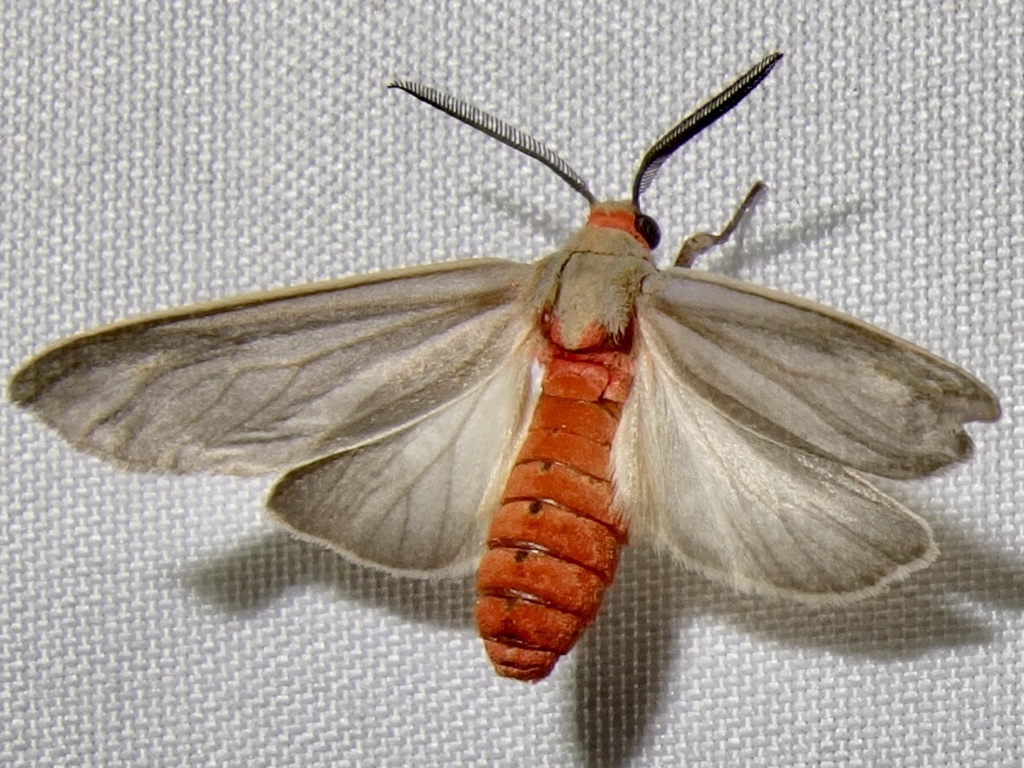
(c) Sue Carnahan, some rights reserved (CC BY) · licence
Family: Erebidae · Class: Insecta · Order: Lepidoptera
Pygarctia murina is a California animal in the Erebidae family.
Pygarctia murina is a moth species belonging to the family Erebidae, subfamily Arctiinae, commonly known as tiger moths or lichen moths. This species is part of the genus Pygarctia, which comprises several North American moth species characterized by their relatively small size and distinctive wing patterns. Adult Pygarctia murina moths typically measure 20-25 mm in wingspan. The forewings are generally pale gray to brownish-gray with darker markings, while the hindwings are typically lighter in coloration. Like other members of the Arctiinae subfamily, adults possess the characteristic feathery or thread-like antennae and a robust, hairy body. The specific epithet 'murina' refers to the mouse-gray coloration of this species. The range and distribution of Pygarctia murina within California requires further documentation, as comprehensive survey data for this species is limited. Members of the genus Pygarctia are generally found across western North America, with various species occupying different ecological niches from coastal regions to montane environments. Without specific locality records, the precise California distribution remains unclear. Habitat preferences for Pygarctia murina are not well-documented in the literature. Other Pygarctia species typically inhabit areas with diverse herbaceous vegetation and may be associated with specific host plant communities. The larvae, like those of many Arctiinae moths, are likely polyphagous, feeding on various low-growing plants, lichens, or detritus. Adults are typically nocturnal and attracted to artificial lights. The life cycle follows the typical lepidopteran pattern of complete metamorphosis. Eggs are likely deposited on or near host plants during the adult flight period. Larval development occurs over several instars, with caterpillars potentially overwintering before pupating. The timing of adult emergence and flight periods in California would depend on local climatic conditions and elevation. The conservation status of Pygarctia murina is not well-established, as this species has received limited scientific attention. No federal or state listing status has been assigned, suggesting either stable populations or insufficient data for assessment. Like many moth species, potential threats could include habitat modification, pesticide use, and light pollution, which can disrupt nocturnal behavior patterns. Climate change may also affect distribution patterns, particularly for species with specific microhabitat requirements. The taxonomic status and relationship of Pygarctia murina to other Pygarctia species requires further investigation. Recent molecular studies of Arctiinae moths have revealed complex evolutionary relationships within this diverse subfamily, and some species boundaries may require revision. Additional field surveys and taxonomic research are needed to better understand the distribution, ecology, and conservation needs of this species in California.
Classification
Class: Insecta · Order: Lepidoptera · Family: Erebidae
Frequently asked questions
How is Pygarctia murina classified?
Pygarctia murina belongs to class Insecta, order Lepidoptera, family Erebidae.
What family does Pygarctia murina belong to?
Pygarctia murina is in the Erebidae family.
What is Pygarctia murina?
Pygarctia murina is a moth species belonging to the family Erebidae, subfamily Arctiinae, commonly known as tiger moths or lichen moths.
Is Pygarctia murina found in California?
Yes. Pygarctia murina is recorded in California in The California Species Project's catalogue.
Related species
Other California species in the same genus, family, or bioregion.
Data from The California Species Project — 14,000+ California species with verified data from CNPS, CDFW, USFWS, and more.