Pylodictis olivaris
Flathead catfish
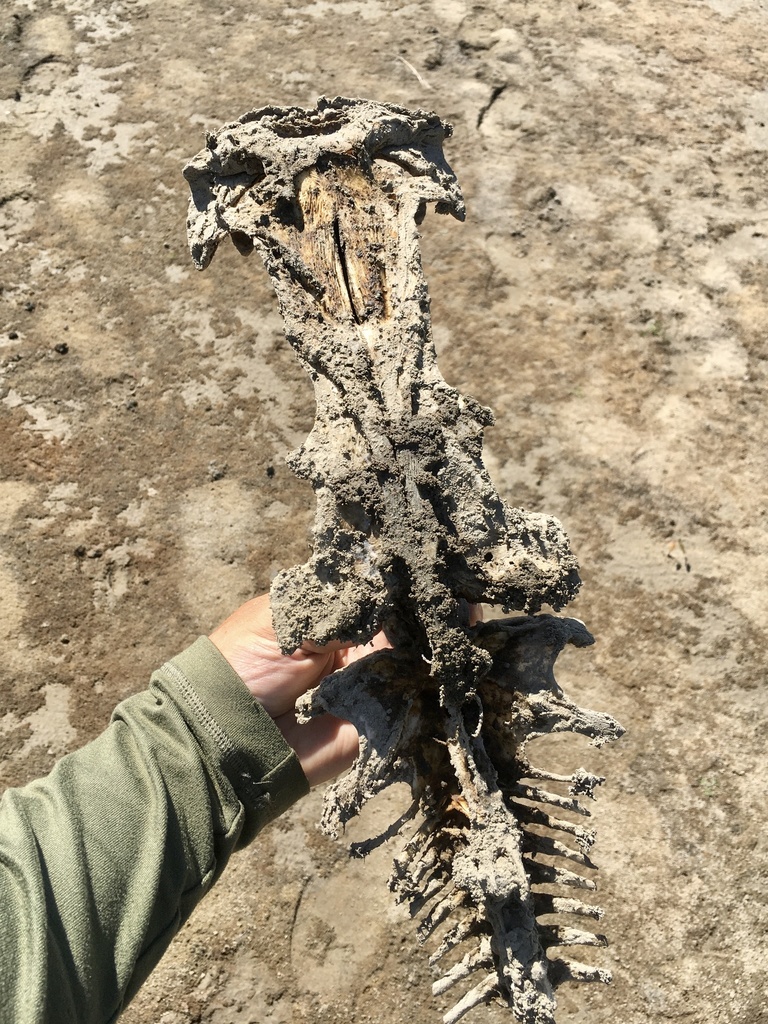
(c) Rose Zappa, some rights reserved (CC BY) · licence
Family: Ictaluridae · Class: Teleostei · Order: Siluriformes
Pylodictis olivaris (Flathead catfish) is a California animal in the Ictaluridae family.
The flathead catfish is a large freshwater fish native to the Mississippi River drainage system and southeastern United States. Adults are distinguished by their flattened head, square tail, and protruding lower jaw. The body is elongated and scaleless, with a mottled olive-brown to yellow coloration that provides camouflage against muddy substrates. Large specimens can exceed 1.2 meters (4 feet) in length and weigh over 45 kilograms (100 pounds), making it one of North America's largest catfish species. The head comprises approximately 25% of the total body length, with small eyes positioned on top and a wide mouth containing bands of small teeth. Historically, flathead catfish were absent from California waters. However, the species has been introduced to several western states through unauthorized releases. In California, established populations now occur in the Colorado River system along the state's southeastern border, including Lake Havasu and the lower Colorado River. Additional populations have been documented in the San Joaquin River system, particularly in the lower San Joaquin River and its tributaries. The species has also been reported in several Central Valley reservoirs and irrigation canals. Flathead catfish inhabit large rivers, reservoirs, and deep pools with moderate to slow current. They prefer areas with abundant cover such as submerged logs, rock piles, undercut banks, and deep holes. Adults are typically found in waters deeper than 3 meters (10 feet) during daylight hours, moving to shallower areas to feed at night. The species tolerates a wide range of water temperatures and oxygen levels, contributing to its successful establishment in non-native waters. Flathead catfish are solitary predators that feed almost exclusively on live fish, distinguishing them from other catfish species that consume carrion and invertebrates. Juveniles initially feed on aquatic insects and crustaceans before transitioning to a piscivorous diet at approximately 10 centimeters (4 inches) in length. Adults are opportunistic predators that consume sunfish, bass, carp, and other available fish species. Spawning occurs from May through August when water temperatures reach 21-29°C (70-84°F). Males construct nests in cavities such as hollow logs or undercut banks, where females deposit 2,000 to 100,000 adhesive eggs. Males guard the nest and young for several weeks after hatching. Flathead catfish are not federally or state listed in California, as they are a non-native species. However, their presence raises significant ecological concerns due to their predatory impact on native fish populations. The species has been implicated in the decline of native fish communities in several river systems where it has been introduced. California Department of Fish and Wildlife considers flathead catfish a prohibited species under certain regulations, and their transport and release are restricted. Management efforts focus on preventing further spread and monitoring existing populations to assess impacts on native aquatic ecosystems.
Classification
Class: Teleostei · Order: Siluriformes · Family: Ictaluridae
Frequently asked questions
How is Pylodictis olivaris classified?
Pylodictis olivaris belongs to class Teleostei, order Siluriformes, family Ictaluridae.
What family does Pylodictis olivaris belong to?
Pylodictis olivaris is in the Ictaluridae family.
What is Pylodictis olivaris?
The flathead catfish is a large freshwater fish native to the Mississippi River drainage system and southeastern United States.
Is Pylodictis olivaris found in California?
Yes. Pylodictis olivaris is recorded in California in The California Species Project's catalogue.
Related species
Other California species in the same genus, family, or bioregion.
Data from The California Species Project — 14,000+ California species with verified data from CNPS, CDFW, USFWS, and more.