Pyrausta californicalis
California Pyrausta Moth
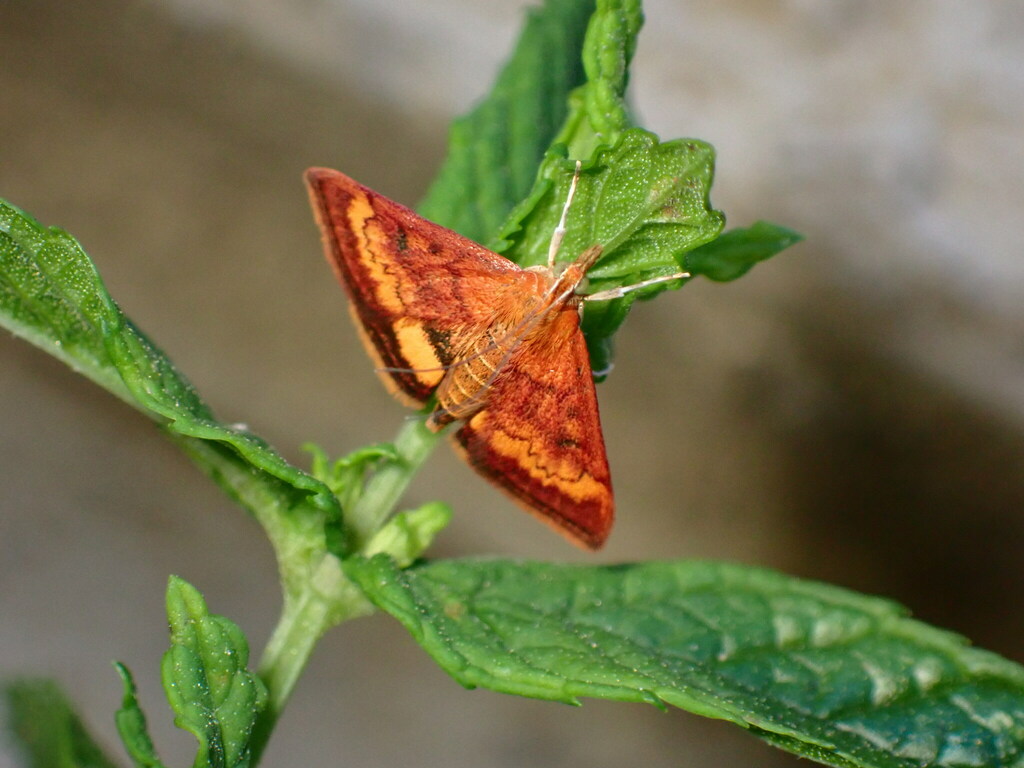
(c) Cricket Raspet, some rights reserved (CC BY) · licence
Family: Crambidae · Class: Insecta · Order: Lepidoptera
Pyrausta californicalis (California Pyrausta Moth) is a California animal in the Crambidae family.
The California Pyrausta moth (Pyrausta californicalis) is a small member of the grass moth family Crambidae. Adults typically measure 15 to 20 millimeters (0.6 to 0.8 inches) in wingspan. The forewings display a characteristic pattern of orange-brown to reddish-brown ground color with distinctive white or pale yellow markings that form irregular bands and spots across the wing surface. The hindwings are generally paler, often appearing whitish or cream-colored with subtle darker margins. Like other Pyrausta species, this moth has relatively narrow wings and slender antennae. Pyrausta californicalis ranges from British Columbia, Canada, southward through the western United States to California. Within California, the species occurs in areas where suitable host plants are present, including both natural and cultivated environments. The distribution follows the availability of mint species throughout the Pacific coastal regions and inland valleys where these aromatic herbs grow naturally or are cultivated. This species inhabits areas where mint plants (Mentha species) thrive, including riparian zones, moist meadows, garden edges, and agricultural areas. The moth is commonly found in elevations from sea level to mid-montane zones where spearmint, peppermint, and other Mentha species occur. Preferred habitats include areas with consistent moisture, as mint plants require adequate water availability. The species may also be found in disturbed habitats where mint has naturalized, including roadside ditches and field margins. California Pyrausta moths are multivoltine, producing multiple generations per year depending on climate and host plant availability. Adults are primarily active during twilight hours and at night, when they engage in mating and nectar feeding behaviors. Females deposit eggs on or near mint plants, where the developing larvae feed as leaf rollers or stem borers within the host plant tissues. The caterpillars create silken shelters by rolling or folding leaves, providing protection while they consume plant material. Pupation typically occurs within the larval feeding site or in nearby leaf litter. The species overwinters in the pupal stage in temperate regions of its range. Larvae are specifically adapted to feed on several species of mint (Mentha), including spearmint (Mentha spicata) and peppermint (Mentha × piperita). This host plant specialization reflects the moth's evolutionary adaptation to the chemical compounds found in mint foliage, which many other herbivorous insects cannot tolerate. Currently, Pyrausta californicalis does not appear on federal or California state listing schedules for threatened or endangered species. The moth's association with widely distributed and often cultivated host plants may provide some buffer against habitat loss. However, like many specialized herbivorous insects, populations could be affected by changes in land use, pesticide applications in agricultural areas, and alterations to riparian habitats where native mint species occur. No specific population trends or conservation assessments have been documented for this species.
Classification
Class: Insecta · Order: Lepidoptera · Family: Crambidae
Frequently asked questions
How is Pyrausta californicalis classified?
Pyrausta californicalis belongs to class Insecta, order Lepidoptera, family Crambidae.
What family does Pyrausta californicalis belong to?
Pyrausta californicalis is in the Crambidae family.
What is Pyrausta californicalis?
The California Pyrausta moth (Pyrausta californicalis) is a small member of the grass moth family Crambidae.
Is Pyrausta californicalis found in California?
Yes. Pyrausta californicalis is recorded in California in The California Species Project's catalogue.
Related species
Other California species in the same genus, family, or bioregion.
Data from The California Species Project — 14,000+ California species with verified data from CNPS, CDFW, USFWS, and more.