Pyrausta corinthalis
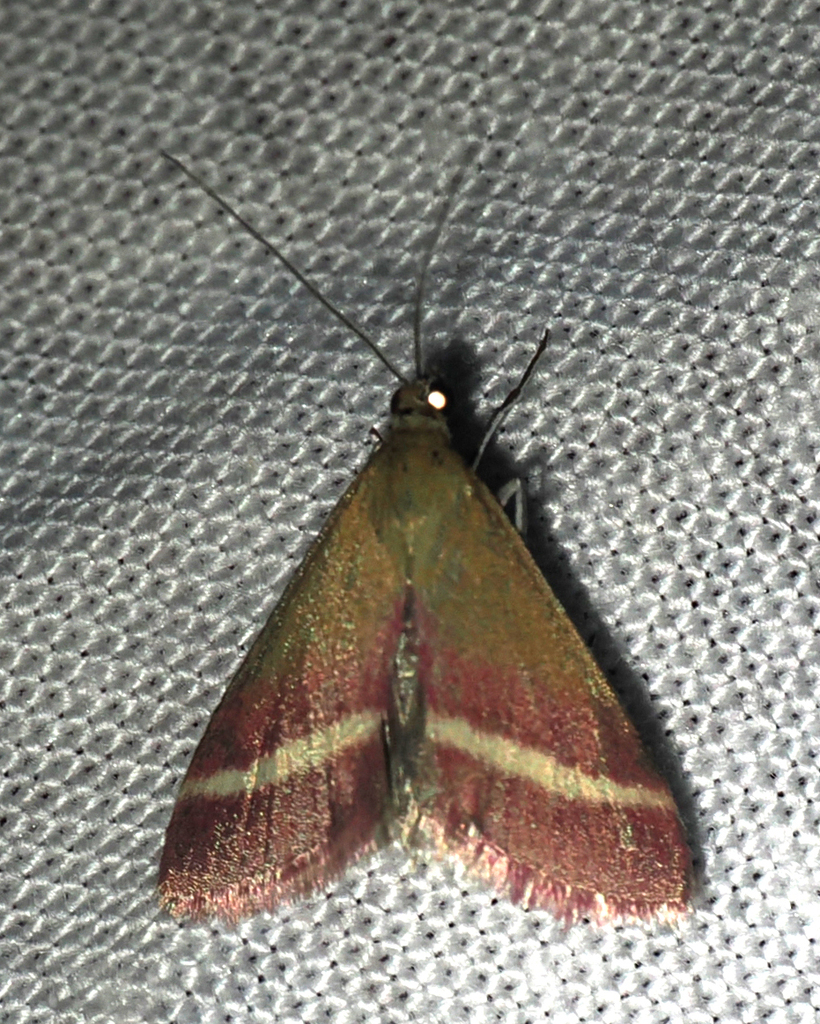
(c) Roger Rittmaster, some rights reserved (CC BY) · licence
Family: Crambidae · Class: Insecta · Order: Lepidoptera
Pyrausta corinthalis is a California animal in the Crambidae family.
Pyrausta corinthalis is a small moth in the family Crambidae, first described by Barnes and McDunnough in 1914. This species belongs to the genus Pyrausta, a group of grass moths commonly known as mint moths due to their frequent association with plants in the mint family. The moth displays typical Pyrausta characteristics with forewings that are generally brownish or gray-brown in coloration, often marked with darker lines or patterns that vary among individuals. The range and distribution of P. corinthalis in California remains poorly documented in the scientific literature. According to the Butterflies and Moths of North America database, verified sightings exist for this species, though specific locality data and distribution patterns within California have not been comprehensively mapped. The species appears to have a limited distribution compared to more common Pyrausta species, with records primarily from western North America. Habitat preferences for P. corinthalis have not been extensively studied or documented. Like other members of the genus Pyrausta, this species likely inhabits areas where suitable host plants occur, potentially including grasslands, meadows, or disturbed areas where herbaceous plants are present. The elevation range and specific microhabitat requirements remain undetermined for this species. The life history and ecology of P. corinthalis are not well documented in published literature. Based on patterns observed in related Pyrausta species, adults likely emerge during specific seasonal periods, with larvae potentially feeding on herbaceous plants. The specific host plant relationships, larval feeding habits, and seasonal flight periods have not been definitively established through scientific study. Adult moths in this genus are typically nocturnal and may be attracted to artificial lights during their active period. P. corinthalis does not appear on federal or state endangered species lists and lacks formal conservation status designations. The species is not listed by the U.S. Fish and Wildlife Service under the Endangered Species Act, nor does it appear in California Department of Fish and Wildlife special status species lists as of December 2025. However, the limited documentation and apparent restricted distribution suggest that population trends and conservation needs remain largely unknown. Like many lesser-studied invertebrates, this species may face threats from habitat loss, agricultural practices, or climate change, though specific impacts have not been assessed. Detailed ecological studies of this species are lacking. The information presented here synthesizes available data from taxonomic databases and moth occurrence records. We welcome contributions of verified scientific data, photographs, or field observations to enhance this species account. Additional research is needed to establish basic biological parameters including host plants, habitat requirements, distribution patterns, and population status within California.
Classification
Class: Insecta · Order: Lepidoptera · Family: Crambidae
Frequently asked questions
How is Pyrausta corinthalis classified?
Pyrausta corinthalis belongs to class Insecta, order Lepidoptera, family Crambidae.
What family does Pyrausta corinthalis belong to?
Pyrausta corinthalis is in the Crambidae family.
What is Pyrausta corinthalis?
Pyrausta corinthalis is a small moth in the family Crambidae, first described by Barnes and McDunnough in 1914.
Is Pyrausta corinthalis found in California?
Yes. Pyrausta corinthalis is recorded in California in The California Species Project's catalogue.
Related species
Other California species in the same genus, family, or bioregion.
Data from The California Species Project — 14,000+ California species with verified data from CNPS, CDFW, USFWS, and more.