Pyrausta dapalis
Pearly Pyrausta
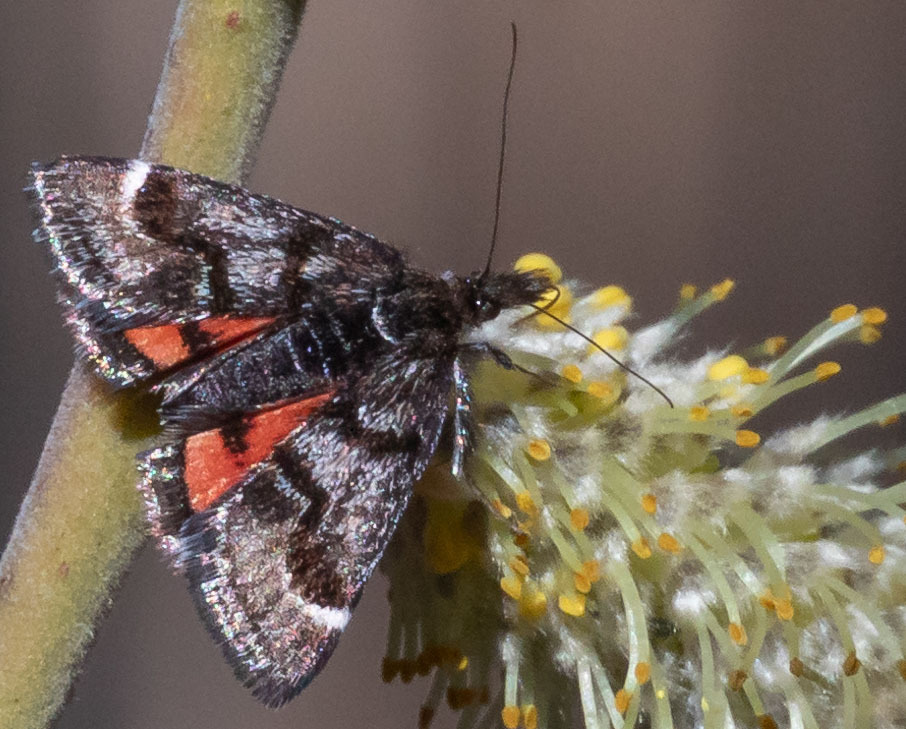
(c) Pinnacles National Park, some rights reserved (CC BY) · licence
Family: Crambidae · Class: Insecta · Order: Lepidoptera
Pyrausta dapalis (Pearly Pyrausta) is a California animal in the Crambidae family.
Pyrausta dapalis, commonly known as the pearly pyrausta, is a small moth in the family Crambidae (grass moths). This species exhibits distinctive coloration patterns that make it recognizable among North American pyraloids. Adults display variable coloration with reddish or pinkish hues on the forewings and hindwings, distinguishing it from most other Pyrausta species. According to Powell and Opler (2009), only P. dapalis and P. coccinea among Nearctic Pyrausta species possess distinctly red hindwings, though P. dapalis can be separated by its entirely black or dark gray markings. The species can superficially resemble Archiearis infans in certain lighting conditions, but differs in family placement and wing pattern details. Pyrausta dapalis occurs in California's Sierra Nevada mountains, representing the species' documented range within the state. The species has a broader North American distribution, with records extending beyond California to other western states. In California, observations have been documented from various elevations within the Sierra Nevada system, though specific altitudinal ranges have not been precisely quantified in available literature. The species inhabits montane environments associated with the Sierra Nevada ecosystem. Like other Pyrausta species, P. dapalis likely requires specific host plant associations, though detailed host plant relationships remain poorly documented for this particular species. Other members of the genus Pyrausta typically utilize plants in the mint family (Lamiaceae) as larval hosts, suggesting similar ecological requirements may apply to P. dapalis, though this requires verification through field studies. Adult flight periods for P. dapalis show seasonal variation based on available collection records. Historical observations from the Lepidopterists' Society News indicate activity from late winter through fall months, with records spanning February through December in California locations. The species shows association with native plant communities, with one observation noting association with Salvia spathacea (hummingbird sage) at San Bruno Mountains in February (Lepidopterists' Society News 1990). This suggests potential host plant relationships within the Salvia genus, consistent with known preferences of related Pyrausta species. Conservation status information for P. dapalis remains limited. The species appears on Arkansas's Species of Greatest Conservation Need list, indicating regional conservation concerns, though it lacks federal or state listing status in California. The Arkansas designation notes that species were included due to rarity, population decline, or insufficient knowledge to determine taxonomic or conservation status (BugGuide). For P. dapalis specifically in California, population trends and conservation needs have not been thoroughly assessed. Detailed ecological studies of this species remain limited in California. Scientific documentation focuses primarily on taxonomic descriptions and basic distributional records rather than comprehensive life history studies. The species would benefit from targeted research examining host plant relationships, population dynamics, and habitat requirements within the Sierra Nevada ecosystem. Current knowledge gaps include specific breeding requirements, larval development patterns, and responses to environmental changes affecting montane habitats.
Classification
Class: Insecta · Order: Lepidoptera · Family: Crambidae
Frequently asked questions
How is Pyrausta dapalis classified?
Pyrausta dapalis belongs to class Insecta, order Lepidoptera, family Crambidae.
What family does Pyrausta dapalis belong to?
Pyrausta dapalis is in the Crambidae family.
What is Pyrausta dapalis?
Pyrausta dapalis, commonly known as the pearly pyrausta, is a small moth in the family Crambidae (grass moths).
Is Pyrausta dapalis found in California?
Yes. Pyrausta dapalis is recorded in California in The California Species Project's catalogue.
Related species
Other California species in the same genus, family, or bioregion.
Data from The California Species Project — 14,000+ California species with verified data from CNPS, CDFW, USFWS, and more.