Pyrausta grotei
Grote’s Pyrausta
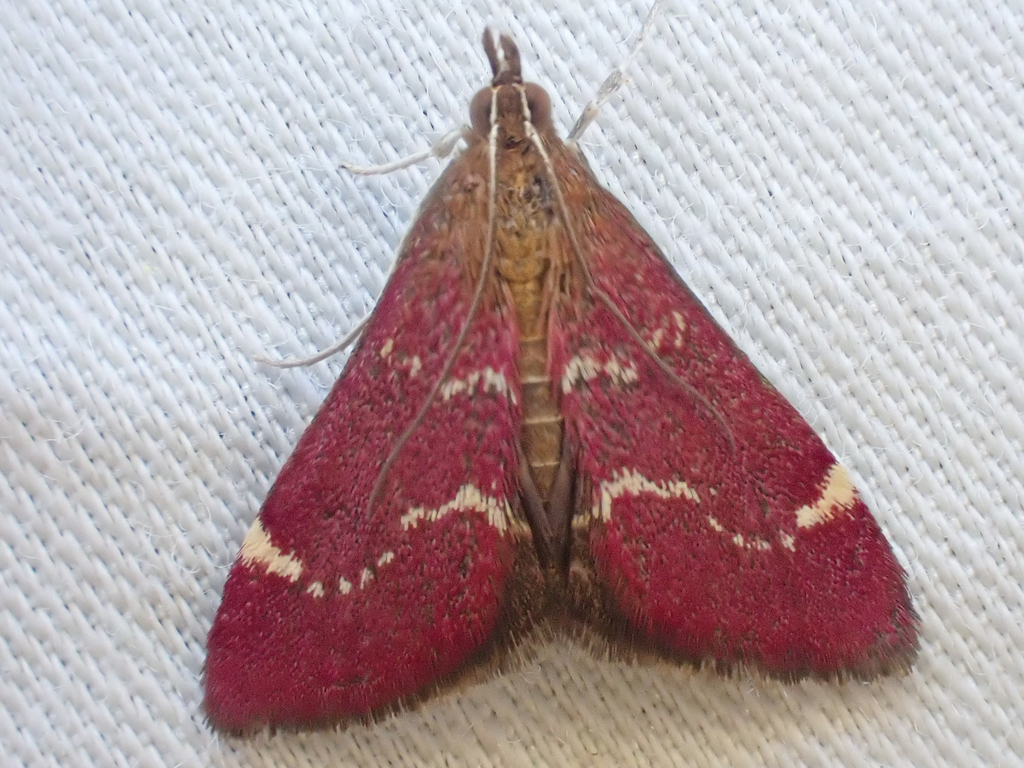
(c) Trevor Van Loon, some rights reserved (CC BY) · licence
Family: Crambidae · Class: Insecta · Order: Lepidoptera
Pyrausta grotei (Grote’s Pyrausta) is a California animal in the Crambidae family.
Pyrausta grotei is a small moth in the family Crambidae, subfamily Pyraustinae. This species was described by Munroe in 1976 and represents one of 61 named species of the genus Pyrausta in America north of Mexico (BugGuide). The moth displays the characteristic wing patterns typical of the genus, though specific morphological details for this species have not been extensively documented in the literature. The range of Pyrausta grotei appears to be centered in western North America, particularly California. According to the Moth Photographers Group, specimens have been recorded from various locations, though detailed distribution data remains limited. The species is assigned Hodges number 5033 in the standard North American moth catalog system. Like other members of the genus Pyrausta, P. grotei likely occurs across multiple western states, but comprehensive range mapping has not been completed. Habitat requirements for Pyrausta grotei have not been well documented in the scientific literature. Members of the genus Pyrausta typically inhabit areas where their larval host plants occur, and many species in this group are associated with open habitats including grasslands, chaparral, and disturbed areas. The elevation range and specific microhabitat preferences for P. grotei remain poorly characterized. The larval host plants for Pyrausta grotei have not been definitively established. Many Pyrausta species utilize plants in the mint family (Lamiaceae) as larval hosts, as documented for related species like P. laticlavia, which feeds on rosemary and other mints (Powell et al. 2000). Adult flight period and seasonal activity patterns for P. grotei are not well documented, though most Pyrausta species are active during warmer months and are commonly attracted to artificial lights at night. Pyrausta grotei is not federally listed and does not appear on California's special concern species lists as of December 2025. The species lacks formal conservation status designation, likely due to insufficient population data and limited research attention. No specific threats have been identified for this species, though habitat loss and degradation potentially affect populations like other native moths. The taxonomic status appears stable, with grotei recognized as a valid species since Munroe's 1976 description, though some historical confusion exists with the synonym augustalis (Grote, 1882). Scientific documentation for this species remains limited despite its formal taxonomic recognition for nearly five decades. Current knowledge is based primarily on taxonomic treatments and specimen records rather than ecological studies. Research priorities for P. grotei include basic life history documentation, host plant confirmation, detailed distribution mapping, and population assessment. The species represents an example of the many North American moths requiring additional study to understand their biology and conservation needs.
Classification
Class: Insecta · Order: Lepidoptera · Family: Crambidae
Frequently asked questions
How is Pyrausta grotei classified?
Pyrausta grotei belongs to class Insecta, order Lepidoptera, family Crambidae.
What family does Pyrausta grotei belong to?
Pyrausta grotei is in the Crambidae family.
What is Pyrausta grotei?
Pyrausta grotei is a small moth in the family Crambidae, subfamily Pyraustinae.
Is Pyrausta grotei found in California?
Yes. Pyrausta grotei is recorded in California in The California Species Project's catalogue.
Related species
Other California species in the same genus, family, or bioregion.
Data from The California Species Project — 14,000+ California species with verified data from CNPS, CDFW, USFWS, and more.