Pyrausta inornatalis
Southern Pink Moth
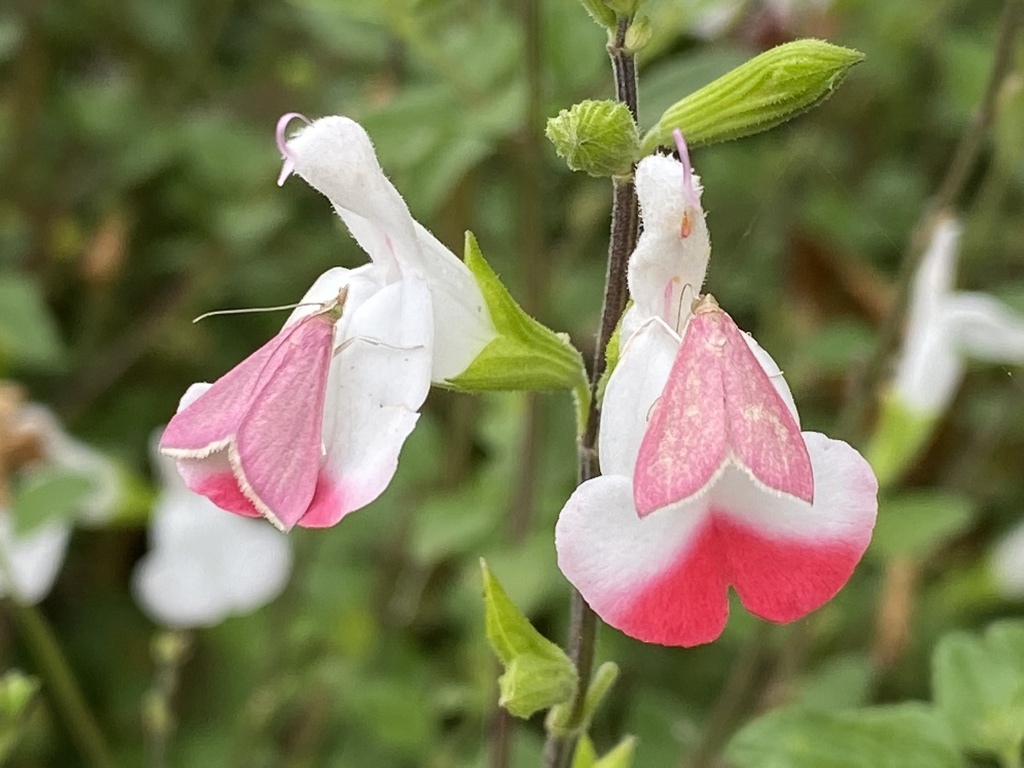
(c) Jennifer Arrow, some rights reserved (CC BY) · licence
Family: Crambidae · Class: Insecta · Order: Lepidoptera
Pyrausta inornatalis (Southern Pink Moth) is a California animal in the Crambidae family.
Pyrausta inornatalis, commonly known as the Southern Pink Moth, is a small moth in the family Crambidae, subfamily Pyraustinae. Adults typically measure 8 to 12 mm (0.31 to 0.47 inches) in wingspan, making this one of the smaller members of the genus Pyrausta. The forewings are pale brown to tan with subtle darker markings and a faint pinkish hue that gives the species its common name. The hindwings are lighter, often whitish to pale gray. The antennae are filiform in both sexes, and the body is slender with a brownish coloration that matches the forewings. The Southern Pink Moth has a limited distribution in North America, with records primarily from the southeastern United States extending into parts of the southwestern states, including California. In California, the species has been documented in desert and semi-arid regions, though specific county records are sparse in the literature. The species appears to have a patchy distribution pattern typical of many specialized desert moths. This species inhabits arid and semi-arid environments, including desert scrublands, chaparral margins, and disturbed areas with appropriate host plants. The moth is associated with elevations ranging from sea level to approximately 1,500 meters (4,900 feet). Habitat requirements appear closely tied to the presence of suitable larval host plants in the family Chenopodiaceae, particularly saltbush species (Atriplex) and related genera. Adult Southern Pink Moths are nocturnal and are attracted to artificial lights. Flight periods vary by location and elevation, but typically occur during warmer months from late spring through early fall. In California's desert regions, adults may be active from April through September, with peak activity during summer months when temperatures are favorable. Larvae feed on leaves of chenopod plants, creating small feeding damage that is often difficult to detect. The species likely completes one to two generations per year depending on local climate conditions and host plant phenology. The conservation status of Pyrausta inornatalis is not well documented, as the species lacks formal federal or state listing status. Population trends are largely unknown due to limited systematic surveys of desert moth communities. The species may face habitat pressures from urbanization, agricultural conversion, and invasive plant species that alter native plant communities in desert regions. Climate change effects on desert ecosystems, including altered precipitation patterns and increased temperatures, may affect both the moth and its host plants. The specialized habitat requirements and apparent rarity of museum records suggest this species may be naturally uncommon, though distinguishing natural rarity from population decline requires additional research.
Classification
Class: Insecta · Order: Lepidoptera · Family: Crambidae
Frequently asked questions
How is Pyrausta inornatalis classified?
Pyrausta inornatalis belongs to class Insecta, order Lepidoptera, family Crambidae.
What family does Pyrausta inornatalis belong to?
Pyrausta inornatalis is in the Crambidae family.
What is Pyrausta inornatalis?
Pyrausta inornatalis, commonly known as the Southern Pink Moth, is a small moth in the family Crambidae, subfamily Pyraustinae.
Is Pyrausta inornatalis found in California?
Yes. Pyrausta inornatalis is recorded in California in The California Species Project's catalogue.
Related species
Other California species in the same genus, family, or bioregion.
Data from The California Species Project — 14,000+ California species with verified data from CNPS, CDFW, USFWS, and more.