Pyrausta laticlavia
Southern Purple Mint Moth
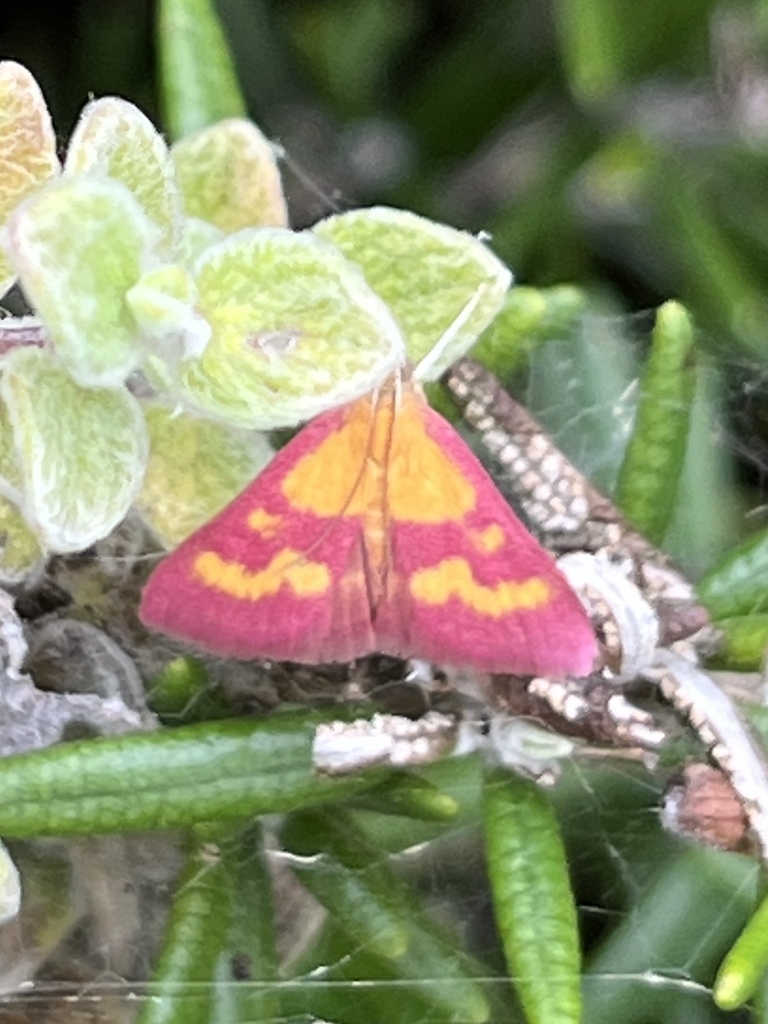
(c) harrier, some rights reserved (CC BY) · licence
Family: Crambidae · Class: Insecta · Order: Lepidoptera
Pyrausta laticlavia (Southern Purple Mint Moth) is a California animal in the Crambidae family.
The Southern Purple Mint Moth (Pyrausta laticlavia) is a small pyralid moth in the family Crambidae, subfamily Pyraustinae. Adults typically measure 8-12 mm in wingspan, with forewings displaying a distinctive pattern of purple-brown and orange markings against a darker background. The hindwings are generally lighter, often pale yellow to cream-colored with darker marginal borders. Males can be distinguished from females by their more slender abdomen and feathery antennae. This species has a limited distribution in southern California, with documented occurrences in coastal and inland areas of the region. Historical records indicate populations in Los Angeles, Orange, Riverside, and San Bernardino counties, though current distribution patterns require updated surveys to confirm active populations. The moth's range appears to be closely tied to the distribution of its host plants and suitable habitat conditions. The Southern Purple Mint Moth inhabits areas where native mint species occur, including chaparral, coastal sage scrub, and riparian zones. These environments typically range from sea level to approximately 1,500 meters in elevation. The species shows a preference for areas with moderate moisture and partial shade, often found in canyon bottoms, north-facing slopes, and areas adjacent to seasonal water sources where mint plants flourish. Larvae are specialized feeders on plants in the mint family (Lamiaceae), particularly native species of Monarda, Salvia, and related genera. The caterpillars bore into stems and feed on internal plant tissues, creating characteristic damage patterns. Adults are active during late spring and early summer months, typically from April through July, with peak flight activity occurring in May and June. The species is univoltine, producing one generation per year. Adults are primarily nocturnal and are attracted to artificial lights, though they may also be active during twilight hours. Females deposit eggs singly or in small clusters on host plant stems, usually near nodes or leaf axils. Larvae develop within the plant tissues over several weeks before pupating in silk-lined chambers within the host stem or in nearby soil. The species overwinters as larvae or pupae, with adult emergence timed to coincide with optimal host plant condition in spring. While the Southern Purple Mint Moth lacks formal conservation status listings, it faces potential threats typical of specialized herbivorous insects in California. Habitat loss and fragmentation due to urbanization and agricultural development have reduced available habitat throughout its range. The conversion of native plant communities to non-native vegetation affects both the moth and its host plants. Fire suppression and altered fire regimes may impact habitat quality, as many native mint species depend on periodic disturbance for population maintenance. Climate change poses additional challenges through altered precipitation patterns and increased drought frequency, which can stress host plants and reduce reproductive success. The species' specialized relationship with native mint plants makes it particularly vulnerable to habitat degradation and the spread of invasive plant species that compete with or replace native Lamiaceae.
Classification
Class: Insecta · Order: Lepidoptera · Family: Crambidae
Frequently asked questions
How is Pyrausta laticlavia classified?
Pyrausta laticlavia belongs to class Insecta, order Lepidoptera, family Crambidae.
What family does Pyrausta laticlavia belong to?
Pyrausta laticlavia is in the Crambidae family.
What is Pyrausta laticlavia?
The Southern Purple Mint Moth (Pyrausta laticlavia) is a small pyralid moth in the family Crambidae, subfamily Pyraustinae.
Is Pyrausta laticlavia found in California?
Yes. Pyrausta laticlavia is recorded in California in The California Species Project's catalogue.
Related species
Other California species in the same genus, family, or bioregion.
Data from The California Species Project — 14,000+ California species with verified data from CNPS, CDFW, USFWS, and more.