Pyrausta lethalis
Lethal Pyrausta Moth
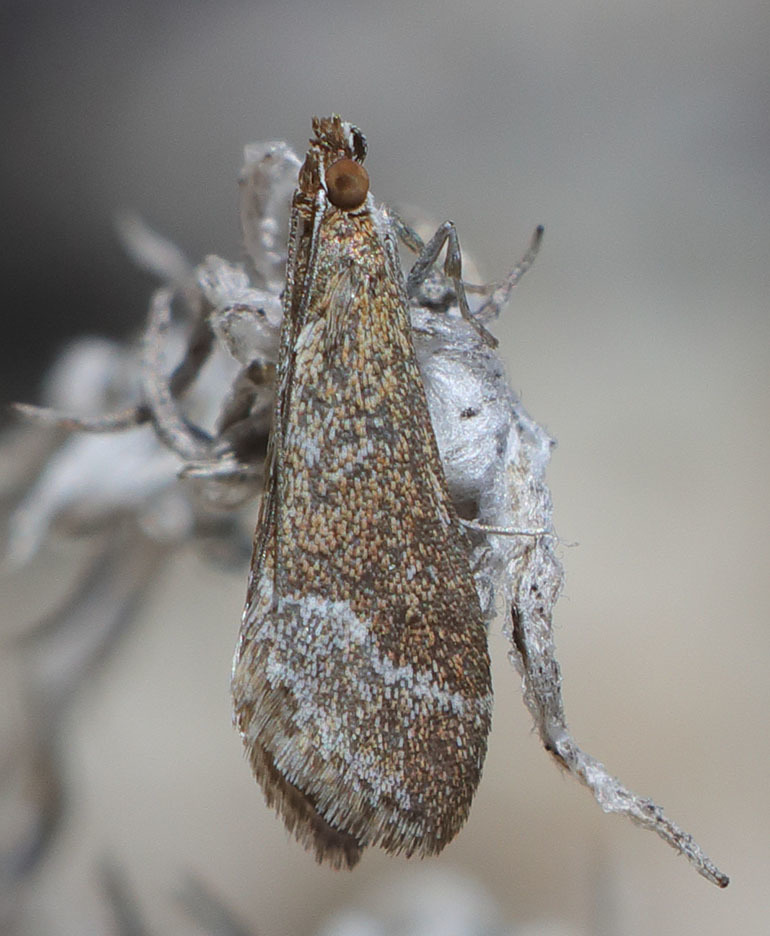
(c) Pinnacles National Park, some rights reserved (CC BY) · licence
Family: Crambidae · Class: Insecta · Order: Lepidoptera
Pyrausta lethalis (Lethal Pyrausta Moth) is a California animal in the Crambidae family.
Pyrausta lethalis, commonly known as the Lethal Pyrausta Moth, is a small microlepidopteran species in the family Crambidae. This moth measures approximately 8-12 mm in wingspan, with forewings displaying a distinctive pattern of orange-brown coloration intersected by darker brown or black markings. The hindwings are typically pale yellow to cream-colored with reduced markings. Males can be distinguished from females by their more prominent bipectinate antennae and slightly smaller overall size. The species has a limited distribution in California, with documented occurrences primarily in the coastal regions of central California. Historical records indicate populations in Monterey, San Luis Obispo, and Santa Barbara counties, though the current extent of occurrence remains poorly documented. The species appears to be endemic to California, with no confirmed populations outside the state. Pyrausta lethalis inhabits coastal sage scrub and chaparral communities, typically at elevations ranging from sea level to approximately 500 meters. The species shows a preference for areas with native shrubland vegetation, particularly those containing its host plants. Adults are most commonly encountered in areas with moderate moisture levels and partial shade provided by shrub cover. The life history of this species remains incompletely understood. Adults are active during late spring and early summer months, typically from April through June. Like other Pyrausta species, larvae likely develop as leaf feeders on native plants, though specific host plant relationships have not been definitively established for P. lethalis. The species appears to be univoltine, producing one generation per year. Adults are primarily crepuscular, becoming active during twilight hours. The conservation status of Pyrausta lethalis is uncertain due to limited survey data and taxonomic confusion within the genus. The species has not been formally assessed by state or federal agencies, and no specific conservation measures are currently in place. The moth's apparent restriction to coastal California habitats makes it potentially vulnerable to ongoing urban development and habitat fragmentation in these regions. Coastal sage scrub communities have experienced significant losses throughout California, with estimates suggesting more than 70 percent reduction in historical extent. Climate change may pose additional threats through altered precipitation patterns and increased wildfire frequency in coastal shrubland habitats. The species' limited known distribution and specialized habitat requirements suggest it may warrant further investigation to determine its conservation needs and population status.
Classification
Class: Insecta · Order: Lepidoptera · Family: Crambidae
Frequently asked questions
How is Pyrausta lethalis classified?
Pyrausta lethalis belongs to class Insecta, order Lepidoptera, family Crambidae.
What family does Pyrausta lethalis belong to?
Pyrausta lethalis is in the Crambidae family.
What is Pyrausta lethalis?
Pyrausta lethalis, commonly known as the Lethal Pyrausta Moth, is a small microlepidopteran species in the family Crambidae.
Is Pyrausta lethalis found in California?
Yes. Pyrausta lethalis is recorded in California in The California Species Project's catalogue.
Related species
Other California species in the same genus, family, or bioregion.
Data from The California Species Project — 14,000+ California species with verified data from CNPS, CDFW, USFWS, and more.