Pyrausta napaealis
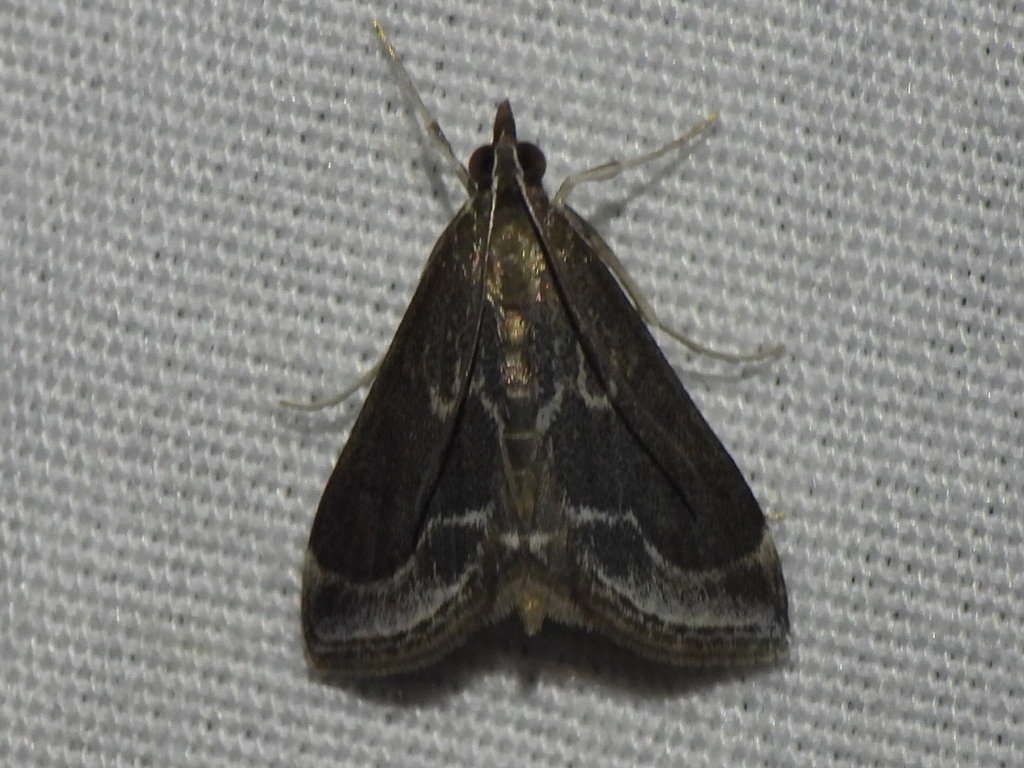
(c) Sam Kieschnick, some rights reserved (CC BY) · licence
Family: Crambidae · Class: Insecta · Order: Lepidoptera
Pyrausta napaealis is a California animal in the Crambidae family.
Pyrausta napaealis is a small moth in the family Crambidae, subfamily Pyraustinae. This species belongs to a diverse group of grass moths that includes numerous North American taxa. Adults typically measure 15-20 mm in wingspan, displaying the characteristic wing patterns common to the genus Pyrausta. The forewings are generally brownish with darker markings, while the hindwings tend to be lighter in coloration with reduced patterning. The distribution of Pyrausta napaealis in North America requires verification through current taxonomic databases, as species boundaries and geographic ranges within this genus have undergone revision in recent years. Many Pyrausta species demonstrate localized distributions tied to specific host plant associations and habitat requirements. The genus occurs across temperate regions of North America, with individual species often showing restricted ranges based on elevation, climate, and vegetation communities. Habitat associations for Pyrausta napaealis likely involve areas supporting native herbaceous plants, as most members of this genus utilize specific host plants during larval development. Pyrausta moths typically inhabit grasslands, meadows, forest edges, and disturbed areas where their larval host plants occur. Many species in this genus show preferences for particular elevation ranges and moisture conditions that support their host plant communities. The life cycle of Pyrausta napaealis follows the typical pattern for Crambidae moths. Adults are generally active during warmer months, with flight periods varying by geographic location and elevation. Females deposit eggs on or near host plants, and larvae develop as leaf feeders or stem borers depending on the species. Most Pyrausta species complete one or two generations per year, overwintering as larvae or pupae. Adults are primarily crepuscular or nocturnal, attracted to artificial lights during evening hours. Larval host plants represent a critical ecological factor for Pyrausta species, with many showing high specificity to particular plant families or genera. Host plant relationships often determine habitat requirements and geographic distributions. Adult moths serve as pollinators for various native plants and provide food sources for nocturnal predators including bats, spiders, and other insects. The conservation status of Pyrausta napaealis is not well-documented, as many moths in this genus lack comprehensive population assessments. Small, localized moth species face potential threats from habitat loss, agricultural practices, light pollution, and climate change. Grassland and meadow habitats supporting native plant communities are particularly vulnerable to development and agricultural conversion. The taxonomic complexity within Pyrausta may also obscure conservation needs if species boundaries require clarification or if cryptic species exist. Without detailed ecological studies, the specific conservation requirements for Pyrausta napaealis remain uncertain. Protection of native grassland and meadow ecosystems, along with their associated plant communities, would benefit this species and related moths. Reducing pesticide applications in areas where the species occurs and maintaining dark-sky conditions to minimize light pollution could support population stability.
Classification
Class: Insecta · Order: Lepidoptera · Family: Crambidae
Frequently asked questions
How is Pyrausta napaealis classified?
Pyrausta napaealis belongs to class Insecta, order Lepidoptera, family Crambidae.
What family does Pyrausta napaealis belong to?
Pyrausta napaealis is in the Crambidae family.
What is Pyrausta napaealis?
Pyrausta napaealis is a small moth in the family Crambidae, subfamily Pyraustinae.
Is Pyrausta napaealis found in California?
Yes. Pyrausta napaealis is recorded in California in The California Species Project's catalogue.
Related species
Other California species in the same genus, family, or bioregion.
Data from The California Species Project — 14,000+ California species with verified data from CNPS, CDFW, USFWS, and more.