Pyrausta rubricalis
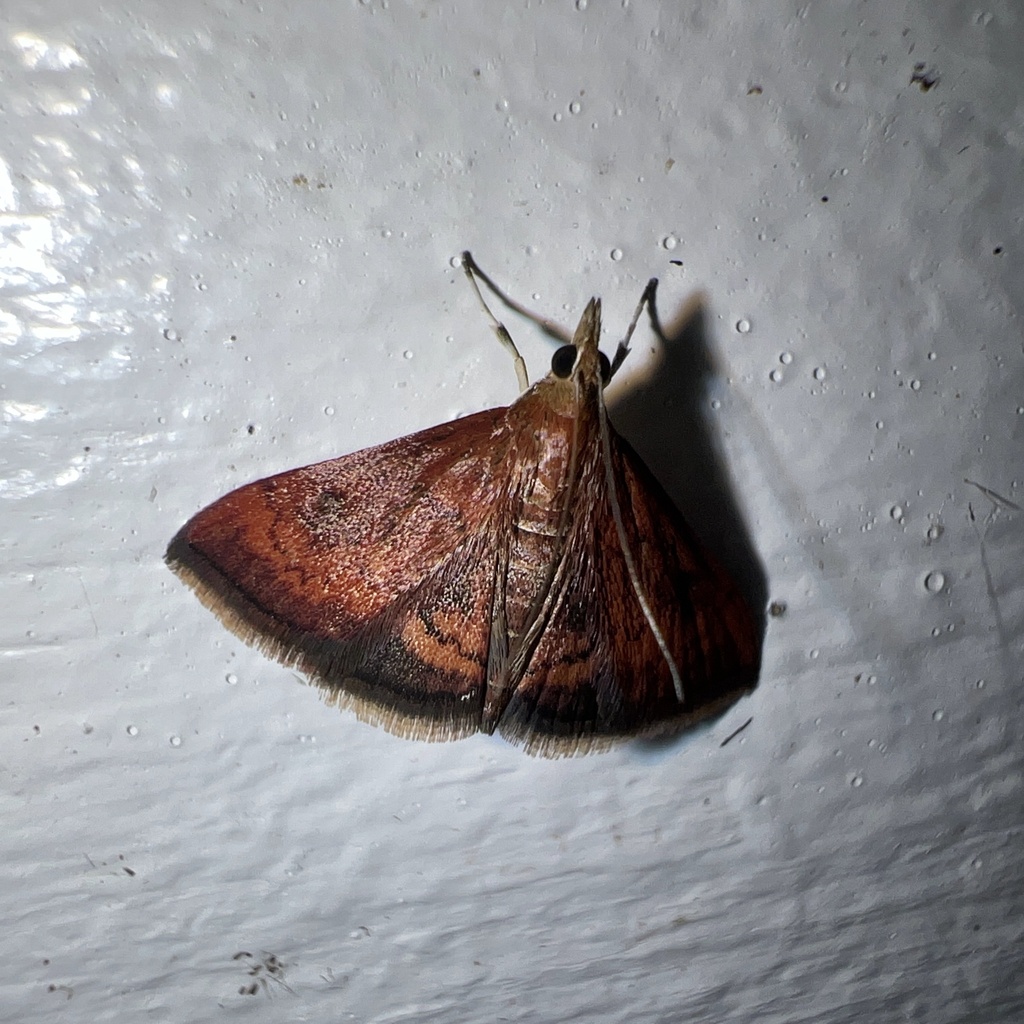
(c) Healthy Yards, some rights reserved (CC BY) · licence
Family: Crambidae · Class: Insecta · Order: Lepidoptera
Pyrausta rubricalis is a California animal in the Crambidae family.
Pyrausta rubricalis, commonly known as the reddish pyrausta, is a small moth in the family Crambidae (grass moths). Adults have a wingspan of approximately 16-20 mm (0.6-0.8 inches). The forewings are characterized by a reddish-brown ground color with distinctive white and yellowish markings forming irregular bands and patches across the wing surface. The hindwings are typically lighter, appearing pale yellow to whitish with darker marginal areas. The thorax and head match the reddish-brown coloration of the forewings, while the abdomen is generally paler. This species occurs across much of North America, with records extending from Canada south to Mexico. In California, Pyrausta rubricalis has been documented from various counties, though specific distribution data within the state remains limited. The species appears to have a relatively wide but potentially sparse distribution pattern typical of many small moths in the genus Pyrausta. Pyrausta rubricalis inhabits open areas including grasslands, meadows, agricultural fields, and disturbed sites where appropriate host plants occur. The species shows a preference for areas with mixed vegetation communities rather than dense forest habitats. Elevation ranges for California populations have not been specifically documented, but the species likely occurs from near sea level to moderate elevations based on habitat preferences and regional records. Adult moths are active during warmer months, typically flying from late spring through early fall. Flight period may vary with elevation and local climate conditions. Like other members of the genus, adults are primarily crepuscular and nocturnal, becoming active during evening hours. The species exhibits positive phototaxis and is attracted to artificial lights. Larvae are believed to feed on various grasses and possibly other herbaceous plants, though specific host plant relationships for this species require further documentation. Larval development likely follows the typical crambid pattern of multiple instars, with pupation occurring in soil or plant debris. The conservation status of Pyrausta rubricalis has not been formally assessed by federal or state agencies. The species does not appear on any endangered species lists, suggesting populations are considered stable or data-deficient rather than threatened. However, like many small moths, this species may face localized threats from habitat loss due to agricultural intensification, urban development, and changes in land management practices. The conversion of natural grasslands and meadows to developed uses could potentially impact populations, though the species' apparent ability to utilize disturbed habitats may provide some resilience. Climate change effects on flight timing, host plant phenology, and habitat suitability represent potential long-term concerns, but specific impacts on Pyrausta rubricalis populations have not been studied. Additional research is needed to better understand the species' distribution, ecology, and conservation needs within California.
Classification
Class: Insecta · Order: Lepidoptera · Family: Crambidae
Frequently asked questions
How is Pyrausta rubricalis classified?
Pyrausta rubricalis belongs to class Insecta, order Lepidoptera, family Crambidae.
What family does Pyrausta rubricalis belong to?
Pyrausta rubricalis is in the Crambidae family.
What is Pyrausta rubricalis?
Pyrausta rubricalis, commonly known as the reddish pyrausta, is a small moth in the family Crambidae (grass moths).
Is Pyrausta rubricalis found in California?
Yes. Pyrausta rubricalis is recorded in California in The California Species Project's catalogue.
Related species
Other California species in the same genus, family, or bioregion.
Data from The California Species Project — 14,000+ California species with verified data from CNPS, CDFW, USFWS, and more.