Pyrausta semirubralis
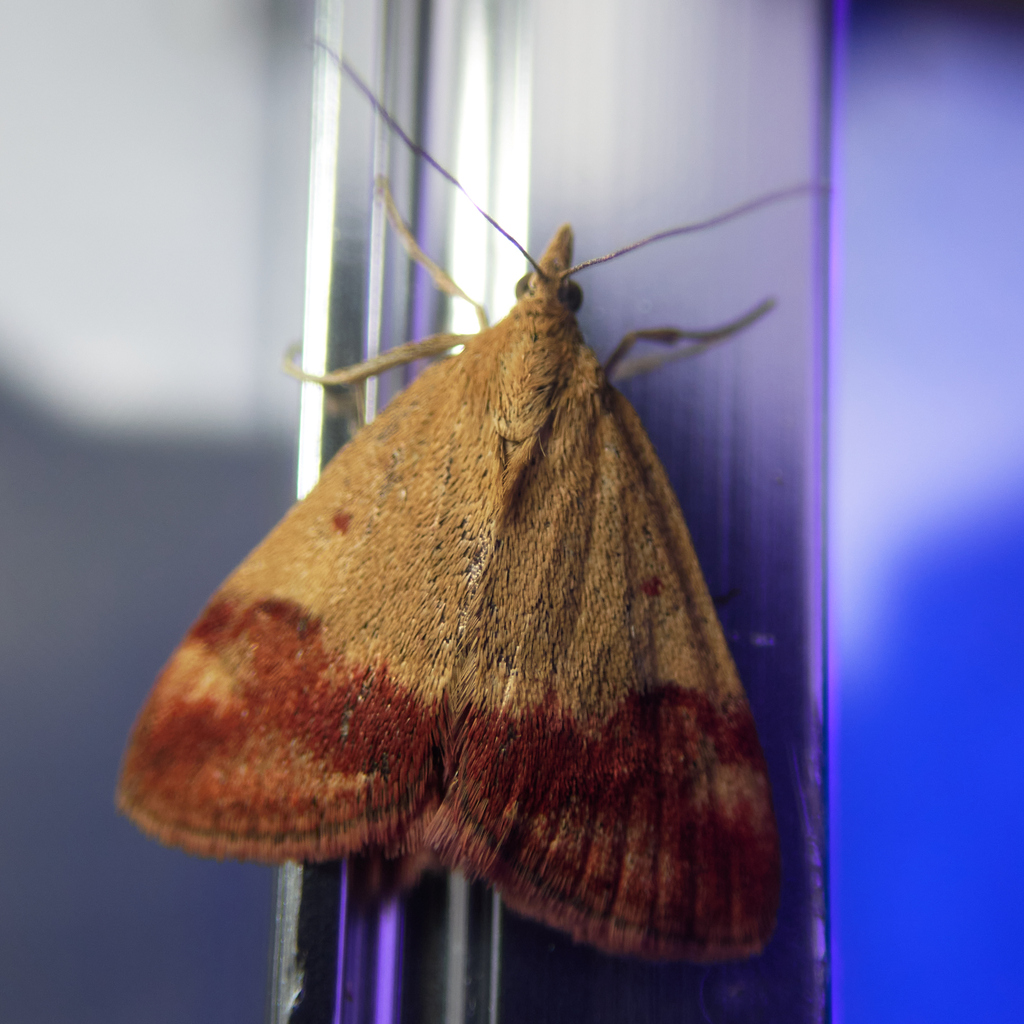
(c) Ken-ichi Ueda, some rights reserved (CC BY) · licence
Family: Crambidae · Class: Insecta · Order: Lepidoptera
Pyrausta semirubralis is a California animal in the Crambidae family.
Pyrausta semirubralis is a small moth in the family Crambidae, subfamily Pyraustinae. This species displays the characteristic pink coloration found in several members of the genus Pyrausta, though specific morphological details distinguishing it from closely related species have not been comprehensively documented in the available literature. Like other Pyrausta species, adults likely have a wingspan of approximately 15-25 mm, though precise measurements for P. semirubralis are not well established. The species occurs across western North America, with documented records from California and the Pacific Northwest. According to lepidopterological surveys, P. semirubralis has been recorded from locations including Tuolumne Meadows in California's Sierra Nevada at elevations around 2,440 meters (8,000 feet), indicating tolerance for montane conditions (News of the Lepidopterists' Society 1982). Additional records exist from the Pacific Northwest, including observations from Orcas Island in Washington's San Juan County (News of the Lepidopterists' Society 2019). The species' full distributional range likely extends beyond these documented localities, but comprehensive survey data remains limited. Habitat preferences for P. semirubralis appear to include both montane meadow systems and coastal environments. The Tuolumne Meadows records suggest association with high-elevation grassland and meadow habitats characteristic of the Sierra Nevada, while Pacific Northwest records indicate potential occurrence in maritime-influenced environments. The species may utilize multiple habitat types across its range, reflecting the ecological diversity found within the Pyrausta genus. Behavioral and ecological information for P. semirubralis is notably sparse in the scientific literature. Flight period data suggests adult activity during summer months, with California records from late June through early July and Washington observations in mid-June (News of the Lepidopterists' Society 1982, 2019). Host plant associations have not been definitively established for this species, though other Pyrausta moths typically utilize various herbaceous plants, particularly in the families Asteraceae and Lamiaceae. Larval biology, including development time and specific feeding preferences, remains undocumented. Conservation status information for P. semirubralis is limited. NatureServe lists the species with an uncertain global rank, indicating insufficient data to assess population trends or conservation needs (NatureServe Explorer). The species does not appear on federal or state endangered species lists. Given the scattered nature of documented records and apparent rarity in collections, P. semirubralis may represent a naturally uncommon species with a patchy distribution, or survey efforts may be insufficient to accurately characterize its abundance and range. Scientific documentation for this species remains limited. The information presented here is based on available sources including lepidopterological society records and taxonomic databases. Additional research is needed to better understand the species' distribution, habitat requirements, life history, and conservation status. Field surveys targeting appropriate habitats and seasons could help clarify the species' current status and ecological needs.
Classification
Class: Insecta · Order: Lepidoptera · Family: Crambidae
Frequently asked questions
How is Pyrausta semirubralis classified?
Pyrausta semirubralis belongs to class Insecta, order Lepidoptera, family Crambidae.
What family does Pyrausta semirubralis belong to?
Pyrausta semirubralis is in the Crambidae family.
What is Pyrausta semirubralis?
Pyrausta semirubralis is a small moth in the family Crambidae, subfamily Pyraustinae.
Is Pyrausta semirubralis found in California?
Yes. Pyrausta semirubralis is recorded in California in The California Species Project's catalogue.
Related species
Other California species in the same genus, family, or bioregion.
Data from The California Species Project — 14,000+ California species with verified data from CNPS, CDFW, USFWS, and more.