Pyrausta subsequalis
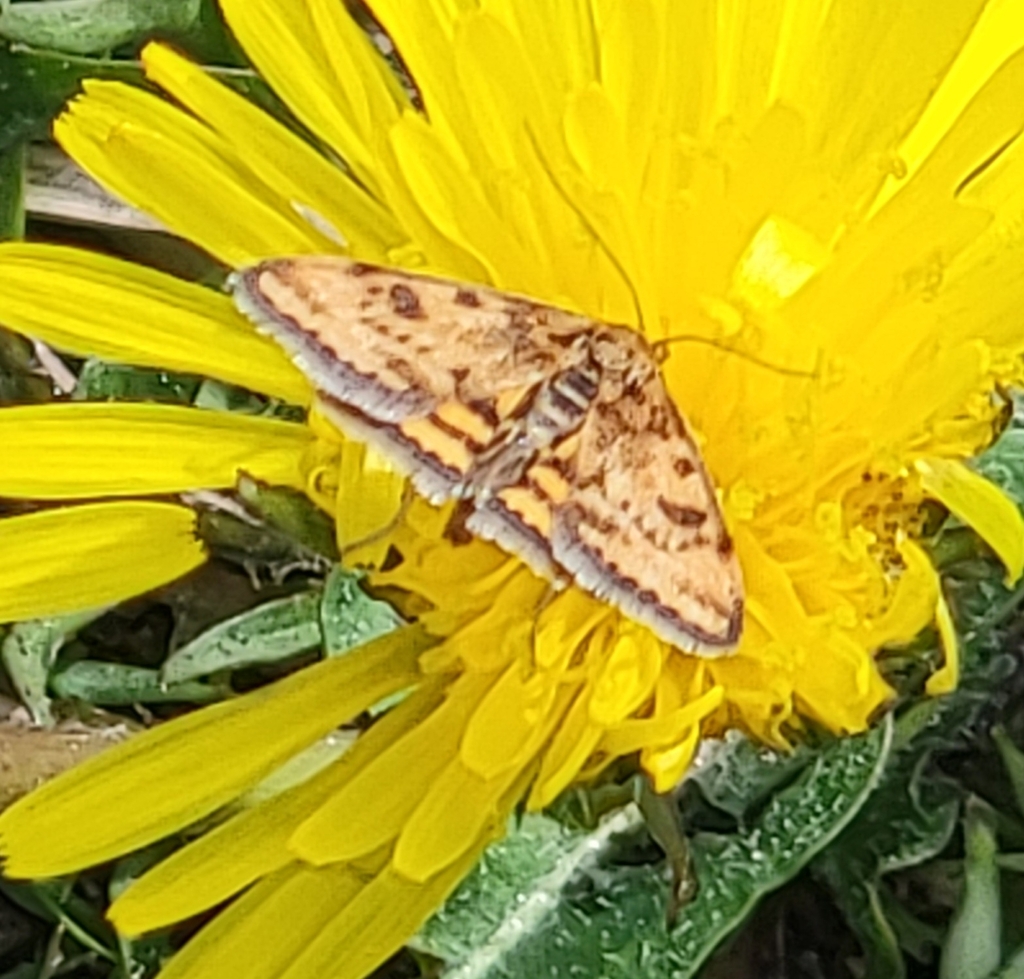
(c) Rebecca Gimenez Husted, some rights reserved (CC BY) · licence
Family: Crambidae · Class: Insecta · Order: Lepidoptera
Pyrausta subsequalis is a California animal in the Crambidae family.
Pyrausta subsequalis is a small moth in the family Crambidae, a diverse group commonly known as grass moths or crambid snout moths. This species belongs to the genus Pyrausta, which comprises numerous small, colorful moths found throughout North America. Adults typically measure 10 to 15 mm (0.4 to 0.6 inches) in wingspan, displaying the characteristic features of crambid moths including a triangular forewing shape when at rest and relatively long antennae. The wing coloration and patterns vary among Pyrausta species, often featuring combinations of brown, orange, yellow, and white markings that provide camouflage against natural substrates. The distribution of Pyrausta subsequalis in North America remains incompletely documented, though members of the genus Pyrausta are widely distributed across temperate regions of the continent. Many Pyrausta species show regional endemism or restricted distributions, particularly in western North America where geographic isolation has promoted speciation. California hosts several Pyrausta species, with distributions often correlated with specific host plant ranges and climatic conditions. Like other crambid moths, Pyrausta subsequalis likely inhabits areas where its larval host plants occur. Many Pyrausta species utilize herbaceous plants as larval food sources, with caterpillars feeding on leaves, stems, or flowers. The moths typically occupy open habitats including grasslands, meadows, chaparral margins, and disturbed areas where host vegetation thrives. Adults are attracted to flowers for nectar feeding and may be found in gardens, riparian zones, and areas with diverse flowering plants. The life cycle follows the typical lepidopteran pattern of complete metamorphosis. Females deposit eggs on or near host plants, and larvae develop through several instars before pupating. Many Pyrausta species are multivoltine, producing multiple generations per year in favorable climates. Adults are primarily active during daylight hours or at dusk, distinguishing them from many nocturnal moth species. Flight periods vary by species and geographic location but often coincide with host plant phenology and favorable weather conditions. Mating behavior involves chemical communication through pheromones, with males locating females through scent detection. Larvae may construct silk shelters or feed within rolled leaves, depending on the species and host plant characteristics. Winter survival strategies vary among Pyrausta species, with some overwintering as larvae, pupae, or adults depending on local climate conditions. No specific conservation status has been established for Pyrausta subsequalis, reflecting the limited research attention given to many small moth species. Like many specialized herbivorous insects, population stability likely depends on the persistence of suitable habitat and host plant communities. Potential threats may include habitat loss from development, agricultural intensification, and climate change effects on host plant distributions. The species' conservation needs remain largely unknown due to insufficient biological and ecological data.
Classification
Class: Insecta · Order: Lepidoptera · Family: Crambidae
Frequently asked questions
How is Pyrausta subsequalis classified?
Pyrausta subsequalis belongs to class Insecta, order Lepidoptera, family Crambidae.
What family does Pyrausta subsequalis belong to?
Pyrausta subsequalis is in the Crambidae family.
What is Pyrausta subsequalis?
Pyrausta subsequalis is a small moth in the family Crambidae, a diverse group commonly known as grass moths or crambid snout moths.
Is Pyrausta subsequalis found in California?
Yes. Pyrausta subsequalis is recorded in California in The California Species Project's catalogue.
Related species
Other California species in the same genus, family, or bioregion.
Data from The California Species Project — 14,000+ California species with verified data from CNPS, CDFW, USFWS, and more.