Pyrausta volupialis
Volupial Pyrausta Moth
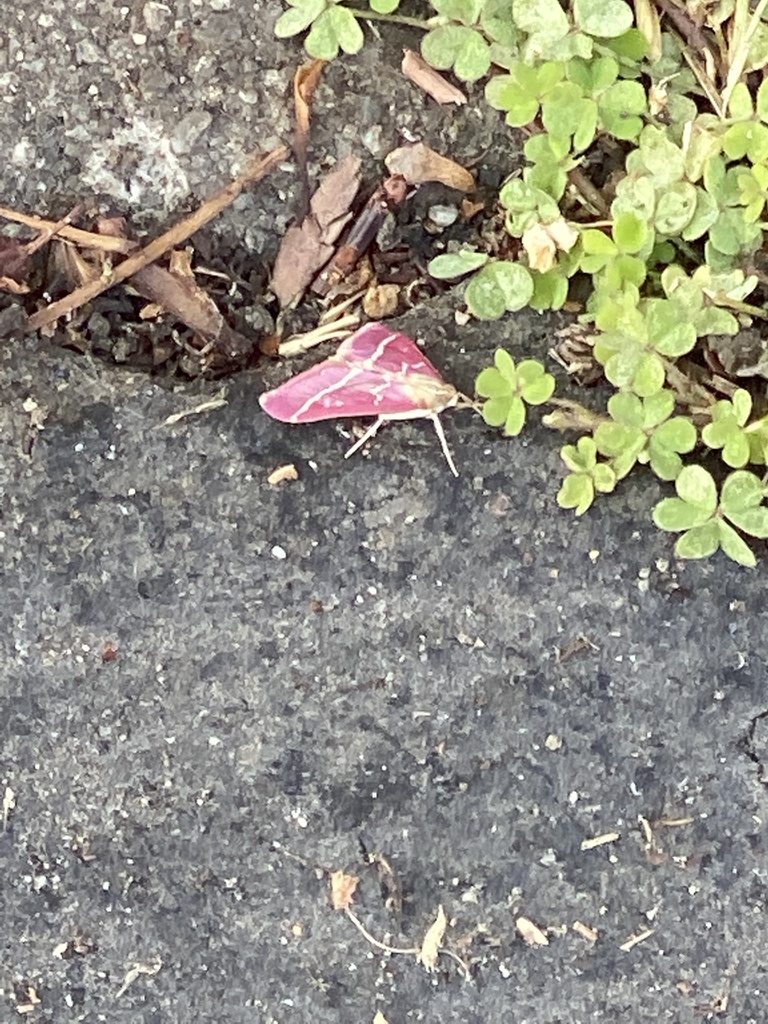
no rights reserved · CC0
Family: Crambidae · Class: Insecta · Order: Lepidoptera
Pyrausta volupialis (Volupial Pyrausta Moth) is a California animal in the Crambidae family.
The Volupial Pyrausta Moth (Pyrausta volupialis) is a small moth in the family Crambidae, characterized by its association with plants in the mint family (Lamiaceae). Adults typically measure 10 to 15 mm in wingspan, displaying the relatively compact size common to pyrausta moths. The forewings exhibit a pattern of orange-brown to reddish-brown coloration with darker markings, while the hindwings are generally paler with subtle banding. The species can be distinguished from related pyrausta moths by specific wing pattern details and genital structures examined during taxonomic identification. The Volupial Pyrausta Moth occurs across a broad geographic range extending from Texas west to southern California, with populations spreading northward to San Francisco and eastward to Colorado. This distribution encompasses multiple ecoregions, from the Sonoran and Mojave deserts of the Southwest through the Central Valley and coastal regions of California, extending into the Rocky Mountain foothills of Colorado. The species appears to be most common in areas where suitable host plants are abundant. Habitat requirements center on the presence of mint family plants, which serve as larval host plants. The moth occupies diverse habitats including riparian areas, canyon bottoms, disturbed sites, and gardens where native and introduced Lamiaceae species grow. Elevational range likely extends from sea level in coastal California to several thousand feet in montane regions, though specific elevation limits require further documentation. The species adapts to both natural and human-modified landscapes where mint family plants persist. Larval development occurs on various members of the mint family, with caterpillars feeding on leaves and potentially stems of host plants. The life cycle likely includes multiple generations per year in warmer regions of the range, with fewer generations at higher elevations or latitudes. Adults are active during warmer months, with flight periods varying by geographic location and local climate conditions. Mating and egg-laying behaviors follow typical patterns for crambid moths, with females depositing eggs on or near host plants. The Volupial Pyrausta Moth currently lacks formal conservation status designations at federal or state levels. Population trends and conservation needs remain poorly documented, reflecting the limited research attention given to many small moth species. The moth's broad geographic range and association with common plant families may provide some resilience to local habitat changes. However, like many native moths, populations may face pressures from habitat loss, pesticide use, light pollution, and climate change. The species' reliance on mint family plants means that conservation of native Lamiaceae species and maintenance of diverse plant communities benefits this moth. Further research on population status, habitat requirements, and potential threats would improve understanding of conservation needs for this widespread but understudied species.
Classification
Class: Insecta · Order: Lepidoptera · Family: Crambidae
Frequently asked questions
How is Pyrausta volupialis classified?
Pyrausta volupialis belongs to class Insecta, order Lepidoptera, family Crambidae.
What family does Pyrausta volupialis belong to?
Pyrausta volupialis is in the Crambidae family.
What is Pyrausta volupialis?
The Volupial Pyrausta Moth (Pyrausta volupialis) is a small moth in the family Crambidae, characterized by its association with plants in the mint family (Lamiaceae).
Is Pyrausta volupialis found in California?
Yes. Pyrausta volupialis is recorded in California in The California Species Project's catalogue.
Related species
Other California species in the same genus, family, or bioregion.
Data from The California Species Project — 14,000+ California species with verified data from CNPS, CDFW, USFWS, and more.