Pyrgulopsis aardahli
Benton Valley (=aahrdahl's) Springsnail
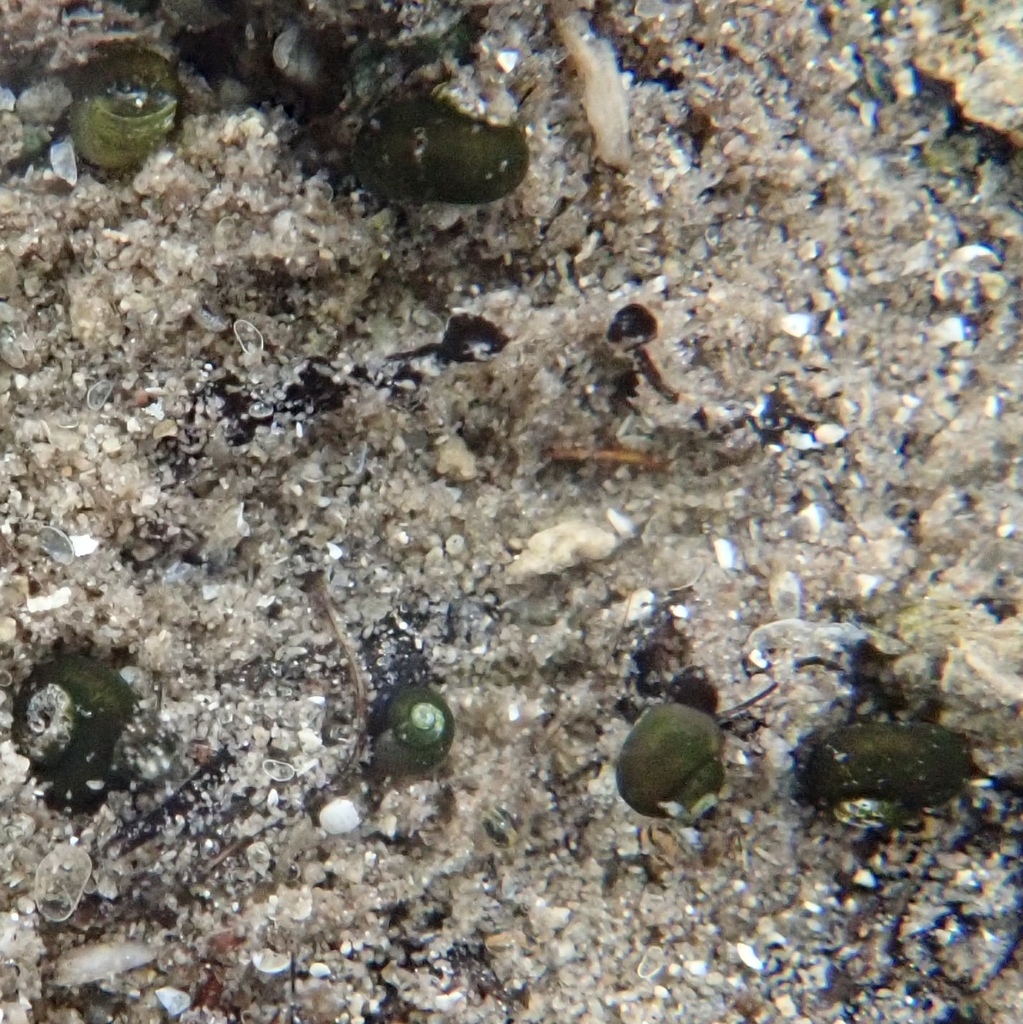
(c) Clifton Ladd, C.W.B., some rights reserved (CC BY) · licence
Family: Hydrobiidae · Class: Gastropoda · Order: Littorinimorpha
Conservation status: G1 S1
Pyrgulopsis aardahli (Benton Valley (=aahrdahl's) Springsnail) is a California animal in the Hydrobiidae family.
The Benton Valley springsnail is a small freshwater gastropod endemic to California's eastern Sierra Nevada region. This minute snail typically measures 2-4 millimeters in shell length, with a conical, brown to yellowish shell characterized by multiple whorls and a pointed apex. The species belongs to the genus Pyrgulopsis, a group of springsnails adapted to specific aquatic habitats in the western United States. Pyrgulopsis aardahli is restricted to a very limited range in California, occurring specifically in the Owens Basin region of Mono and Inyo counties. According to the U.S. Fish and Wildlife Service Owens Basin Wetland and Aquatic Species Recovery Plan, the species is found in association with other endemic springsnails including the Fish Slough springsnail and Owens springsnail. This extremely restricted distribution contributes to its vulnerable conservation status. The species inhabits spring-fed aquatic environments within the Owens Basin, an area characterized by numerous natural springs, seeps, and associated wetland habitats. These spring systems maintain relatively constant water temperatures and flow regimes throughout the year, providing the stable conditions required by springsnails. The Owens Basin's unique hydrogeology, created by tectonic activity and volcanic processes, has resulted in numerous isolated spring systems that support endemic aquatic species. As with other springsnails, P. aardahli likely feeds on algae, bacteria, and organic detritus found on submerged surfaces and sediments. Springsnails typically graze using a rasping feeding structure called a radula to scrape food particles from rocks and plant surfaces. Reproduction occurs through internal fertilization, with females depositing eggs in gelatinous masses attached to hard surfaces. The species' life cycle and specific behavioral patterns remain poorly documented in scientific literature. Pyrgulopsis aardahli is currently classified as a Species of Concern by the U.S. Fish and Wildlife Service, reflecting its precarious conservation status due to extremely limited range and ongoing threats. The species receives a Global/State rank of G1 S1, indicating it is critically imperiled both globally and within California, with typically fewer than five occurrences or very few remaining individuals. Primary threats to the species include groundwater pumping, water diversions, habitat modification, and potential impacts from climate change affecting spring flow regimes. The Owens Basin has experienced significant hydrological alterations due to water exports to Los Angeles, which have affected many native aquatic species in the region. Conservation efforts for this species are addressed within the broader Owens Basin Wetland and Aquatic Species Recovery Plan, which aims to protect and restore spring-fed habitats throughout the region. The plan emphasizes maintaining natural hydrological processes and protecting water quality in spring systems. Given the species' extremely limited distribution and ongoing threats to its habitat, continued monitoring and habitat protection are essential for preventing extinction. The species serves as an indicator of the overall health of the Owens Basin's unique spring ecosystems.
Classification
Class: Gastropoda · Order: Littorinimorpha · Family: Hydrobiidae
Conservation status
G1 S1
Frequently asked questions
How is Pyrgulopsis aardahli classified?
Pyrgulopsis aardahli belongs to class Gastropoda, order Littorinimorpha, family Hydrobiidae.
What family does Pyrgulopsis aardahli belong to?
Pyrgulopsis aardahli is in the Hydrobiidae family.
Is Pyrgulopsis aardahli protected or of conservation concern?
Pyrgulopsis aardahli carries the following status: G1 S1.
What is Pyrgulopsis aardahli?
The Benton Valley springsnail is a small freshwater gastropod endemic to California's eastern Sierra Nevada region.
Is Pyrgulopsis aardahli found in California?
Yes. Pyrgulopsis aardahli is recorded in California in The California Species Project's catalogue.
Related species
Other California species in the same genus, family, or bioregion.
Data from The California Species Project — 14,000+ California species with verified data from CNPS, CDFW, USFWS, and more.