Pyrgulopsis archimedis
Archimedes Pyrg
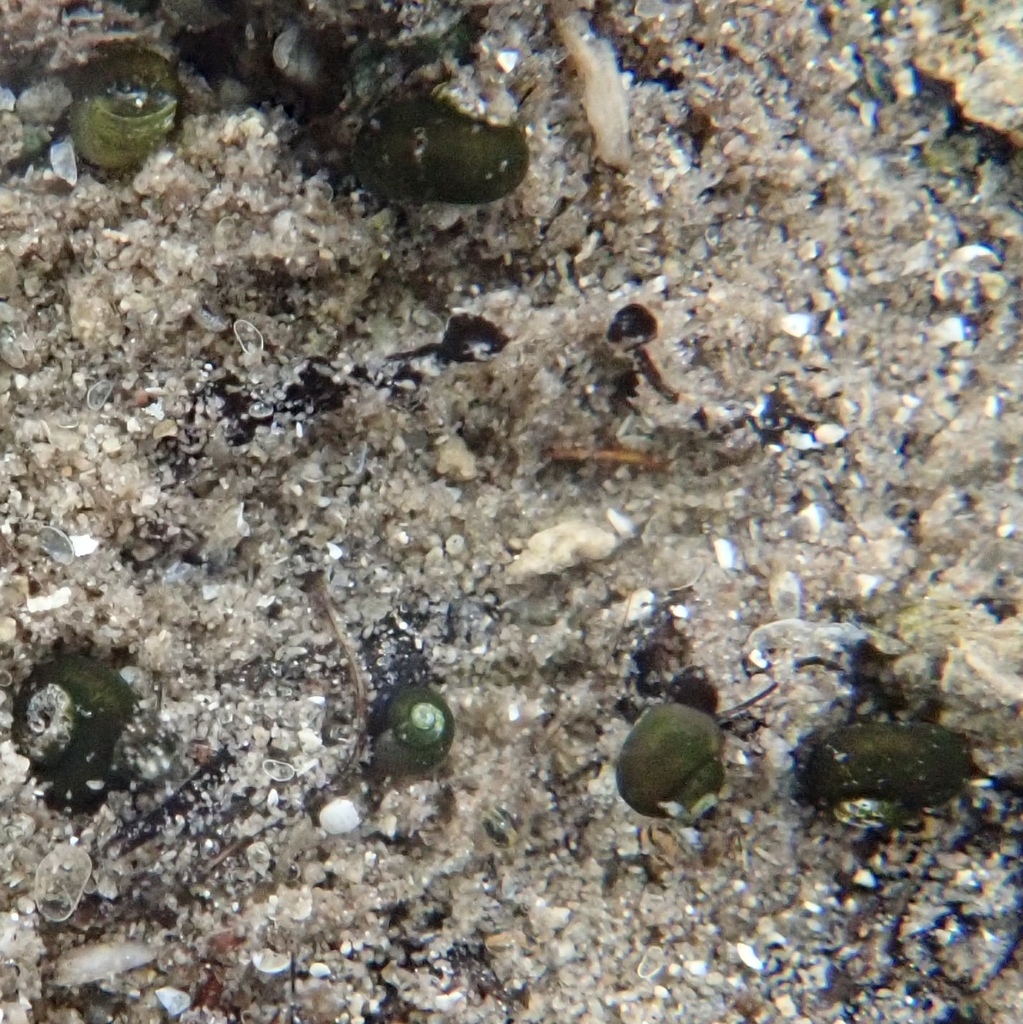
(c) Clifton Ladd, C.W.B., some rights reserved (CC BY) · licence
Family: Hydrobiidae · Class: Gastropoda · Order: Littorinimorpha
Conservation status: G1G2 S1S2
Pyrgulopsis archimedis (Archimedes Pyrg) is a California animal in the Hydrobiidae family.
The Archimedes springsnail (Pyrgulopsis archimedis) is a freshwater gastropod in the family Hydrobiidae. This small aquatic snail is endemic to spring-influenced areas of large lakes in Oregon's East Cascades ecoregion. The species has a very restricted distribution, making it particularly vulnerable to habitat disturbances. Archimedes springsnails are found exclusively in spring systems within large lakes in the East Cascades ecoregion of Oregon. This ecoregion extends from the Cascade Mountains' summit eastward to the high desert, characterized by dramatically varying conditions from cool, moist western borders to dry eastern edges meeting sagebrush desert landscapes. The species' extremely limited range represents one of its primary conservation concerns. The species inhabits spring-influenced lacustrine environments, requiring specific hydrological conditions associated with groundwater discharge into larger lake systems. These springsnails depend on consistent water flow and quality, making them highly sensitive to alterations in their aquatic habitat. The precise substrate preferences and microhabitat requirements within these spring systems require further research to fully understand the species' ecological needs. Like other hydrobiid snails, Archimedes springsnails likely feed on algae, bacteria, and organic detritus found on submerged surfaces. Specific details about reproductive behavior, life cycle timing, and population dynamics remain poorly documented. The species' ecology and behavior patterns represent significant data gaps requiring targeted research to inform conservation planning. Archimedes springsnail faces severe conservation challenges due to its restricted distribution. According to the Oregon Conservation Strategy, habitat loss represents the primary threat, particularly spring alteration and decreased water flow. Water diversions pose significant risks by reducing the consistent flow essential for the species' survival. Sedimentation and nutrient inputs from various land use practices including dredging, mining, and road construction may smother substrates or reduce reproductive success. These activities can degrade water quality and alter the delicate hydrological balance required by the species. The species carries a global rank of G1G2 and state rank of S1S2, indicating it is critically imperiled to imperiled both globally and within Oregon. Conservation actions focus on maintaining appropriate water flow and quality while preventing or mitigating activities that could increase sediment or nutrient levels. Critical data gaps include comprehensive distribution assessments and determination of species-specific habitat requirements. The Oregon Department of Fish and Wildlife emphasizes the need for continued monitoring and habitat protection to ensure the species' persistence. Given the species' extremely limited range and specific habitat requirements, any disturbance to spring systems could have catastrophic population-level impacts.
Classification
Class: Gastropoda · Order: Littorinimorpha · Family: Hydrobiidae
Conservation status
G1G2 S1S2
Frequently asked questions
How is Pyrgulopsis archimedis classified?
Pyrgulopsis archimedis belongs to class Gastropoda, order Littorinimorpha, family Hydrobiidae.
What family does Pyrgulopsis archimedis belong to?
Pyrgulopsis archimedis is in the Hydrobiidae family.
Is Pyrgulopsis archimedis protected or of conservation concern?
Pyrgulopsis archimedis carries the following status: G1G2 S1S2.
What is Pyrgulopsis archimedis?
The Archimedes springsnail (Pyrgulopsis archimedis) is a freshwater gastropod in the family Hydrobiidae.
Is Pyrgulopsis archimedis found in California?
Yes. Pyrgulopsis archimedis is recorded in California in The California Species Project's catalogue.
Related species
Other California species in the same genus, family, or bioregion.
Data from The California Species Project — 14,000+ California species with verified data from CNPS, CDFW, USFWS, and more.