Pyrgulopsis bernardina
San Bernardino springsnail
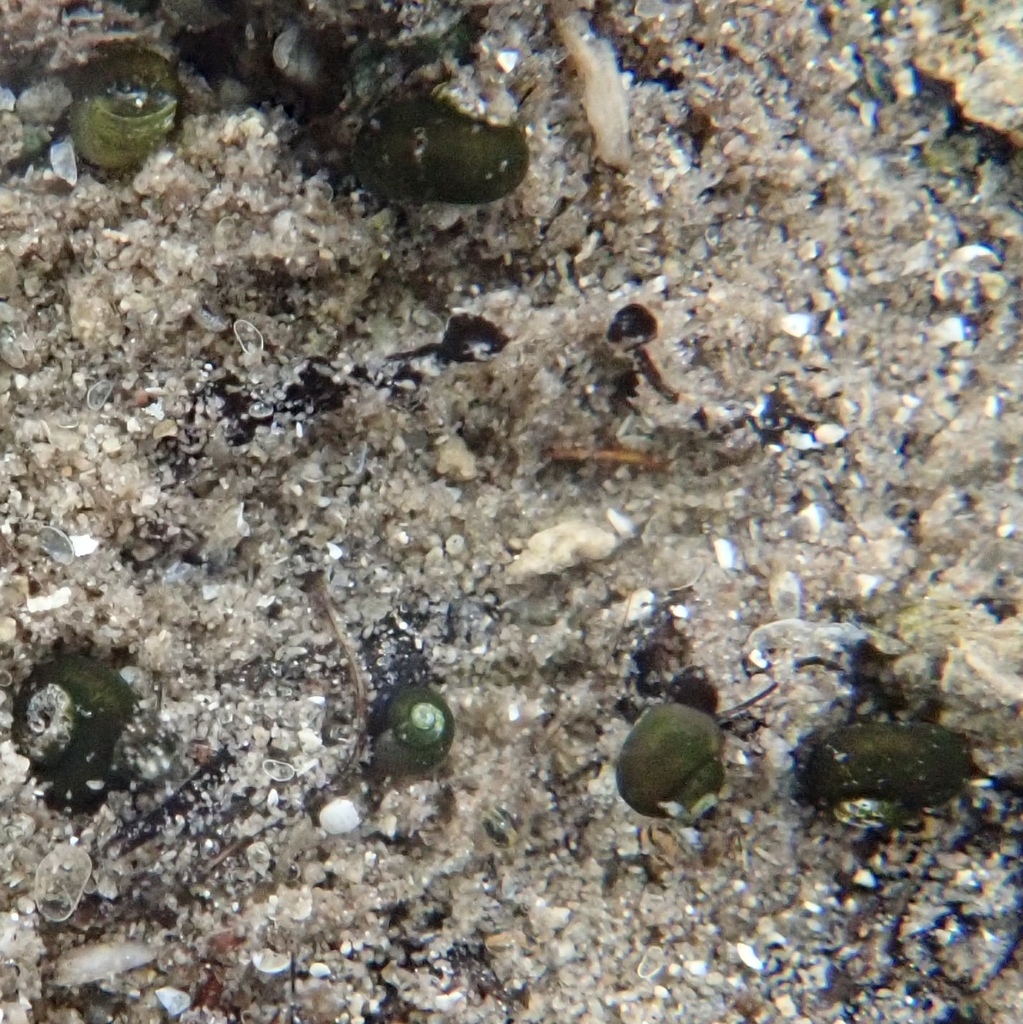
(c) Clifton Ladd, C.W.B., some rights reserved (CC BY) · licence
Family: Hydrobiidae · Class: Gastropoda · Order: Littorinimorpha
Conservation status: Threatened
Pyrgulopsis bernardina (San Bernardino springsnail) is a California animal in the Hydrobiidae family.
The San Bernardino springsnail is a minute aquatic gastropod with a narrow-conic shell measuring 1.3 to 1.7 mm in height (Hershler 1994). This small freshwater snail represents one of the most range-restricted mollusks in North America, endemic to a limited complex of spring ecosystems. The species occurs in Arizona and extends into Sonora, Mexico, within the Rio San Bernardino watershed, also known as San Bernardino Creek or Black Draw. In the United States, the San Bernardino springsnail is found in Cochise County, Arizona, where it inhabits springs within the headwaters of the Rio San Bernardino system. Recent genetic studies have confirmed populations on Rancho San Bernardino in Sonora, Mexico (Varela-Romero and Myers 2010). The historical range in the United States may have included at least six populations within this spring complex, though current distribution is more limited. San Bernardino springsnails require specific aquatic conditions, inhabiting springheads and spring runs with unpolluted water. The species depends on rock-derived substrates for egg-laying, feeding, and refuge from predators. Critical habitat elements include periphyton, bacteria, and decaying organic material that serve as food sources. The snails occupy areas with flowing spring water and require substrates of gravel and pebbles for successful reproduction and survival. Like other springsnails in the genus Pyrgulopsis, San Bernardino springsnails are oviparous, with eggs likely deposited during spring months. The species probably completes its life cycle in less than one year. These snails feed on periphyton and organic detritus within their spring habitats. Their limited dispersal capability restricts colonization of new sites, making existing populations particularly vulnerable to local disturbances. The U.S. Fish and Wildlife Service listed the San Bernardino springsnail as threatened on April 17, 2012 (77 FR 23060). Critical habitat designation encompasses approximately 2.0 acres (0.8 hectares) in Cochise County, Arizona. The species faces significant threats from habitat destruction and modification, including springhead inundation from water impoundment and diversion activities. Water depletion poses a substantial risk to spring flow maintenance. Additional threats include potential impacts from fire retardant chemicals during wildfire suppression activities and the presence of non-native predators and competitors in spring ecosystems. Conservation efforts focus on protecting existing spring habitats and maintaining adequate water flow to support viable populations. The species' extremely limited range and specific habitat requirements make it particularly vulnerable to environmental changes. Population monitoring continues at known sites in both Arizona and Mexico. Recovery planning emphasizes habitat protection, water resource management, and coordination between U.S. and Mexican authorities to ensure conservation across the species' binational range. The narrow distribution and ongoing threats to spring ecosystems maintain conservation concern for this endemic springsnail.
Classification
Class: Gastropoda · Order: Littorinimorpha · Family: Hydrobiidae
Conservation status
Threatened
Frequently asked questions
How is Pyrgulopsis bernardina classified?
Pyrgulopsis bernardina belongs to class Gastropoda, order Littorinimorpha, family Hydrobiidae.
What family does Pyrgulopsis bernardina belong to?
Pyrgulopsis bernardina is in the Hydrobiidae family.
Is Pyrgulopsis bernardina protected or of conservation concern?
Pyrgulopsis bernardina carries the following status: Threatened.
What is Pyrgulopsis bernardina?
The San Bernardino springsnail is a minute aquatic gastropod with a narrow-conic shell measuring 1.3 to 1.7 mm in height (Hershler 1994).
Is Pyrgulopsis bernardina found in California?
Yes. Pyrgulopsis bernardina is recorded in California in The California Species Project's catalogue.
Related species
Other California species in the same genus, family, or bioregion.
Data from The California Species Project — 14,000+ California species with verified data from CNPS, CDFW, USFWS, and more.