Pyrgulopsis cinerana
Ash Valley Pyrg
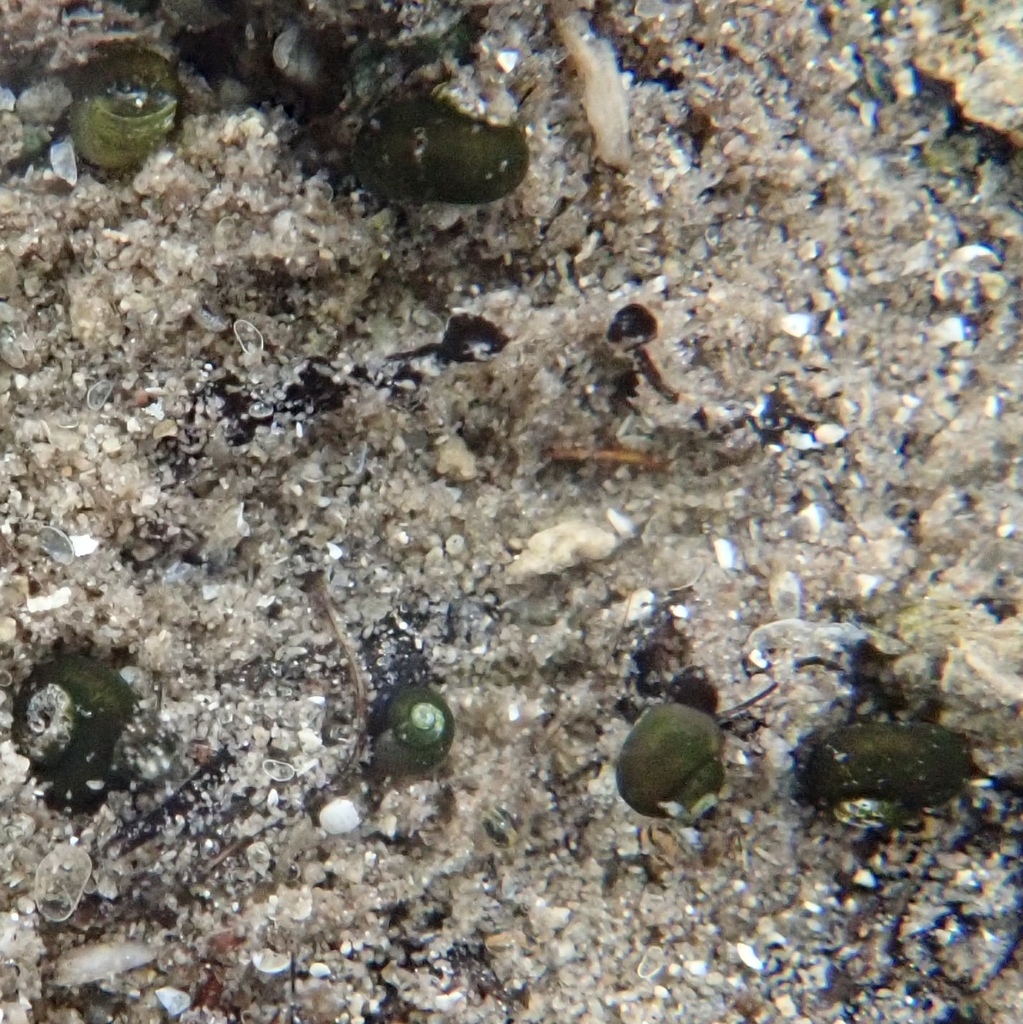
(c) Clifton Ladd, C.W.B., some rights reserved (CC BY) · licence
Family: Hydrobiidae · Class: Gastropoda · Order: Littorinimorpha
Conservation status: G1G2 S1S2
Pyrgulopsis cinerana (Ash Valley Pyrg) is a California animal in the Hydrobiidae family.
The Ash Valley Pyrg (Pyrgulopsis cinerana) is a small freshwater gastropod mollusk in the family Hydrobiidae, endemic to the Great Basin region. Like other members of the genus Pyrgulopsis, this species is a springsnail that typically measures 2-5 mm in shell length, though specific morphological details for P. cinerana have not been well documented in the scientific literature. The species' range is extremely limited, as indicated by its global and state conservation rank of G1G2 S1S2, suggesting it occurs in five or fewer locations with a high risk of extinction. The common name suggests an association with Ash Valley, though the precise geographic distribution and number of known populations require further documentation. Like other springsnails in the genus Pyrgulopsis, the Ash Valley Pyrg likely inhabits desert springs and associated aquatic habitats. These environments are characterized by relatively stable water temperatures, consistent flow regimes, and specific water chemistry conditions. Spring-dependent mollusks typically require high-quality groundwater sources and are sensitive to changes in water temperature, flow rates, and chemical composition. The species likely occurs in shallow areas with suitable substrate for feeding and reproduction. Springsnails are generally detritivores and grazers, feeding on algae, organic debris, and bacterial films on submerged surfaces. Reproduction in Pyrgulopsis species typically involves direct development without a free-swimming larval stage, with juveniles emerging as miniature adults. Population dynamics and seasonal activity patterns for P. cinerana specifically have not been documented in available literature. The conservation status of the Ash Valley Pyrg reflects the vulnerability common to endemic springsnail species. According to a 2021 petition to the U.S. Fish and Wildlife Service, 42 species of springsnails from the Great Basin and Mojave ecosystems in Nevada, Utah, and California were recommended for listing as endangered or threatened species, highlighting the conservation concern for this taxonomic group. Primary threats to springsnails typically include groundwater withdrawal, habitat modification, water quality degradation, and climate change impacts on spring systems. The limited range and specialized habitat requirements make populations particularly vulnerable to environmental perturbations. Spring ecosystems that support endemic springsnails are uniquely influenced by aquifer geology, morphology, discharge rates, and regional precipitation patterns. Conservation of these species requires protection of both surface spring habitats and the underlying groundwater resources that maintain them. Given the G1G2 S1S2 ranking, immediate conservation attention may be warranted to prevent further population decline or potential extinction. Detailed ecological studies and population surveys are needed to better understand the distribution, habitat requirements, and conservation needs of the Ash Valley Pyrg. The limited available information underscores the need for additional research on this and other endemic springsnail species in the Great Basin region.
Classification
Class: Gastropoda · Order: Littorinimorpha · Family: Hydrobiidae
Conservation status
G1G2 S1S2
Frequently asked questions
How is Pyrgulopsis cinerana classified?
Pyrgulopsis cinerana belongs to class Gastropoda, order Littorinimorpha, family Hydrobiidae.
What family does Pyrgulopsis cinerana belong to?
Pyrgulopsis cinerana is in the Hydrobiidae family.
Is Pyrgulopsis cinerana protected or of conservation concern?
Pyrgulopsis cinerana carries the following status: G1G2 S1S2.
What is Pyrgulopsis cinerana?
The Ash Valley Pyrg (Pyrgulopsis cinerana) is a small freshwater gastropod mollusk in the family Hydrobiidae, endemic to the Great Basin region.
Is Pyrgulopsis cinerana found in California?
Yes. Pyrgulopsis cinerana is recorded in California in The California Species Project's catalogue.
Related species
Other California species in the same genus, family, or bioregion.
Data from The California Species Project — 14,000+ California species with verified data from CNPS, CDFW, USFWS, and more.