Pyrgulopsis diablensis
Diablo Range Pyrg
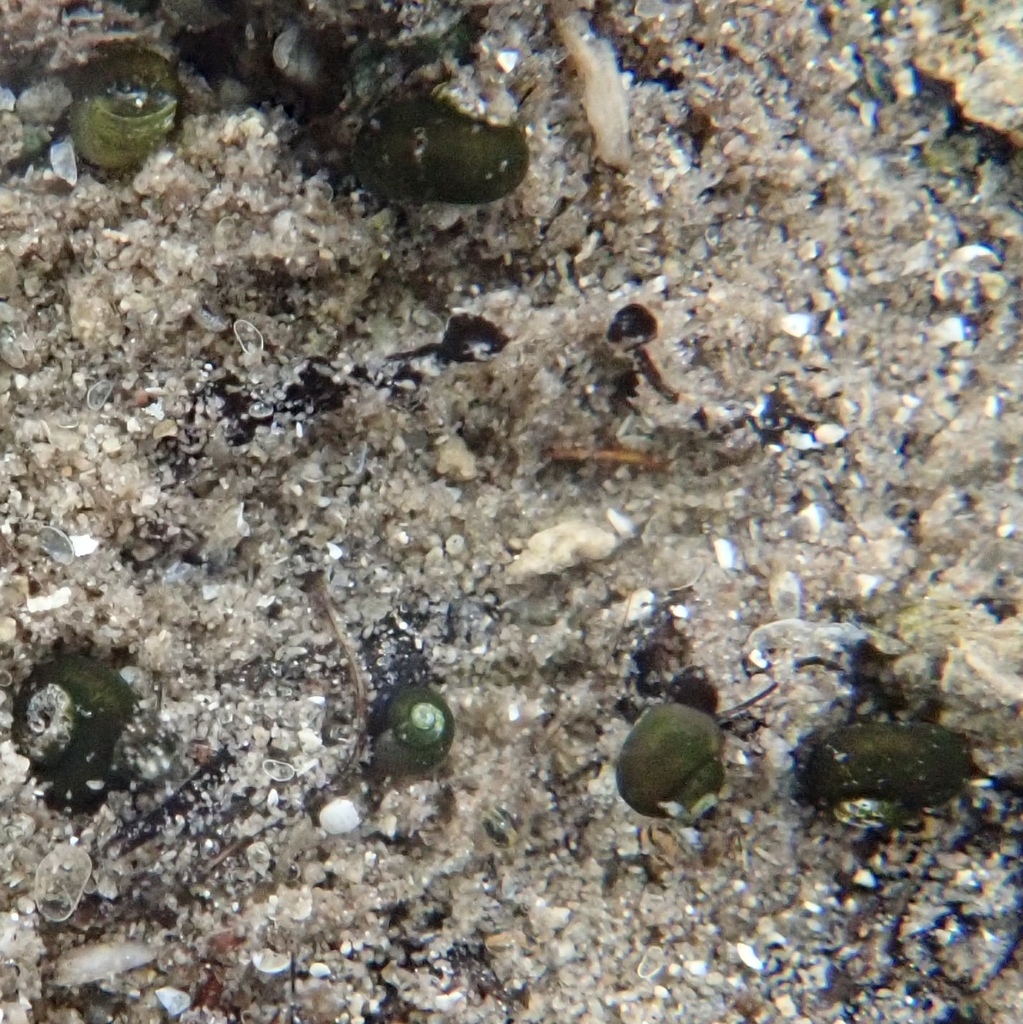
(c) Clifton Ladd, C.W.B., some rights reserved (CC BY) · licence
Family: Hydrobiidae · Class: Gastropoda · Order: Littorinimorpha
Conservation status: G1 S1
Pyrgulopsis diablensis (Diablo Range Pyrg) is a California animal in the Hydrobiidae family.
Pyrgulopsis diablensis is a minute freshwater gastropod endemic to California. This hydrobiid snail measures approximately 2-4 mm in shell length, typical of the genus Pyrgulopsis. The shell is conical to ovate-conic with a moderately elevated spire and smooth or weakly sculptured surface. Like other pyrg species, it possesses an operculum that seals the shell aperture when the animal retracts. The Diablo Range pyrg is restricted to spring systems within the Diablo Range of California. This extremely limited distribution places the species among California's most geographically restricted mollusks. The species occurs in isolated spring complexes where specific hydrogeological conditions have persisted, likely representing relict populations from periods when suitable habitat was more widespread across the region. This pyrg inhabits freshwater springs and associated seepage areas within the Diablo Range. The species requires specific water chemistry conditions, including consistent temperature, dissolved mineral content, and flow characteristics typical of spring environments. These hydrobiid snails are adapted to stable aquatic conditions with minimal temperature fluctuation and specific substrate requirements, typically occurring on hard surfaces such as rocks, gravel, or vegetation within the spring discharge areas. Like other members of the genus Pyrgulopsis, P. diablensis is likely a grazer, feeding on periphyton, diatoms, and organic detritus attached to hard surfaces within its spring habitat. Reproduction in hydrobiid snails typically involves direct development, with females depositing eggs that hatch directly into juvenile snails without a free-swimming larval stage. This reproductive strategy limits dispersal capability and contributes to the species' restricted distribution patterns. The Diablo Range pyrg carries conservation rankings of G1 S1, indicating it is critically imperiled both globally and within California. This ranking reflects the species' extremely limited range and small population size, making it vulnerable to local threats. Primary conservation concerns for spring-endemic mollusks include groundwater depletion, water diversion, habitat modification, and contamination from urban or agricultural runoff. Climate change poses additional threats through altered precipitation patterns and groundwater recharge cycles that could affect spring flow regimes. The species' dependence on specific spring conditions and limited dispersal ability make population recovery difficult following local extirpations. The conservation status of P. diablensis underscores the vulnerability of California's endemic spring fauna. Spring systems supporting pyrg populations require protection of both surface water quality and groundwater recharge areas to maintain the hydrological integrity essential for species persistence. Given the species' critical conservation status, monitoring of known populations and habitat protection measures are essential for preventing extinction of this endemic California gastropod.
Classification
Class: Gastropoda · Order: Littorinimorpha · Family: Hydrobiidae
Conservation status
G1 S1
Frequently asked questions
How is Pyrgulopsis diablensis classified?
Pyrgulopsis diablensis belongs to class Gastropoda, order Littorinimorpha, family Hydrobiidae.
What family does Pyrgulopsis diablensis belong to?
Pyrgulopsis diablensis is in the Hydrobiidae family.
Is Pyrgulopsis diablensis protected or of conservation concern?
Pyrgulopsis diablensis carries the following status: G1 S1.
What is Pyrgulopsis diablensis?
Pyrgulopsis diablensis is a minute freshwater gastropod endemic to California.
Is Pyrgulopsis diablensis found in California?
Yes. Pyrgulopsis diablensis is recorded in California in The California Species Project's catalogue.
Related species
Other California species in the same genus, family, or bioregion.
Data from The California Species Project — 14,000+ California species with verified data from CNPS, CDFW, USFWS, and more.