Pyrgulopsis falciglans
Likely Pyrg
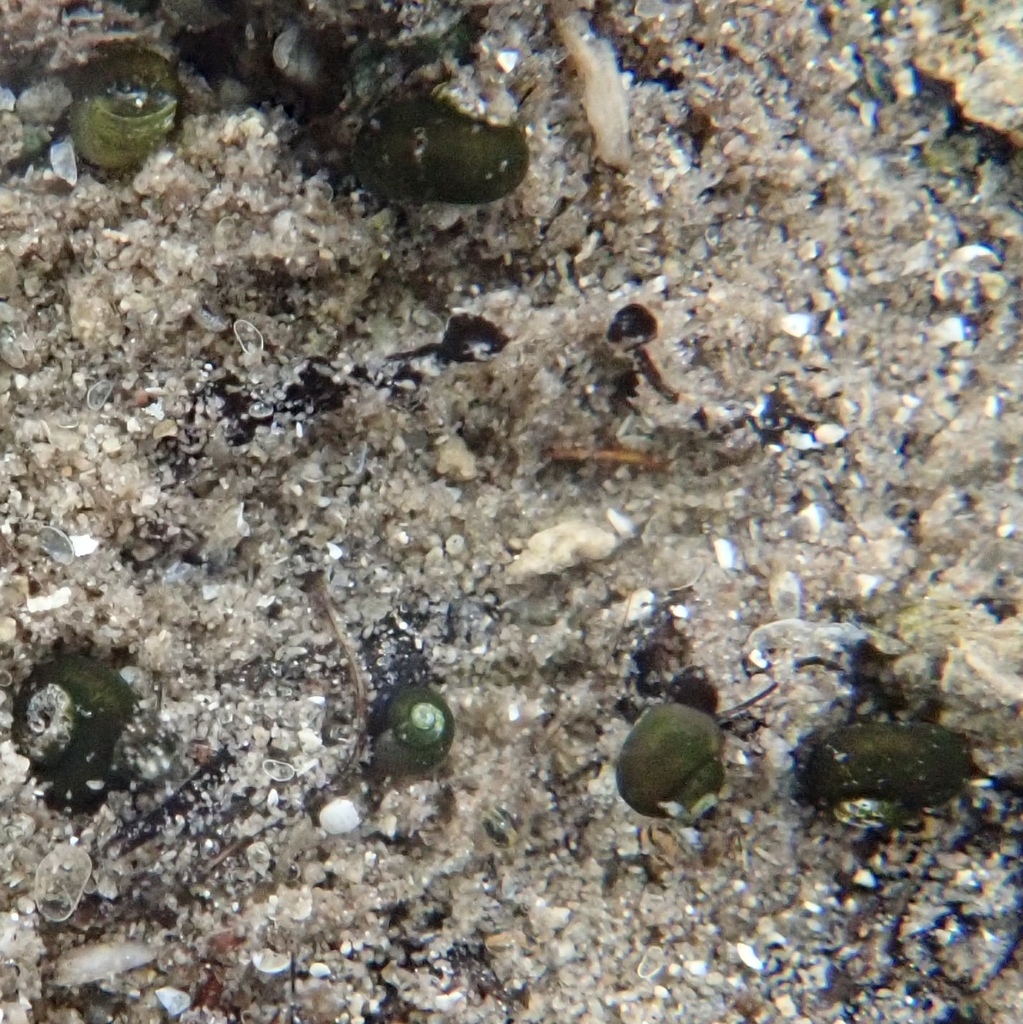
(c) Clifton Ladd, C.W.B., some rights reserved (CC BY) · licence
Family: Hydrobiidae · Class: Gastropoda · Order: Littorinimorpha
Conservation status: G1 S1
Pyrgulopsis falciglans (Likely Pyrg) is a California animal in the Hydrobiidae family.
The Likely Pyrg (Pyrgulopsis falciglans) is a small freshwater gastropod mollusk endemic to extremely limited aquatic habitats. Like other members of the genus Pyrgulopsis, this species is a minute springsnail, typically measuring 2-4 millimeters in shell length. The shell is conical and translucent to pale brown, with a smooth or faintly sculptured surface characteristic of hydrobiid snails. The range of P. falciglans is highly restricted, as indicated by its Global and State conservation rankings of G1 S1, signifying it is critically imperiled both globally and within California. The species occurs in very few locations, likely confined to specific spring systems or small aquatic habitats within California. This extremely narrow distribution makes the species particularly vulnerable to environmental changes or habitat disturbance. Like other springsnails in the genus Pyrgulopsis, P. falciglans inhabits freshwater springs, seeps, or associated spring-fed waters. These specialized aquatic environments typically maintain relatively constant temperatures and water chemistry year-round. Springsnails are often adapted to specific hydrogeological conditions, including particular temperature ranges, mineral content, and flow characteristics. The species likely requires clean, well-oxygenated water with stable flow patterns. Springsnails are typically herbivorous, feeding on algae, diatoms, and organic detritus present on submerged surfaces. They use their radula, a rasping feeding organ, to scrape food particles from rocks, sediment, and aquatic vegetation. Reproduction in Pyrgulopsis species generally involves separate sexes, with females depositing small egg masses on hard substrates. Development is direct, with juveniles emerging as miniature versions of adults rather than passing through a free-swimming larval stage. Population dynamics are typically characterized by slow growth rates and limited dispersal ability. The conservation status of P. falciglans reflects the precarious situation facing many western North American springsnails. The G1 S1 ranking indicates this species faces an extremely high risk of extinction due to its restricted range and small population size. Primary threats to springsnails typically include groundwater pumping, habitat modification, water diversion, pollution, and introduction of non-native species. Climate change poses additional risks through altered precipitation patterns and increased temperatures that can affect spring flow and water chemistry. Springsnails have received significant conservation attention from federal agencies, as evidenced by the multiple Pyrgulopsis species listed under the Endangered Species Act. Several related species, including the San Bernardino springsnail (P. bernardina) listed as threatened and the Socorro springsnail (P. neomexicana) listed as endangered, have received federal protection and dedicated conservation funding. The extremely restricted distributions and specialized habitat requirements of springsnails make them particularly challenging to conserve, often requiring site-specific management approaches and careful monitoring of water resources. Detailed ecological studies of P. falciglans remain limited, reflecting the broader challenge of studying rare, endemic invertebrates with highly restricted distributions. The species' critical conservation status underscores the urgent need for comprehensive surveys, habitat protection, and research into its specific biological requirements.
Classification
Class: Gastropoda · Order: Littorinimorpha · Family: Hydrobiidae
Conservation status
G1 S1
Frequently asked questions
How is Pyrgulopsis falciglans classified?
Pyrgulopsis falciglans belongs to class Gastropoda, order Littorinimorpha, family Hydrobiidae.
What family does Pyrgulopsis falciglans belong to?
Pyrgulopsis falciglans is in the Hydrobiidae family.
Is Pyrgulopsis falciglans protected or of conservation concern?
Pyrgulopsis falciglans carries the following status: G1 S1.
What is Pyrgulopsis falciglans?
The Likely Pyrg (Pyrgulopsis falciglans) is a small freshwater gastropod mollusk endemic to extremely limited aquatic habitats.
Is Pyrgulopsis falciglans found in California?
Yes. Pyrgulopsis falciglans is recorded in California in The California Species Project's catalogue.
Related species
Other California species in the same genus, family, or bioregion.
Data from The California Species Project — 14,000+ California species with verified data from CNPS, CDFW, USFWS, and more.