Pyrgulopsis fresti
Owyhee hot springsnail
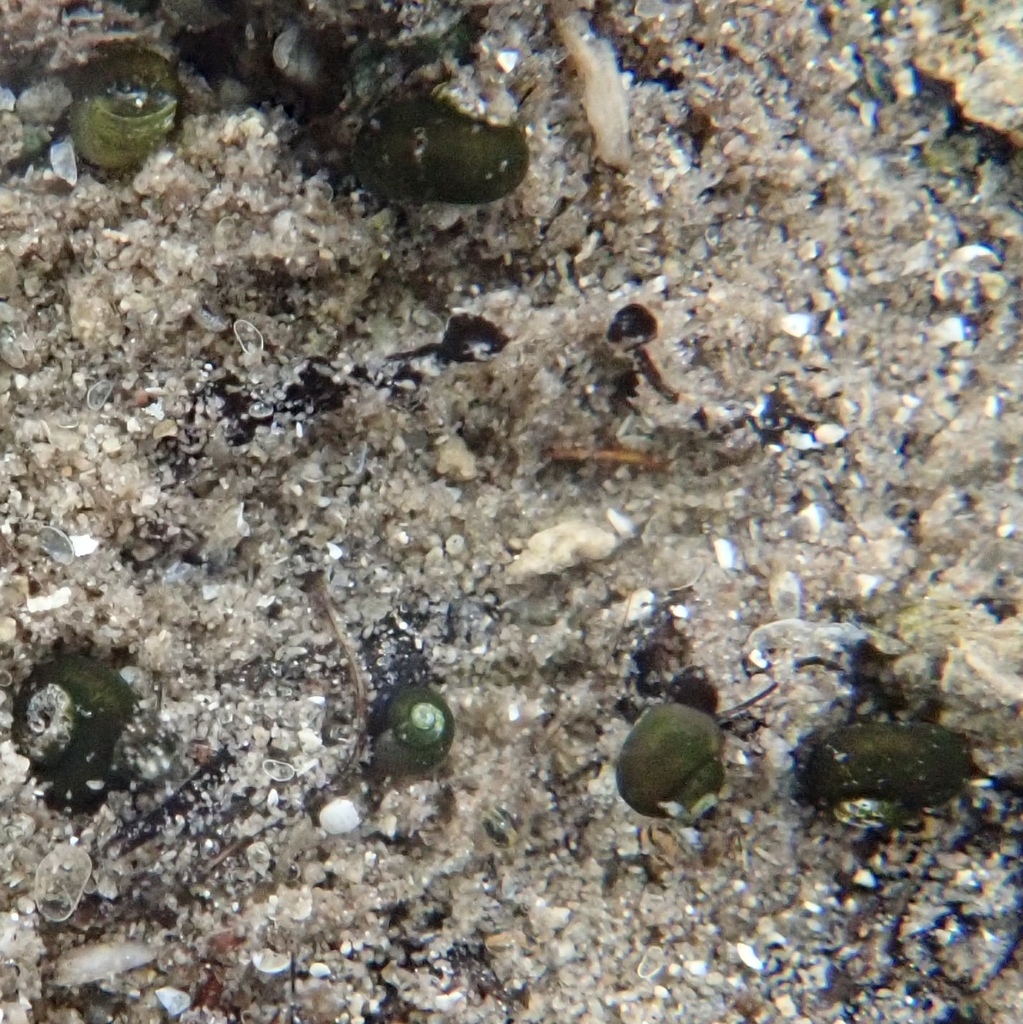
(c) Clifton Ladd, C.W.B., some rights reserved (CC BY) · licence
Family: Hydrobiidae · Class: Gastropoda · Order: Littorinimorpha
Pyrgulopsis fresti (Owyhee hot springsnail) is a California animal in the Hydrobiidae family.
The Owyhee hot springsnail is a small freshwater gastropod mollusk in the family Hydrobiidae endemic to thermal springs in the Owyhee River basin and adjacent drainages. This species is distinguished from other springsnails in the genus Pyrgulopsis by its broad, low-spired, squat shell morphology and the distinctive large, disc-shaped, glandular ornament present on the male penis (Hershler and Liu 2009). Pyrgulopsis fresti occurs exclusively in the Owyhee River basin of southeastern Oregon and southwestern Idaho, with its range extending into adjacent drainages. The species inhabits a major river canyon characterized by exposed basalt and other volcanic lithologies within open and dry sage scrub ecosystems (Frest and Johannes 1995). This highly endemic distribution makes the species particularly vulnerable to localized threats. The Owyhee hot springsnail requires very specific habitat conditions, inhabiting thermal springs with water temperatures ranging from 24 to 33°C (75 to 91°F). The species requires clean, moderately swift, well-oxygenated waters with gravel-boulder substrates (Hershler and Liu 2009). These stringent thermal and water quality requirements limit the species to a small number of suitable spring systems within its restricted geographic range. This springsnail maintains an entirely aquatic life cycle, feeding by gleaning algae from substrate surfaces and aquatic vegetation. Like other members of the genus, reproduction likely involves direct development without a free-swimming larval stage, though specific reproductive biology details for this species remain poorly documented. The species' dependence on stable thermal spring conditions means populations are confined to individual spring systems with limited dispersal capabilities between sites. Pyrgulopsis fresti lacks federal protection status but faces significant conservation challenges due to its extremely limited distribution and specialized habitat requirements. As with other thermophilic Pyrgulopsis species, populations are generally very rare and highly endemic, making them particularly sensitive to anthropogenic threats (Hershler 1998, Sada and Vinyard 2002). Primary threats include livestock grazing impacts to spring systems, recreational activities that can disturb delicate spring habitats, diversion of water sources for human uses, and introduction of non-native or invasive species that may compete with or prey upon native springsnails. The species receives a NatureServe global conservation rank of G1, indicating it is critically imperiled with typically five or fewer occurrences worldwide. Given the vulnerability of thermal spring ecosystems to groundwater withdrawal, climate change, and human disturbance, maintaining water quality and flow in the few remaining occupied sites is essential for the species' persistence. The specialized nature of thermal spring habitats and the species' limited dispersal ability make population recovery extremely difficult once local extirpations occur, emphasizing the critical importance of protecting existing populations and their habitat.
Classification
Class: Gastropoda · Order: Littorinimorpha · Family: Hydrobiidae
Frequently asked questions
How is Pyrgulopsis fresti classified?
Pyrgulopsis fresti belongs to class Gastropoda, order Littorinimorpha, family Hydrobiidae.
What family does Pyrgulopsis fresti belong to?
Pyrgulopsis fresti is in the Hydrobiidae family.
What is Pyrgulopsis fresti?
The Owyhee hot springsnail is a small freshwater gastropod mollusk in the family Hydrobiidae endemic to thermal springs in the Owyhee River basin and adjacent drainages.
Is Pyrgulopsis fresti found in California?
Yes. Pyrgulopsis fresti is recorded in California in The California Species Project's catalogue.
Related species
Other California species in the same genus, family, or bioregion.
Data from The California Species Project — 14,000+ California species with verified data from CNPS, CDFW, USFWS, and more.